Saturday 10 October 2026 SourcesAbout🌓
🇦🇺 AU ▾
BREAKING
› Rare, powerful earthquake hits Panama, spares Panama Canal› On top of Mount Panorama, Smarty’s Circus is erected for the 50th year› Muchea: Two men fighting for life after light plane crashes in private airfield› Two men fighting for life after plane crashes in Muchea airfield, Western Australia› AFLW round nine: Record-equalling low one week, victory the next – Saints send Dal Santo out on a high› Protests erupt outside CPAC conference in Brisbane› Donald Trump throws a tantrum over Nobel Peace Prize snub claiming he has ended eight wars› ‘Smarmy management consultant’: Angus Taylor criticised by Pauline Hanson and heckled at CPAC event› Conservatives one, and all over the place at conference› Ducklings walk on track at Bathurst› Rare, powerful earthquake hits Panama, spares Panama Canal› On top of Mount Panorama, Smarty’s Circus is erected for the 50th year› Muchea: Two men fighting for life after light plane crashes in private airfield› Two men fighting for life after plane crashes in Muchea airfield, Western Australia› AFLW round nine: Record-equalling low one week, victory the next – Saints send Dal Santo out on a high› Protests erupt outside CPAC conference in Brisbane› Donald Trump throws a tantrum over Nobel Peace Prize snub claiming he has ended eight wars› ‘Smarmy management consultant’: Angus Taylor criticised by Pauline Hanson and heckled at CPAC event› Conservatives one, and all over the place at conference› Ducklings walk on track at Bathurst
Science

Why the story of urchin barrens and kelp forests is more complex than we thought
The Conversation Australia ·
Why the story of urchin barrens and kelp forests is more complex than we thought

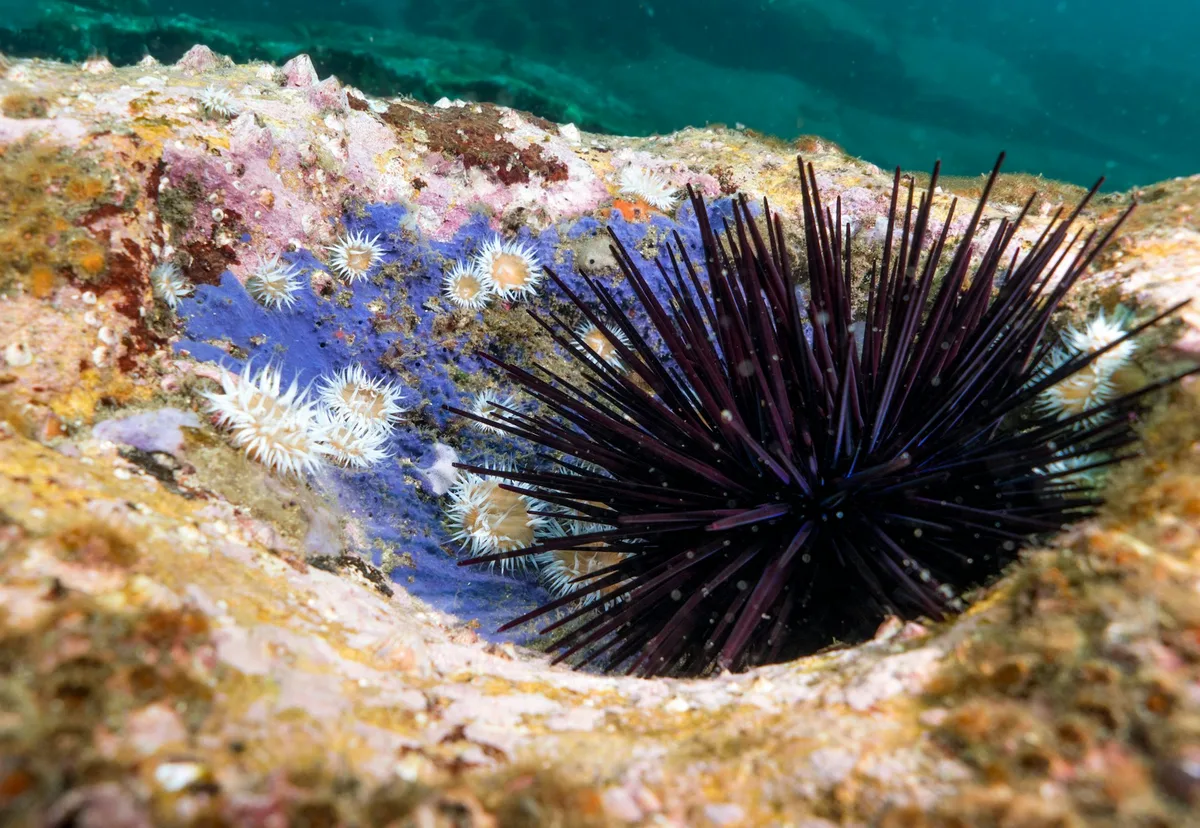
John Turnbull/Flickr , CC BY-NC-ND It’s not hard to find a long-spined sea urchin ( Centrostephanus rodgersii ) on rocky walls and in underwater forests comprised of golden kelp ( Ecklonia radiata ) and crayweed ( Phyllospora comosa ) in southeast Australia.

They also live in “ urchin barrens ”, areas of bare rock and encrusting algae.

In media reports, these areas are often described as “ lifeless moonscapes ”.

In this telling, large numbers of urchins eat their way through kelp forests and create new barrens.

This isn’t quite fair on the barrens – or the urchins.

Much concern has focused on how fast barrens have expanded their range into Tasmanian waters in recent decades as oceans have warmed up.

But in New South Wales, barrens do not appear to be increasing.

Barrens are vital habitat .

By some measures, they can be richer in species and host different invertebrates than kelp forests.

Urchins, too, may be being judged unfairly.

Across their native NSW range, long-spined urchin populations have been stable over long timeframes .

Long-spined urchins have long been suggested as the key cause of kelp forest declines , because disappearing kelp coincides with more urchins .

In response, authorities have launched urchin control programs , where divers pull urchins from the sea.

But recent research suggests it’s not that simple.

Read the full article on The Conversation Australia ›

5News aggregated this summary from the outlet’s public feed. The full article, with all the context, is on theconversation.com — the content belongs to The Conversation Australia.

More from The Conversation Australia

See all ›

More in Science

See all ›