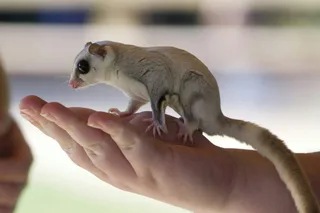
Are petting zoos safe?

meadowmouse/Getty A three-year-old girl has died from a rare illness after visiting a petting zoo in Victoria.
She had developed brain damage and kidney failure after spending weeks in intensive care.
The girl is confirmed to have had haemolytic uraemic syndrome , a rare but serious serious condition, caused by infection with a specific type of Escherichia coli bacteria (or E. coli for short).
This can be transmitted in a variety of ways, including after contact with animals on a farm or at a petting zoo.
Fortunately, such tragic cases are rare .
But they do shed light on bacterial infections harboured by some animals and the need to take hygiene precautions when visiting petting zoos .
I’m a microbiology lecturer, and I’m planning to visit a petting zoo next weekend with my family.
Here’s what we know about the infection risk at petting zoos, and what parents can do to help keep their children safe.
What is haemolytic uraemic syndrome? Haemolytic uraemic syndrome most commonly results from infection with types of E. coli that produce a specific toxin called the Shiga toxin.
Early symptoms of infection are nausea, stomach cramps, vomiting and diarrhoea, which can contain blood.
Warning signs that need urgent medical assessment include bloody diarrhoea, markedly reduced urination, lethargy, pallor (looking pale), unexplained bruising or red-purple spots on the skin.
If a doctor suspects someone has haemolytic uraemic syndrome, they will ask about symptoms and examine the person.
Hospitalisation as soon as possible will be necessary.
Blood, stool and sometimes urine tests confirm the diagnosis.
5News aggregated this summary from the outlet’s public feed. The full article, with all the context, is on theconversation.com — the content belongs to The Conversation Australia.