Australia’s economy grows by 2.1%, but people’s living standards aren’t keeping pace
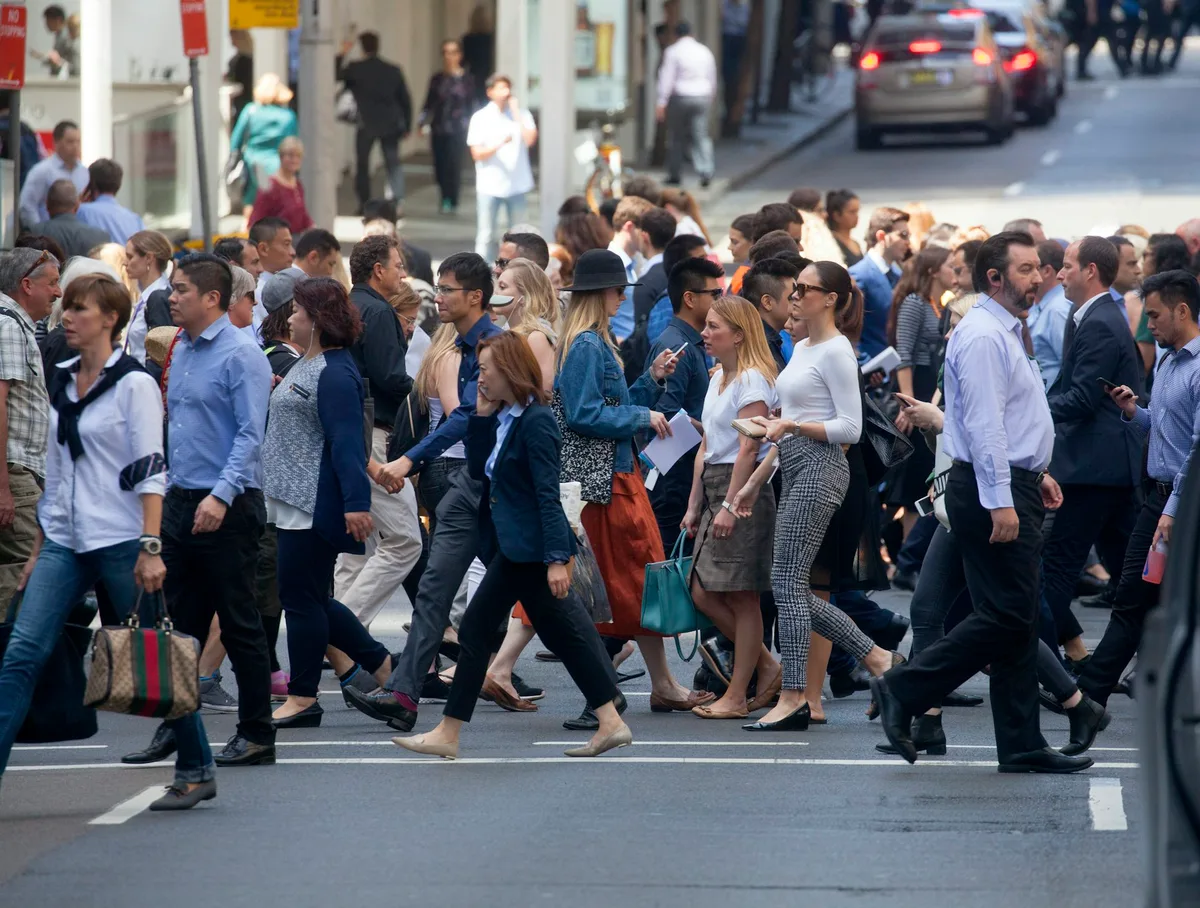
Grant Faint/Getty Images Australia’s economy expanded by 0.4% in the June quarter, with spending growth driven by record sales of imported electric vehicles.
For the year to June, gross domestic product (GDP) grew by 2.1%, according to the Australian Bureau of Statistics, slightly stronger than market expectations .
The bureau noted overall growth remained subdued, with spending growth and business investment only in “pockets” of the economy.
But a significant proportion of this demand was met from imports, rather than production in Australia.
With the economy performing in line with Reserve Bank of Australia forecasts, the national accounts are unlikely to change the outlook for interest rates.
This represents another disappointing quarter, with the economy only growing at the same pace as the population.
In eight of the past 20 quarters, the economy has expanded at a slower rate than the population.
So net immigration is propping up an economy that would otherwise be flat.
We are on the edge of what some observers call a “per capita recession”, meaning the average Australian’s living standards are not improving.
This may be welcomed by some in what is known as the “ degrowth” movement , which questions the desirability of GDP growth.
However, for average Australians it means having to adjust expectations radically, from a world where living standards grow each year to one where they remain static.
The best measure of average living standards – real net national disposable income per capita – is around where it was five years ago.
What’s hot and what’s not This is the first full quarterly report reflecting the conflict in the Middle East.
As it became clear the United States was not achieving a quick victory, and oil prices would be high for an extended period, business and consumer confidence took a hit.
5News aggregated this summary from the outlet’s public feed. The full article, with all the context, is on theconversation.com — the content belongs to The Conversation Australia.