Friday essay: space was once a place of wonder – now it’s being bought and sold by powerful men
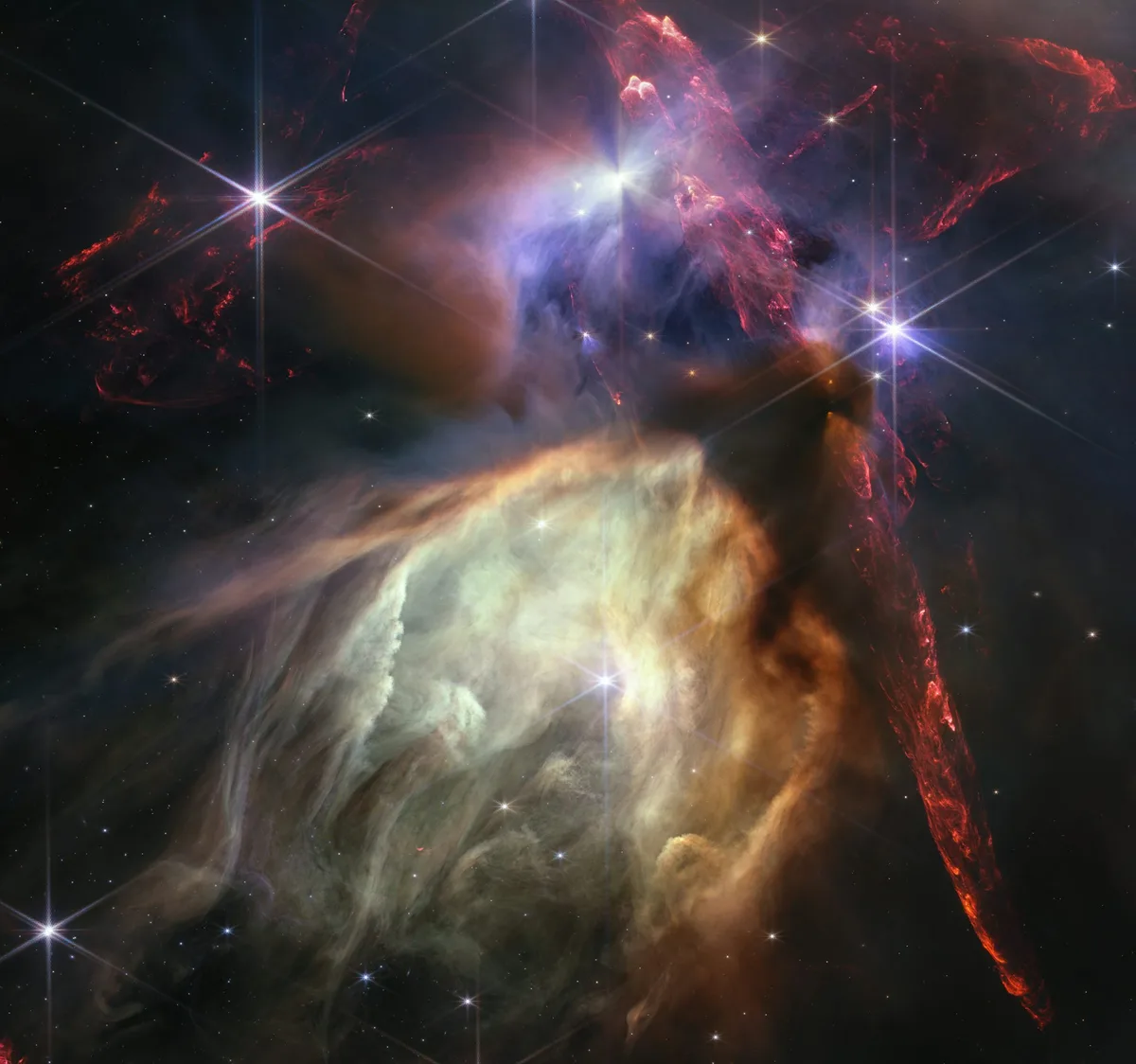
Photo by NASA, ESA, CSA, and STScI via Getty Images I spent most of my twenties driving around remote Australia in a self-built tiny home, researching from the road while attempting to live a life connected to the natural world.
I loved this for many reasons: one reason was that life looks very different whether you are 50 kilometres, 500 kilometres or even 5,000 kilometres down the road.
Everyone’s normal is different.
I was also struck by how different my experience of space from the middle of the outback was.
As a political scientist with no more sophisticated a stargazing tool than my own eyes, I couldn’t believe it the first time I truly saw the Milky Way.
I must have been in my mid-twenties, some five hours from the closest town – Alice Springs – on the edge of the Western Desert, tucked up in a swag, listening to wild dingoes in the distance and watching the branches of mulga trees around me dance, backlit against the majesty of the sky.
I kept wishing the pale white clouds above me would clear so I could see the stars properly.
It was only the next day that the professor I was camped with commented on the clarity of the Milky Way the night before – so bright it resembled clouds.
What I’d experienced was partly naivety, but also partly the reality that even growing up in the relatively unpolluted western outskirts of Brisbane, Australia, I did not see the stars as some others do, my viewing curtailed by light pollution.
While I still feel a mix of magic and fear when looking up into that inky darkness speckled with stars, I also recognise that, despite space being a global commons capable of generating wonder, we’d be wrong to assume humanity’s shared experience is the same experience.
It is becoming increasingly difficult for humans to connect with space as they have in the past – well beyond light pollution, some humans, more than others, are altering our relationship with the stars.
Come the mid-2020s and we arrive at a sector increasingly dictated by a global hegemon spinning out of orbit, spurred on by a “ broligarchy ” of techno-capitalist billionaires (and trillionaires?), hurtling towards military destruction and capitalist exploit, and largely staffed by representatives of less than half the population.
You don’t have to look far to see recent examples of how this is playing out, such as the US confirming it has deployed space control weapons or one of Trump’s top military advisors imploring the military to be “prepared to fight, endure and win […] from the seabed to cislunar space” – the space between the Earth and Moon, including Moon’s orbit.
This is all despite the Outer Space Treaty to which the US is a signatory designating such celestial objects such as the Moon be used “exclusively for peaceful purposes”.
5News aggregated this summary from the outlet’s public feed. The full article, with all the context, is on theconversation.com — the content belongs to The Conversation Australia.