Australia’s vast Nullarbor Plain hides deep caves that can teach us about alien worlds
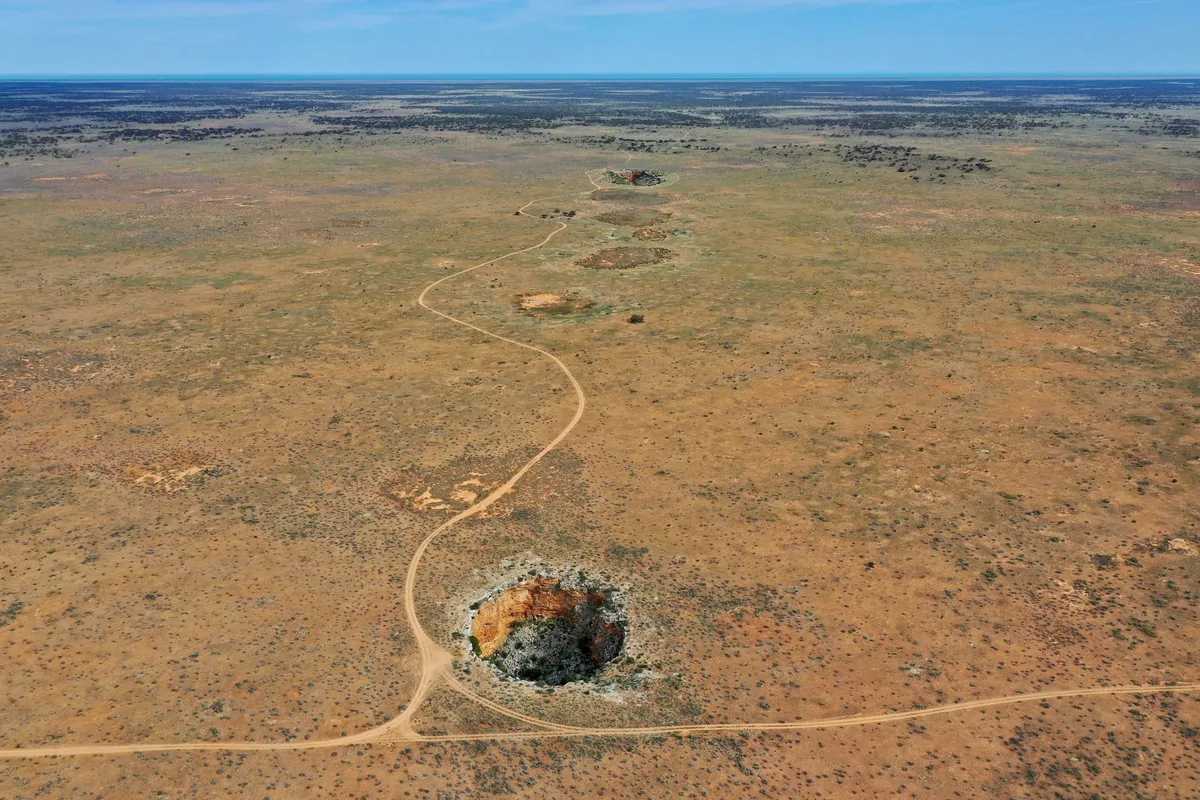
Field team archive GIAM ZRC SAZU Stretching over 200,000 square kilometres across southern Australia, the vast, flat plains of the Nullarbor mark one of the world’s largest regions of limestone.
It formed when an ancient shallow sea retreated some 14 million years ago .
Ultimately, this led to the familiar dry landscape of today, which has acted as a significant barrier for plants, animals , and poorly adapted colonial Victorian-era explorers who described it as “ the sort of place one gets into in bad dreams ”.
In contrast, the Mirning People of the Nullarbor and Great Australian Bight have lived for tens of thousands of years on this southern margin.
They have watched the landscapes change and sea levels fall and rise with the build-up and collapse of the last ice age about 20,000 years ago.
The Bunda Cliffs mark the dramatic edge of the expansive, flat Nullarbor Plain where the arid limestone plains tumble to the Great Australian Bight.
Distinct limestone layers are visible in the cliffs with the Nullarbor Limestone overlying the white, chalkier layer known as the Wilson Bluff Limestone.
Field team archive GIAM ZRC SAZU To an untrained eye the Nullarbor Plain appears deceptively simple and featureless.
However, beneath the immense plain lies a remarkable, largely hidden underground world.
Over millions of years, water has eaten away at the limestone and created complex cave networks that can extend for kilometres underground.
Sadly, the caves remain poorly understood , partly because they’re only really known and accessible where they breach the surface.
Our new study, published in Communications Earth & Environment , reveals a new way to track these cave systems even when they are deeply buried.
Our work helps explain the formation of previously mysterious, shallow trench features on the Nullarbor.
It also provides a new way to identify hidden caves elsewhere – even beyond our own planet.
5News aggregated this summary from the outlet’s public feed. The full article, with all the context, is on theconversation.com — the content belongs to The Conversation Australia.