Australia’s government now has $1 trillion in debt. Four charts on how we got here and its cost
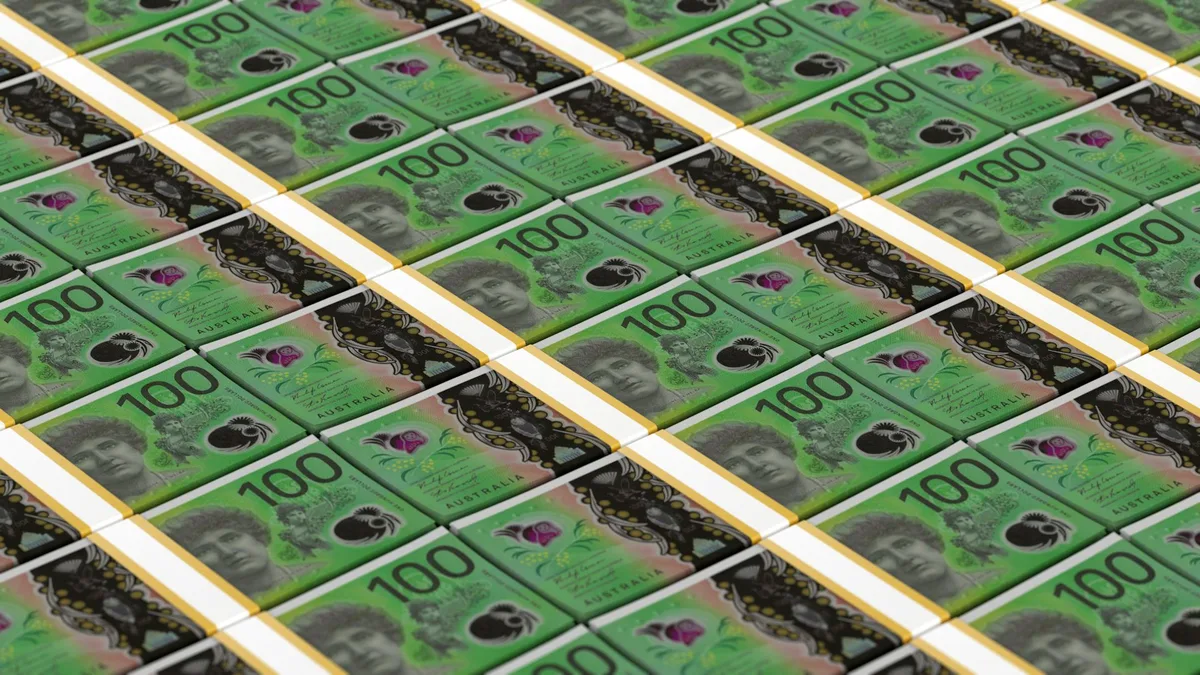
Mirza Kadic/iStock/Getty Images The Australian government’s debt has just hit A$1 trillion again .
And, unlike when it briefly hit that mark for the first time in mid-August , this time it’s set to stay above $1 trillion and keep climbing.
The federal government expects it to rise above $1.2 trillion by 2030 , the equivalent of 35% of Australia’s gross domestic product (GDP) – seven times higher than it was a generation ago.
If you also add in the debt from state and territory governments, the total is already above 50% of Australia’s GDP .
How did we get here? And what does it cost us in growing interest bills? How debt rose over a generation In 2002 under the Howard government, net debt was about 5% of GDP, down from around 19% in 1996-1997 .
For consecutive years, the federal government collected more money than it spent and did not issue debt – that is, it didn’t need to borrow more money because the federal budget was in surplus.
This was widely celebrated.
But financial markets raised concerns that if the government stopped selling government bonds, it would risk financial instability.
So the Howard government continued to issue government bonds.
With the global financial crisis (2008-09) and COVID-19 pandemic (2020-21) demanding governments spend more than they could collect in revenue, successive Labor and Coalition governments sold bonds to meet this shortfall.
What does it cost us in interest? Apart from promising to repay any borrowed money, the federal government makes interest payments on its outstanding debt.
The 2026 budget showed public debt interest payments have been the fastest growing area of federal spending.
How do we compare globally? Australian government debt relative to the economy is similar to New Zealand (56.7% of its GDP) and South Korea (54.4%).
And it’s lower than the average for advanced economies (108.2%).
5News aggregated this summary from the outlet’s public feed. The full article, with all the context, is on theconversation.com — the content belongs to The Conversation Australia.