Poetry is popular with young Australians, from pop-up readings to poetry slams
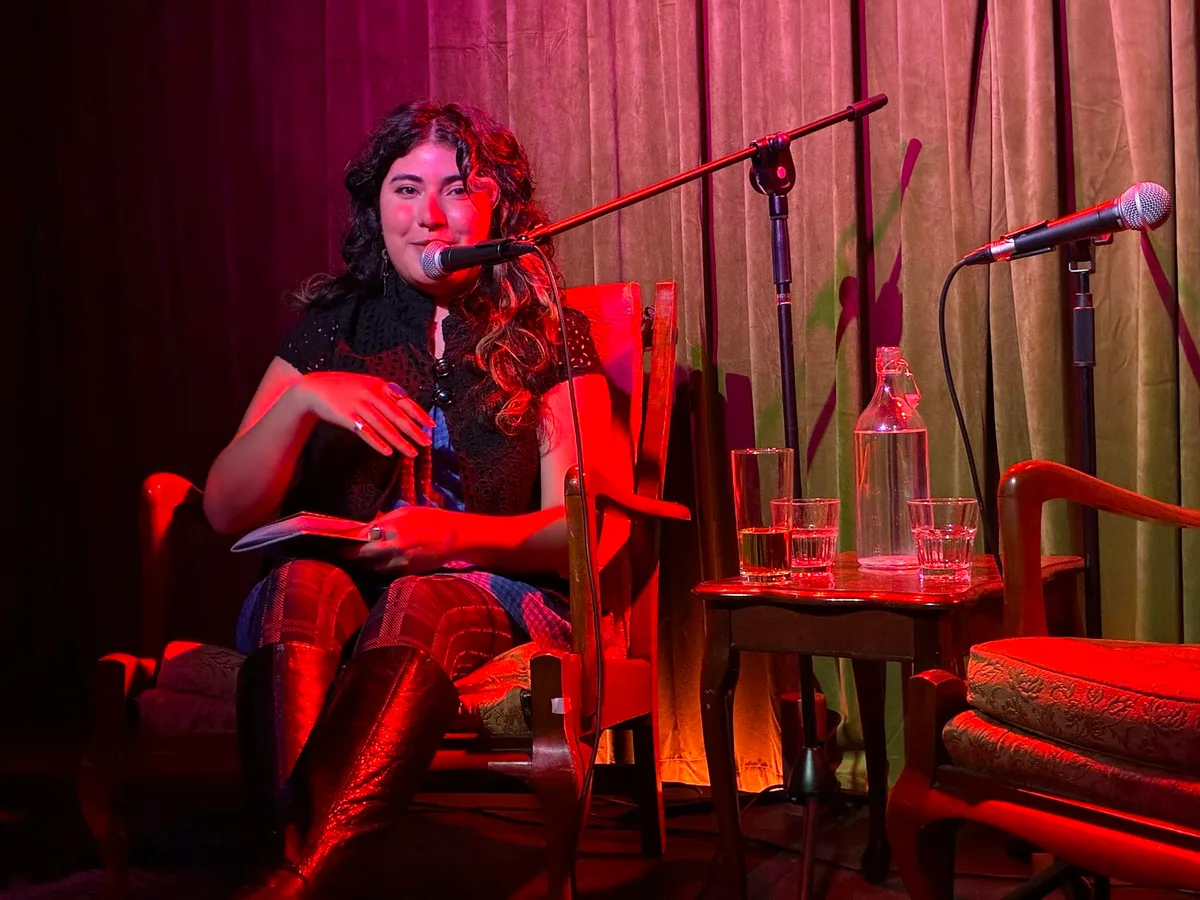
Arantza Garcia Ferrand at Adelaide's Dog-eared Readings.
Jo Case In a world of doomscrolling and the prescriptive responses of AI, young people are increasingly turning to poetry: a form that is raw, honest and authentic.
Poetry also invites the absurd and the experimental, making it a truly flexible way of facing both intimate and global complexity.
Around 24% of children and young people (aged eight to 18) read poetry in their free time at least once a month, a 2025 United Kingdom survey found .
And around 18% said they wrote poetry in their free time at least once a month.
Compared to results a decade earlier, poetry reading had increased.
The survey found that poetry was “a way to express and process their feelings and emotions”, a “quiet refuge”, a “tool for voice and agency”.
There are no similar studies in Australia, but this passion for poetry among young people is evident here, too.
It can be seen in their performances at poetry slams and pop-up events, readings at Sydney’s Sappho Books, Cafe and Bar and the memorably named Slugs in the North in Melbourne’s Coburg, and publications in chapbooks (a type of small, cheaply produced booklet), literary journals and on Instagram.
Young poets breaking out K.J.
Hayward was 16 when she performed at an open-mic night in Ballarat.
Within a year, she had co-won the 2023 Australian Poetry Slam, on stage at the Sydney Opera House. ( Solli Raphael was even younger when he won it in 2017, aged 12; he’s published three books since.) Spoken word poetry appealed to Hayward, she told Radio National’s breakfast show in 2024, because she felt she had “lost her voice sitting at a desk every day”.
Hayward’s debut poetry collection, Puzzle , was published the next year, in 2024.
It weaves stories of feminism, youth and her journey of the transition between “normal” school and home-school with the rap, rhythm and rhyme of slam.
5News aggregated this summary from the outlet’s public feed. The full article, with all the context, is on theconversation.com — the content belongs to The Conversation Australia.