What happens when a neighbourhood bottle store closes? We asked local residents
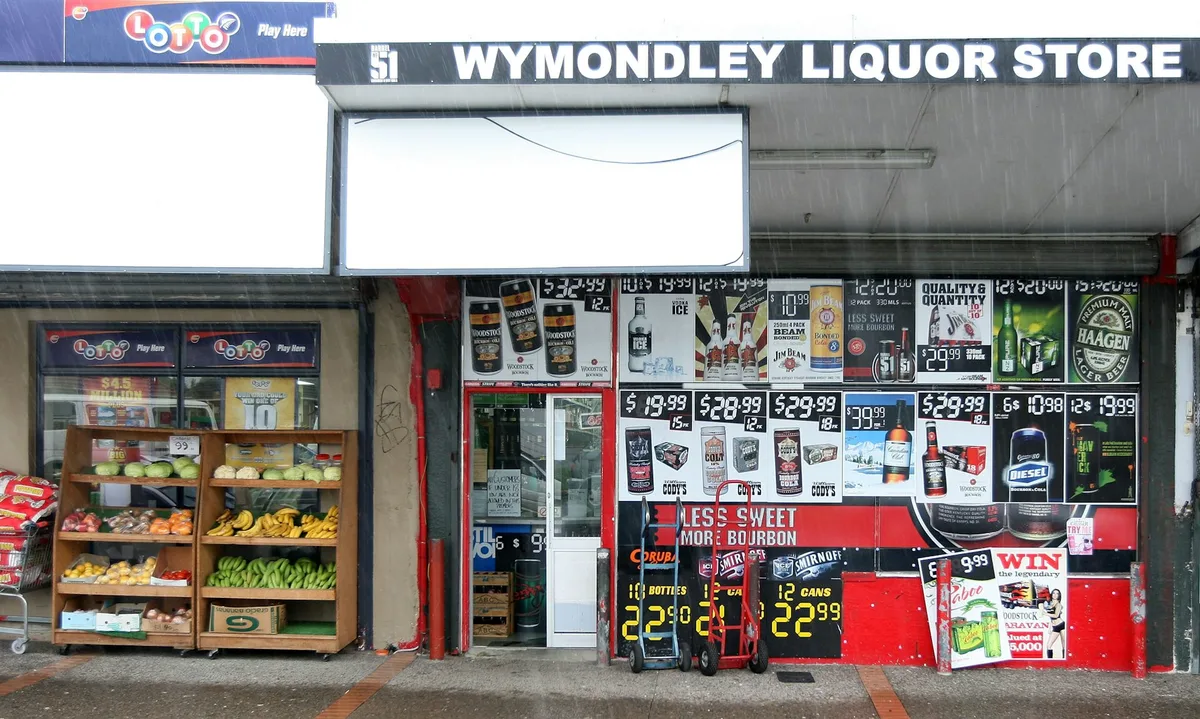
Sandra Mu/Getty Images For people living in New Zealand’s most deprived communities, alcohol is often far too accessible.
These areas have around three times as many off-licence supermarkets, grocery stores and bottle stores as the least deprived.
Just within South Auckland suburbs Ōtara, Ōtāhuhu and Papatoetoe, there are 32 separate outlets.
Research suggests that concentration comes at a cost.
Having more off-licence alcohol outlets nearby has been linked to violence, anti-social behaviour, property damage , crime and higher teenage drinking .
While lowering the number of local outlets might help curb these problems, communities have often found stopping an existing off-licence from being renewed is difficult.
Now, there are concerns that new law changes will only make it harder for locals to have their say.
Proposed amendments to the Sale and Supply of Alcohol Act, presently awaiting their second reading in parliament, would restrict who can oppose licensing applications and give applicants a formal right to respond to objections.
Local alcohol policies could also not be used to reduce the number of existing outlets in unsuitable locations.
For communities, one long-standing challenge has been showing licensing committees what might actually improve if an outlet closed – from noise and rubbish to disorder and crime.
Although studies broadly show fewer alcohol outlets can mean less harm, those involving individual store closures are rare.
Our new research offers one such case, examining what changed after a bottle store closed in South Auckland.
What the community told us Wymondley Discount Liquor, in Ōtara’s Larsen St shopping centre, closed in 2023 after the local District Licensing Committee rejected its off-licence renewal.
At the time, the store was reportedly selling single bottles of beer for as little as $2.
5News aggregated this summary from the outlet’s public feed. The full article, with all the context, is on theconversation.com — the content belongs to The Conversation Australia.