Should you say ‘autistic person’ or ‘person with autism’? Here’s how language has changed
How should we refer to people with mental ill health, disability, or neurodivergence? Terminology should be respectful, apt and avoid carrying stigma.
It’s also important to listen to people’s preferences about how they refer to their condition.
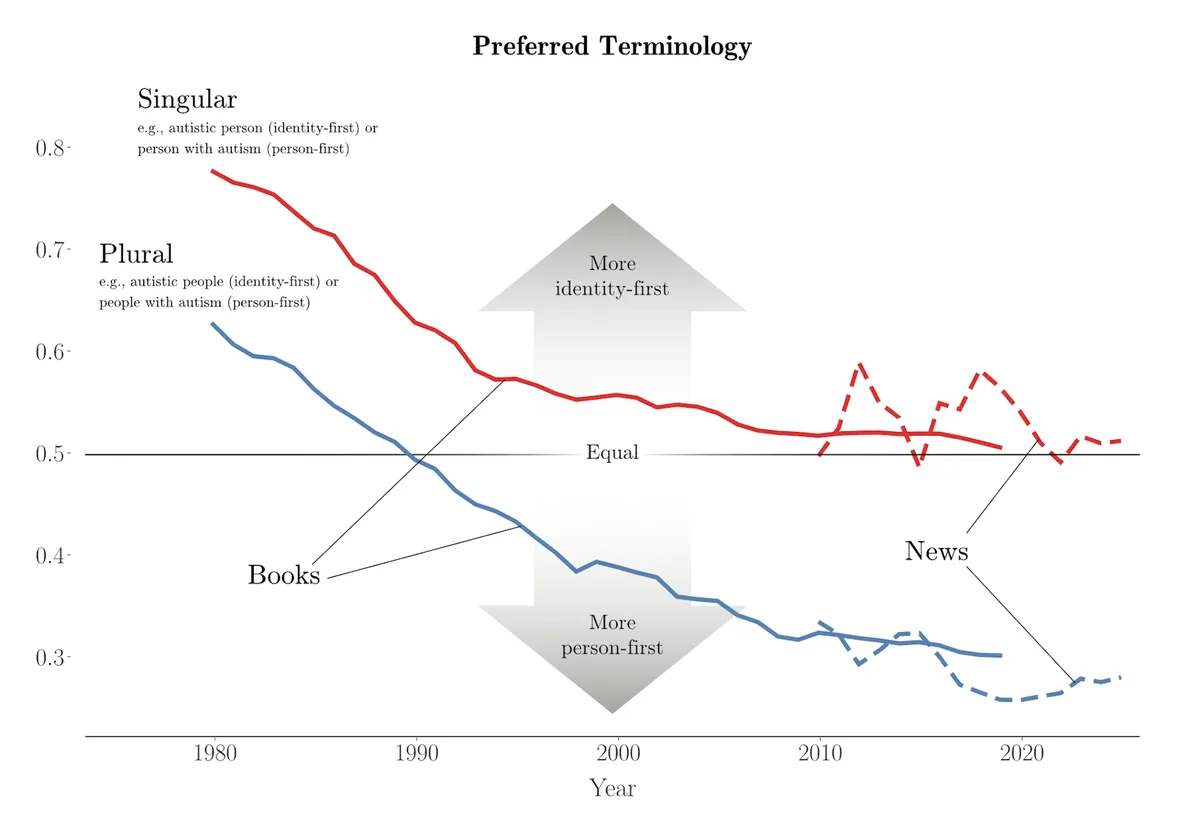
But how much consensus is there and how has terminology changed? Our new study – the largest of its kind – explores how this language has evolved over the past 45 years to reflect our shifting views of mental illness and disability.
We found preferences can depend on the condition, and whether we are talking about individuals or groups.
Remind me, what’s person-first language? In the 1980s, disability activists argued common expressions such as “disabled person” equated the person with their disability.
Instead they proposed “person-first” language.
Referring to someone as a “person with disability” puts their personhood in the foreground and doesn’t define them by their impairment.
Professional organisation soon adopted person-first language as preferred terminology.
Guidelines for academic publishing and media reporting followed.
The move to identity-first language More recently there has been a backlash.
Critics argue person-first language presents disability or mental illness as a devalued and peripheral aspect of the person.
US psychologist Louis Sass expresses this beautifully: Is schizophrenia best conceptualized as a disease entity that comes, as it were, from outside, and with which the sufferer must contend, as with a burden or an enemy? Or is it better seen as a more intimate factor: something that emerges from within, permeates the very core of one’s being, and must, perhaps, be understood as an aspect of the sufferer’s very soul? Proponents of “identity-first” language say expressions such as “autistic person” recognise that some conditions are not external visitations but integral aspects of the individual.
The American Psychological Association endorsed identity-first language in 2020, and surveys show many neurodivergent people prefer it.
But more broadly, is person-first or identity-first language preferred? We studied how preferences changed In our new study , we assessed the relative popularity of person-first and identity-first expressions for 15 mental health, disability and other conditions over 45 years.
5News aggregated this summary from the outlet’s public feed. The full article, with all the context, is on theconversation.com — the content belongs to The Conversation Australia.