The Tuesday fill-up myth — and how to find the cheapest fuel in your city
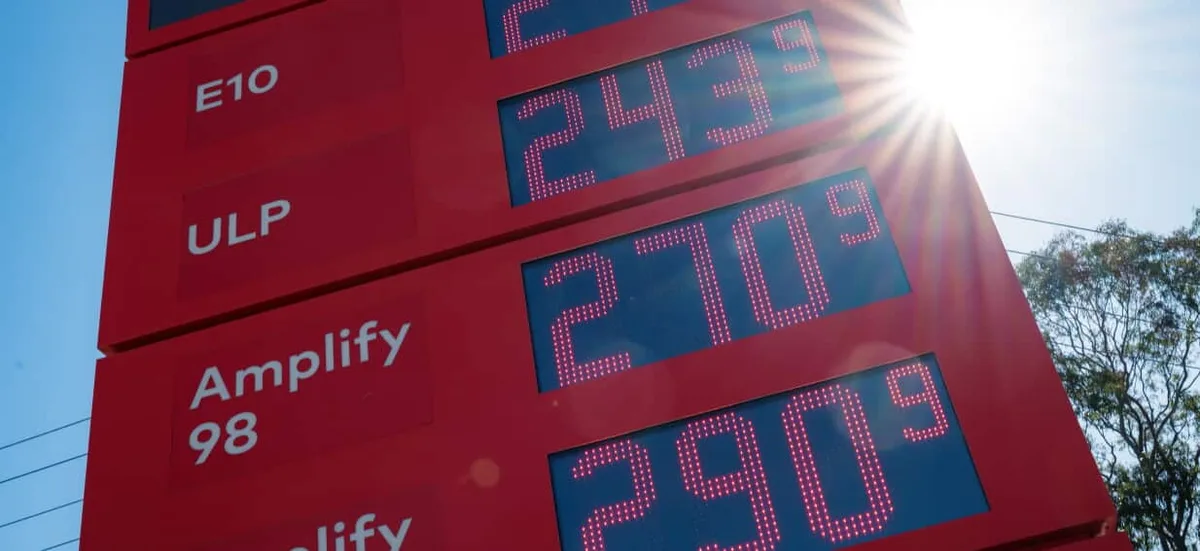
Australians are paying more at the bowser than they have in months, amid strikes in the Middle East leading to oil price shocks and the fuel excise being paid in full.
A cut to the fuel excise, implemented in April to offer Australians relief amid skyrocketing petrol prices at the height of tensions in the war in the Middle East, ended on 3 August.
Opening the war in the Middle East to a new front, Iran-backed Houthi forces in Yemen seized control of the Bab al-Mandeb Strait and disabled the vital Saudi Arabian East-West pipeline, causing oil price spikes.
Brent crude shot above US$100 ($142) on Monday, more than 8 cents per litre, according to the NRMA weekly fuel report. The report also predicted that wholesale prices would continue to rise and that average unleaded prices would rise in Sydney from 237.8 cents per litre to at least 240 cents per litre over the coming week.
Diesel prices similarly spiked with Sydney’s current average diesel price at 286.1 cents per litre.
Your trusted source for staying up-to-date with the world around you. Get free daily news updates and analysis, straight to your inbox.
Experts have warned that these fluctuations could become the "new normal".
Alison Reeve, program director of energy and climate at the Grattan Institute, told SBS News this week that while Australians can "adjust to a new normal" of sustained high fuel costs, it's "volatility that's actually more dangerous to the economy than a price that goes high and stays high".
Fluctuating prices make it more challenging for governments, industry, and households to plan ahead.
However, there are a range of simple hacks you can use to find more affordable fuel amid the uncertainty.
Peter Khoury, head of media at the NRMA, said price gaps between petrol stations can be significant — sometimes as much as 20 or 30 cents per litre — in the same neighbourhood.
"We know that there are several service stations now charging over $3 a day for a litre of diesel, whereas the average is still below $3 and $2.94. So we want people to find the best bargain before they fill up."
But thankfully, he said, "it's easier to do that now than it has ever been before".
In Australia, each state and territory government receives and publishes real-time data on petrol prices. These are available to all motorists through state government websites and some apps.
5News aggregated this summary from the outlet’s public feed. The full article, with all the context, is on www.sbs.com.au — the content belongs to SBS News - Latest.