Aurora australis could light up parts of Australia tonight. Here's how to get the best view
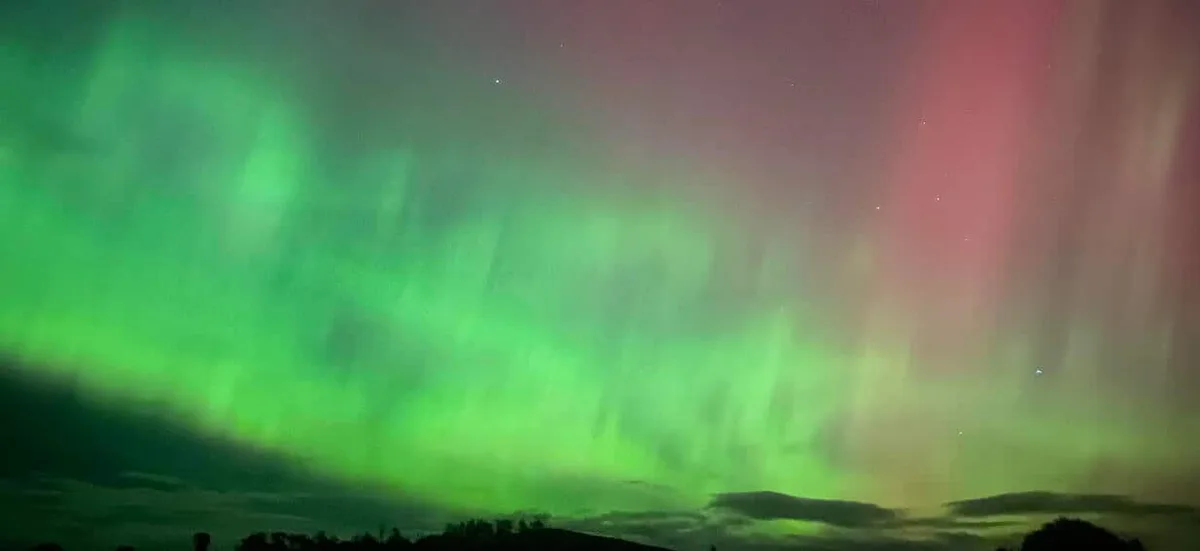
Australians could be treated to a rare double helping of astronomical sights on Friday night, with forecasts pointing to a possible aurora australis and a chance to spot the International Space Station overhead.
While predictions for auroras can be difficult, astronomers say conditions are favourable for some parts of the country to catch a glimpse of the phenomenon, which occurs when charged particles from the sun interact with Earth's atmosphere.
Astrobiologist and astronomer at the University of Southern Queensland Professor Jonti Horner said the forecast was promising, though not for a particularly intense display.
"There is a chance tonight, and it's definitely worth letting people know," Horner told SBS News.
The International Space Station is also set to make a visible pass across Australian skies, giving stargazers a second reason to look up.
Your trusted source for staying up-to-date with the world around you. Get free daily news updates and analysis, straight to your inbox.
The likelihood of an aurora depends on something called a CME, or coronal mass ejection, where "big bursts of material and activity are flung outwards" from the sun into space.
By monitoring these events, observatories around the world can calculate whether the ejections will reach Earth.
CMEs are measured on the Kp index, a 0 to 9 scale that measures Earth's geomagnetic activity. A higher rank on the Kp scale predicts a better chance of aurora.
Horner said the CME could reach the "lower end" of Kp 6 on Friday night, meaning there was a "good chance" that Tasmania and some southern states will catch a glimpse of the aurora.
But his advice was tentative, because while astronomers could see the CME happening, there were multiple factors at play, like the potency of solar wind.
Tasmania, Victoria and some parts of southern NSW may get a glimpse of the aurora.
"The further south you are, the better your chance, and Tasmania and New Zealand are always more likely than Queensland or WA, for example," said Horner.
Horner said a few astronomical factors are affecting the aurora's visibility tonight.
5News aggregated this summary from the outlet’s public feed. The full article, with all the context, is on www.sbs.com.au — the content belongs to SBS News - Latest.