The New Zealand children’s food brand that is changing the way Aussie parents think about daily food intake
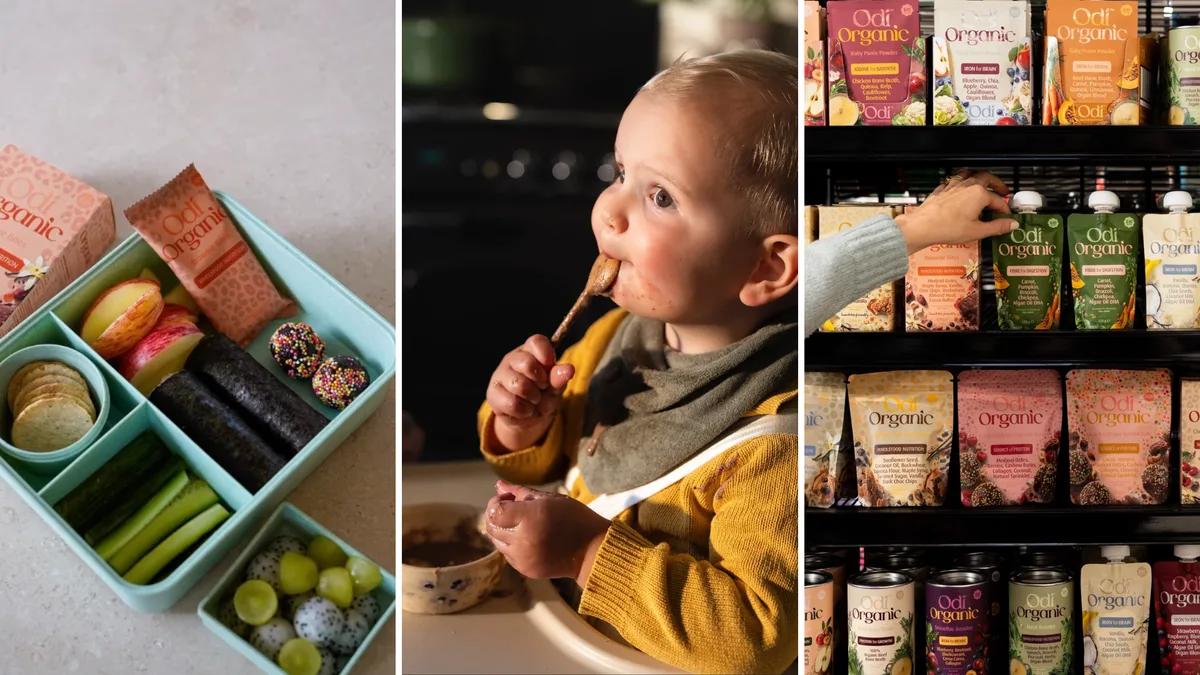
When we think of feeding our little ones during their early years, some parents can be drawn to making their own purees and soft foods to avoid the hidden nasties that come with many store-bought brands.
This is where New Zealand’s fastest growing baby and kids food brand, Odi, is changing the way Aussie parents think of meal times.
Recently landing on Australian shores, the children’s food brand brings a different approach to convenient options for busy parents.
Because we know that parents would much rather be spending quality time with their kids then spending it in the kitchen.
Shifting the focus toward a nutrient dense ingredient list, Odi is changing how our youngest are getting their daily food intake.
Many of Odi’s competitors are filled with sugar and focus primarily on masking nutrients with sweetness.
By creating a healthier alternative to convenient baby food , Odi isn’t telling parents to ditch the grab and go style food pouches entirely.
They are just asking those with busier lifestyles to stop and take a second to investigate what is actually inside the pouch.
It was founded by clinical nutritionist, nurse and mum-of-four Gina Urlich, after she began questioning whether foods marketed specifically for babies and children were delivering the nutrition parents assumed they were.“Parents should be able to pick up a product made for their baby or child and trust that it has been formulated around what growing bodies actually need,” Gina said.“But ‘healthy’ doesn’t necessarily mean nutritionally balanced. A product can be organic, natural or made predominantly from fruit and still not provide meaningful amounts of nutrients such as iron, protein, iodine or omega-3.”
Research conducted by the Australian government indicates that commercial infant food is a major contributor of children’s daily sugar intake and their diets.
The national infant-feeding guidelines recommend first foods be iron-rich and with some pouches and purees containing the equivalent of five teaspoons of sugar, I’m sure you can put the puzzle pieces together.
It all comes down to creating a healthy balance — something that isn’t too rich with fruit that make the taste of the baby food subsequently too sweet or something jam packed with hidden nasties like chemical contaminants or toxic heavy metal traces.
“When I started looking closely at the category, I kept coming back to the same question: where are the nutrients? Babies and children have enormous nutritional needs relative to the amount of food they can physically eat, so every mouthful is an opportunity,” Gina added.
“We wanted to create food that makes those mouthfuls count. That meant starting with nutrient density and building the product from there — rather than starting with sweetness, shelf life or what is cheapest to manufacture.”
5News aggregated this summary from the outlet’s public feed. The full article, with all the context, is on 7news.com.au — the content belongs to 7NEWS Australia.