Data centre pipeline doubles as national power use to rise 40% over decade
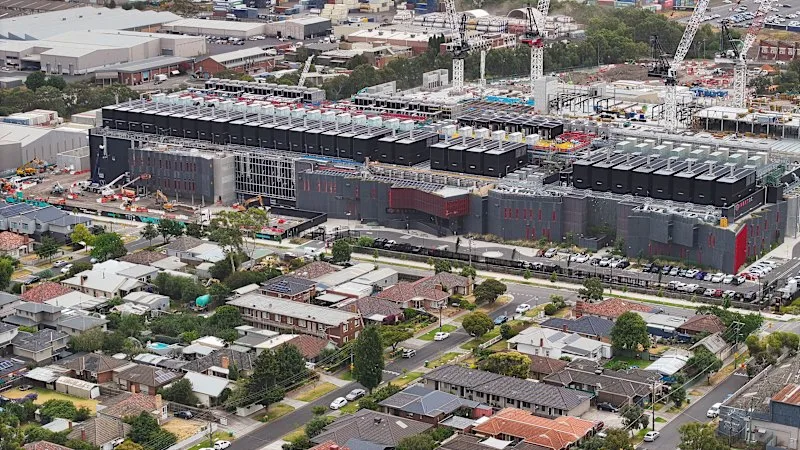
The number of Australian data centres in development has doubled since 2025, but their strain on the nation’s power supply is expected to accelerate even further over the next decade.
The rapid growth of the artificial intelligence industry has resulted in data centres accounting for 3 per cent of the nation’s energy consumption. However, their demand will grow to 13 per cent by 2035, according to the market operator’s latest report into the stability of the grid.
On Tuesday, the Australian Energy Market Operator (AEMO) will release its Electricity Statement of Opportunities report providing a 10-year outlook on whether there will be enough energy to meet demand and how reliable the network will be.
A copy of the document released to The Age ahead of its official publication forecasts consumption across the National Electricity Market will grow by more than 40 per cent, jumping from 176 terawatt hours in 2025-26 to 250 terawatt hours in 2035-26. This figure excludes energy consumed by homes and businesses “behind the meter” from their own solar and battery systems.
The increase will be driven by the electrification of homes, businesses and industries, as well as the rise of data centres which have become a political flashpoint in Australia and abroad.
AI companies rely on the centres for their business models, sparking a flurry of interest from governments and developers seeking to cash in on the massive investment. They have also sparked environmental issues and pushback from local communities.
AEMO’s report estimates there are 225 data centres in development this year, up from 97 in 2025.
Electricity consumption from data centres is forecast to be almost seven times higher by 2035, increasing from 5 terawatt hours now to 34 terawatt hours. This mean they would use 13 per cent of power supplied to the system, compared with 3 per cent now.
However, AEMO noted there was a stark difference between the number and scale of proposed data centres, and what ended up being delivered.
AEMO found that 36 per cent of known projects listed in 2025 went on to be cancelled, including those that had agreements in place to connect to the grid. And the centres that were operational during the first three months of 2026 used only 26 per cent of the total energy capacity to which they had access.
Adding to the expected squeeze on the system, about 15 gigawatts of power generation from coal and gas will be lost over the decade as electricity usage rises at a rapid rate. This includes the anticipated closure of power stations at Yallourn in 2028, Gladstone and Eraring in 2029 and Loy Yang A in 2035.
But AEMO’s outlook was positive about whether the grid could handle the increased consumption for the rest of this decade, and it did not forecast any reliability gaps, where demand outstrips supply, out to 2030.
This has been driven by 9 gigawatts of storage and generation that entered the system at full capability last financial year, a doubling of the year before.
Another 40 gigawatts of projects are anticipated or committed to be delivered by the early 2030s, more than half the current 77-gigawatt capacity of the National Electricity Market.
5News aggregated this summary from the outlet’s public feed. The full article, with all the context, is on www.brisbanetimes.com.au — the content belongs to Brisbane Times.