Waleed Aly believes liberalism is in trouble, but his argument leaves us in a bind
Liberalism is in trouble.
Its underlying ideas still have some popular resonance, but they attract little support in mainstream politics or public discussion.
No major party in the Anglophone liberal democracies consistently relies on traditional liberal principles, which are contested by movements on both the right and left of politics.
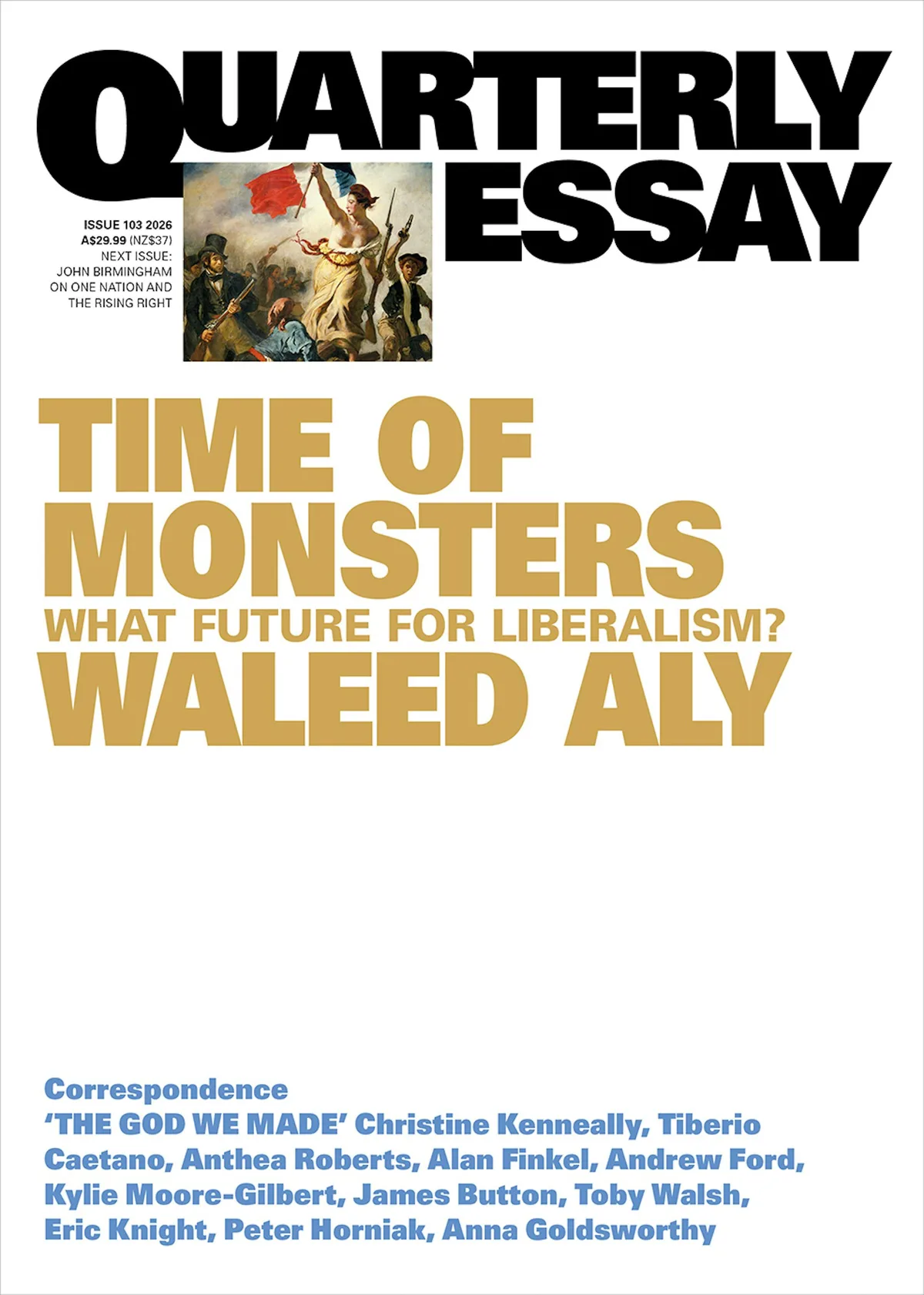
How did this happen and how should we respond? Review: Time of Monsters: What Future for Liberalism? – Waleed Aly (Black Inc.) Waleed Aly takes up the problem in Time of Monsters: What Future for Liberalism? , the latest instalment in Black Inc.’s long-running Quarterly Essay series.
In doing so, he joins numerous others who are worried about the fate of liberalism in an age of polarisation and political discontent.
There is a growing literature on liberalism’s current difficulties and future prospects, including Mark Lilla’s The Once and Future Liberal (2017) and Francis Fukuyama’s Liberalism and Its Discontents (2022).
My own contributions to the debate include The Tyranny of Opinion (2019) and How We Became Post-Liberal (2024).
Why are we all so worried? Throughout Time of Monsters, Aly makes clear that we are living in a post-liberal political environment, even as liberal institutions, such as independent courts, survive and play their assigned roles.
Though Aly is unwilling to declare liberalism dead, he states: “I do think liberalism is in trouble for reasons that it fails to understand.” He senses “deep disquiet” within Australia and other liberal democracies: a feeling, manifested on both sides of politics, that the conventional order has failed and is beyond reform.
Liberalism and its commitments Let’s go back a step.
What is liberalism in this context? As Aly makes clear, it is not really a unified ideology or political theory.
Liberalism is more a tradition or a tendency in politics, which has its roots in early European modernity, but which took a distinctive form during the 19th century in the wake of the Age of Enlightenment .
In Time of Monsters, Aly offers a useful account of liberalism’s foundational commitments to individual freedom, democratic politics and the equality of all citizens.
Philosophers Benjamin Constant , John Stuart Mill and other great contributors to liberal thought argued for freedom from many constraints: not only those imposed by governments, but those demanded by a society’s prevailing attitudes and sensibilities.
5News aggregated this summary from the outlet’s public feed. The full article, with all the context, is on theconversation.com — the content belongs to The Conversation Australia.