How underwater ‘booms’ could provide earlier warning of deadly volcanic tsunamis
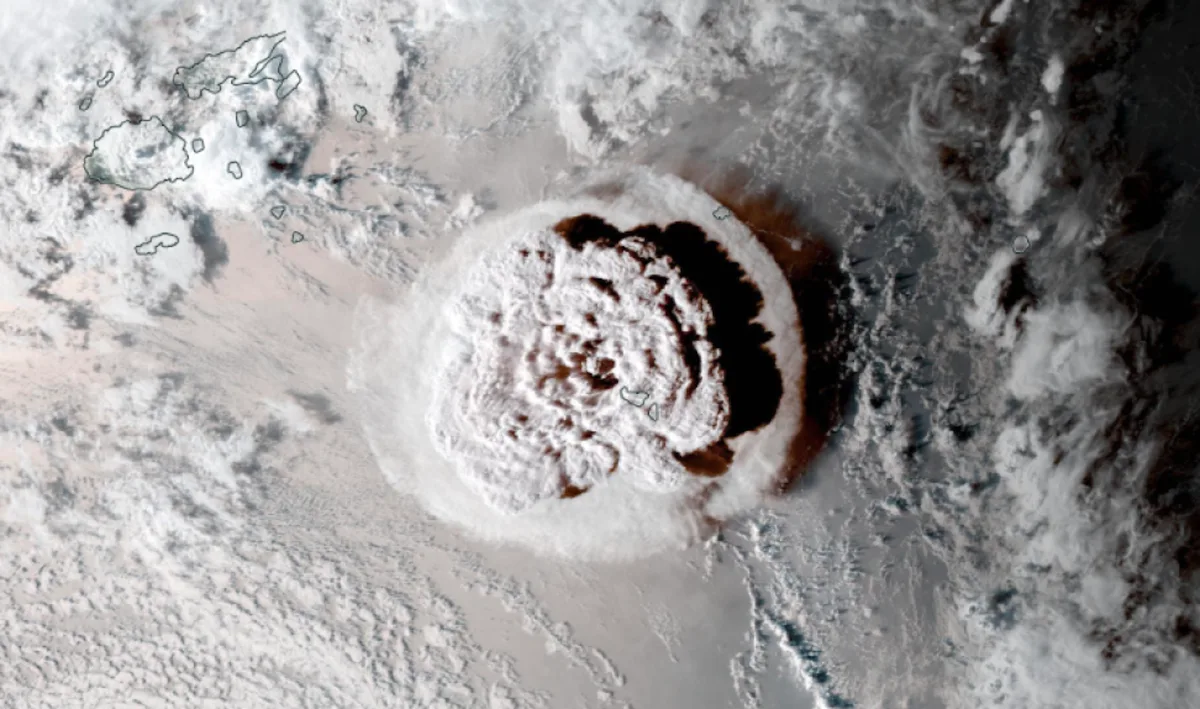
NASA Worldview The massive January 2022 eruption of Hunga volcano in the Kingdom of Tonga took the world by surprise.
It blasted a plume more than 50km into the atmosphere , sent pressure waves around the globe and generated a series of tsunamis , devastating parts of Tonga and killing at least three people.
But one of the most important things we’ve learned since this historic event is that these tsunamis did not all stem from the same cause .
The first were generated by enormous explosions during the opening stages of the eruption.
On nearby Tongatapu, waves with run-ups of one to four metres began arriving within minutes .
Then, more than an hour later, something much more destructive happened.
A tsunami with run-ups reaching 18 to 40 metres struck islands within 100km of Hunga, destroying resorts and villages across southern and central Tonga.
Our newly published research shows this largest tsunami was generated not by another explosion, but by the sudden collapse of the volcano’s caldera – and that the collapse produced an underwater sound detectable thousands of kilometres away.
That finding could point to a new way of warning communities about some of the most unpredictable types of tsunamis on Earth.
Listening to an underwater volcano Monitoring submarine volcanoes is notoriously difficult.
There are hundreds scattered around the Pacific “ Ring of Fire ”, yet we know relatively little about their state of activity – and even less about how to respond when they erupt.
Satellites can detect changes in heat and gas emissions, along with eruption plumes when clouds don’t obscure the view.
These observations can provide timely warnings of eruptions and help protect aircraft.
But satellites cannot tell us whether a deadly tsunami is on its way.
5News aggregated this summary from the outlet’s public feed. The full article, with all the context, is on theconversation.com — the content belongs to The Conversation Australia.