When should you be able to access your super? Battle lines are being drawn
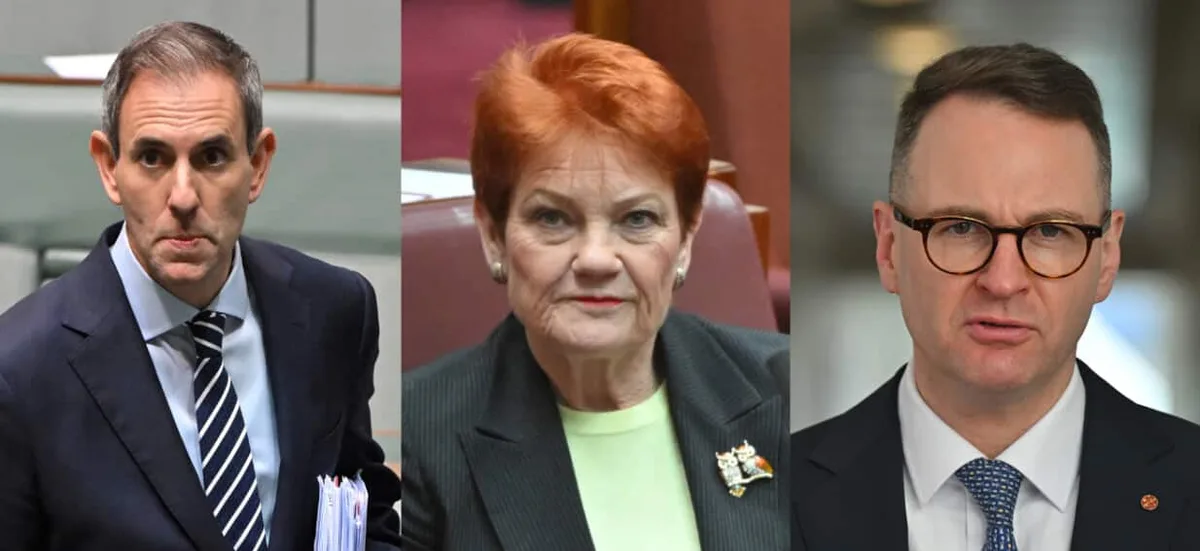
Political battle lines are being drawn over superannuation, with Labor vowing to defend the retirement savings system as the Liberal Party and One Nation attack it as a failure.
On Monday, Treasurer Jim Chalmers signalled super could become a political issue at the next federal election.
"The stakes are high at the next election for a whole range of reasons, and one of them now is the future of Australia's world-leading compulsory superannuation system," Chalmers told reporters as he arrived at Parliament House.
"The Liberals, the Nationals, and One Nation would end compulsory superannuation as we know it. Their policy and their ideology on super would absolutely decimate the economic security and retirement incomes of millions of Australian workers.
"They share a dangerous and divisive anti-worker, anti-super ideology, and if this plays out after the next election, Australian workers will be much worse off."
Your trusted source for staying up-to-date with the world around you. Get free daily news updates and analysis, straight to your inbox.
However a senior Liberal senator later sought to dispute that was the party's ambition.
The stoush began last week when Liberal senator Andrew Bragg declared superannuation an "illiberal experiment".
"It’s one of the biggest public policy failures since federation, in the sense that it hasn’t helped the budget, and it has not really helped many people get off the pension," he told ABC radio on Thursday.
"What it has done is it has created a huge viper's nest for banks and financiers and unions to pilfer, which is why what you saw at the Labor Party conference was now you're going to have super for under 18s."
The Association of Superannuation Funds Australia (ASFA) refuted Bragg's comments, pointing out Australia's age pension expenditure had decreased since the scheme was introduced in 1992.
"Super has meant that even as our population ages, the government's Age Pension bill is going down instead of up. OECD projections have Australia at the lowest public pension spending in the OECD by the mid-2030s," ASFA CEO Mary Delahunty said.
"Super has also meant that reliance on the Age Pension has fallen, with 12 per cent fewer over-65s receiving a part or full Age Pension today than in 2012. This will keep falling as we see the effects of higher super guarantees coming in.
"A lower reliance on the Age Pension is a massive public policy success."
5News aggregated this summary from the outlet’s public feed. The full article, with all the context, is on www.sbs.com.au — the content belongs to SBS News - Latest.