Distant voices: how the revival of ta rē Moriori lets us hear the true history of Rēkohu
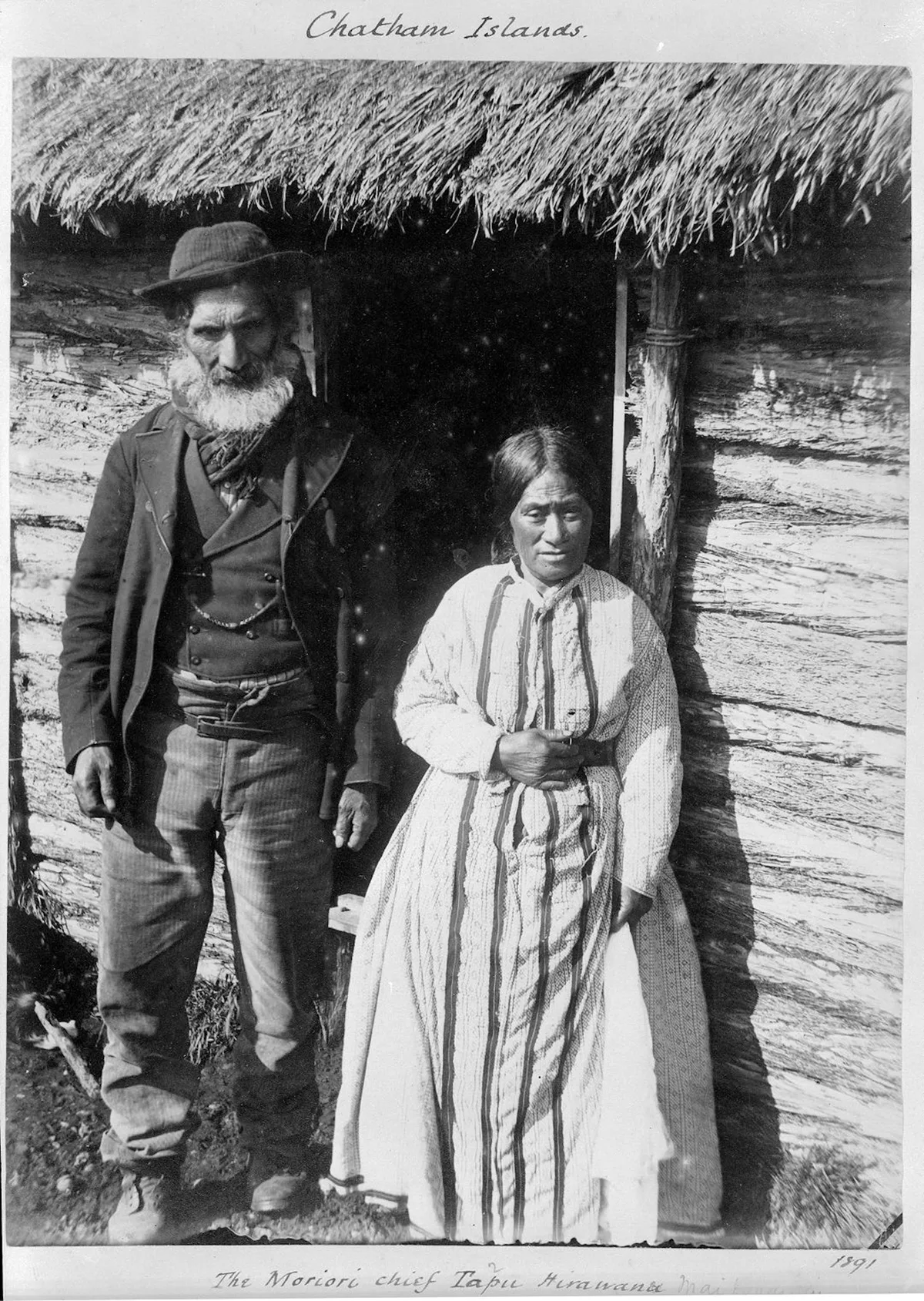
On a recent field trip to Rēkohu, I had anticipated seeing flora and fauna found only in these remote islands, but I had underestimated its rich history and vibrant cultural landscape until I stepped onto the Kōpinga Marae.
On a wall adorned with Moriori carvings and pictures of karāpuna (ancestors) is a framed document – an apology.
Signed by Andrew Little, former minister for Treaty of Waitangi negotiations, it acknowledges how “historical Crown actions or omissions caused prejudice to Moriori and breached the Treaty of Waitangi and its principles”.
Dated February 14 2020, the apology details the Crown’s failure to protect Moriori, release them from enslavement and address the dispossession of their land.
It references the Colonial Museum’s removal of, and trade in, kōimi t’chakat Moriori (human remains).
The Crown also apologised for its role in propagating the false history that Moriori were extinct and had been a racially inferior people – and for the violence and enslavement that caused the loss of language : By the beginning of the twentieth century ta rē Moriori (the Moriori language) as a living language had been lost to Moriori and Aotearoa New Zealand.
For its failure to actively protect this miheke (taonga), the Crown apologises sincerely.
False histories Rēkohu – the Chatham Islands in English, Wharekauri in te reo Māori – is a small corner of Aotearoa New Zealand, 800 kilometres east of the South Island.
Its isolation undoubtedly contributed to the persistence of this mythical history.
The false narrative was spread through the quarterly New Zealand School Journal , established by the Department of Education in 1907 and distributed to children aged 7 to 13.
The initiative of the inspector-general of schools George Hogben, it was an alternative to separate textbooks for history, geography and civics.
In July 1916, the journal published “The Passing of the Mouriuri” (sic), an article claiming the Moriori were a primitive Melanesian people at the bottom of a racial hierarchy.
It promoted the myth they had been driven from Aotearoa New Zealand to Rēkohu by the racially superior Māori.
In this version, the 1835 Māori invasion of Rēkohu resulted in the extinction of the Moriori.
5News aggregated this summary from the outlet’s public feed. The full article, with all the context, is on theconversation.com — the content belongs to The Conversation Australia.