I’ve seen Nepal rise from a natural disaster. Now it must do it again
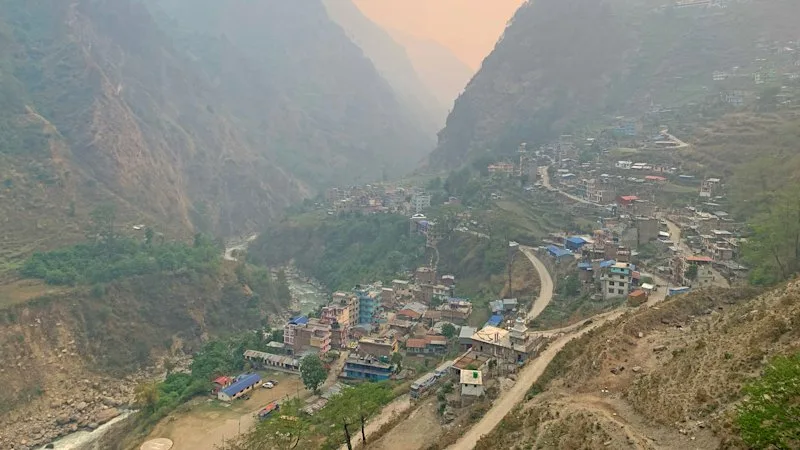
There now seems a cruel irony to the fact that I was in Syabrubesi two years ago to witness Nepal’s ability to recover from disaster. It was May 2024 and I’d come to trek to Langtang Village almost 10 years after it was wiped from the map by a massive avalanche, killing more than 240 villagers and trekkers.
The trail to Langtang Village and the Langtang Valley begins in the ramshackle town of Syabrubesi, on the bank of the Trishuli River. The Chinese border post, captured so terrifyingly in footage from this week’s flood, is just 18 kilometres upstream. Syabrubesi sat squarely in the path of the floodwaters.
The drive to Syabrubesi, due north of Kathmandu, is notorious – eight hours, bouncing around like popcorn, to cover little more than 100 kilometres. With a trekking guide arranged through a Nepali friend in Kathmandu, I stayed the night in the New Red Panda Hotel, a cheap and colourful family guest house at Syabrubesi’s southern end. It was one of the closest buildings in town to the Trishuli River, and today I watched footage of that wall of water pouring through the narrow, mountain-lined valley and I wondered if the Red Panda had survived.
Tonight I found satellite images of Syabrubesi before and after the flood, and everything in the lower village is gone – the Red Panda, the stores around it and, most likely, the family that welcomed me to Syabrubesi and their guest house.
Acclimatising on the slopes above Syabrubesi on the evening of my arrival, I looked down on a river without menace, flowing fast but not furious along its bouldery bed, the sky and mountains smudged with the smoke of a bushfire that was wreaking its own havoc on Nepal’s landscape. The vision we’ve watched over recent days is the Trishuli River as I could never have imagined it.
To reach Langtang Village from Syabrubesi we walked hard for two days, setting out across a suspension bridge over the Trishuli that is surely now washed away. Approaching the new, relocated Langtang Village you must trek across a river of rubble dozens of metres high. It’s the avalanche path that obliterated Langtang Village on April 25, 2015.
Like this week’s flood, the avalanche was triggered when an earthquake fractured a glacier high on the slopes of the Langtang Range. The ensuing disaster was just one of a litany of horrific events to have struck Nepal in the 21st century, from earthquakes and civil war to the massacre of its royal family. With each blow, this country I’ve so grown to love has seemed to emerge deeply scarred but resolute.
Buried beneath my feet as I crossed the rubble in the Langtang Valley was the original Langtang Village and the bodies of all those killed in the avalanche, still unable to be recovered. Walking over it was a moment as painful and sobering as any I’ve experienced on a trail.
The first lodge you come to in the new Langtang Village, just beyond the avalanche path, is the Valley View Lodge, where over dinner I met lodge owner Tsering Lama.
5News aggregated this summary from the outlet’s public feed. The full article, with all the context, is on www.smh.com.au — the content belongs to Sydney Morning Herald - World.