The number that could trip up Australia if we don't get it right
Share your feedback and help us improve this feature. Read more about how we use AI at SBS here.
After the COVID-19 pandemic, the number of migrants flowing into Australia increased to "unbelievable levels", says immigration expert Abul Rizvi.
Numbers had fallen sharply during the pandemic years as lockdown measures halted international travel. By March 2021, quarterly migrant arrivals had dropped to a fifth of pre-pandemic levels in Australia.
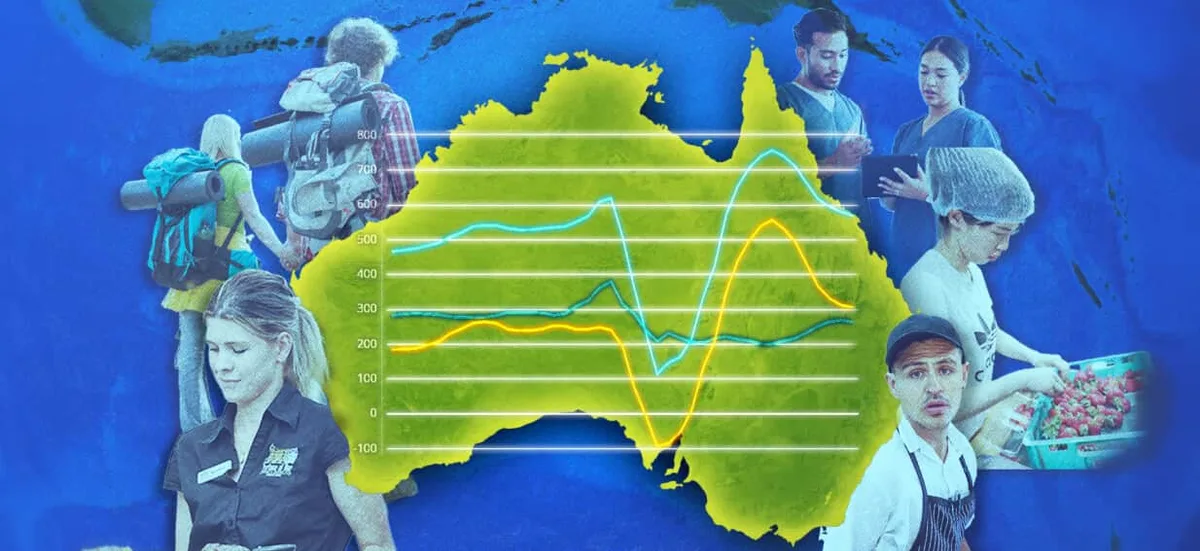
Rizvi, a former deputy secretary at the Department of Immigration, says no one was expecting net overseas migration (NOM) — which also factors in migrant departures — to reach a record annual high of almost 550,000 people as it did in 2023.
Almost three years later, Australia is still adjusting to that influx, and politicians across the ideological divide are now fixated on setting a new figure.
Your trusted source for staying up-to-date with the world around you. Get free daily news updates and analysis, straight to your inbox.
The recent debate over Australia's NOM has been dominated by One Nation, which is calling for substantial cuts to immigration.
But research shows that opposition to immigration is often concentrated in areas with the fewest migrants.
Experts say these areas could also be among the worst hit by wide-ranging cuts, such as those proposed by One Nation.
Temporary migrants have historically been a driver of population growth in Australia. Typically, more migrants arrive each year than those who leave, increasing the overall population over time.
One Nation leader Pauline Hanson has accused Labor of using migration to prop up headline economic numbers, saying in a media release: "Australians pay the price through lower wages, higher rents, unaffordable homes and stretched services."
To address these issues, Hanson says the number of migrants should be reduced, insisting that "international student numbers must be slashed". She has also called for the skilled migration program to be more targeted, and immigration from countries on the 'Do Not Travel' list to be halted.
The latest Department of Home Affairs figures show 2.9 million temporary visa holders were living in Australia on 31 July 2026.
The largest single group was New Zealanders holding 'special category visas', which accounted for 20 per cent (736,509) of temporary visa holders.
5News aggregated this summary from the outlet’s public feed. The full article, with all the context, is on www.sbs.com.au — the content belongs to SBS News - Latest.