‘Tell your child you believe them’: Why young people start to doubt their own bodies
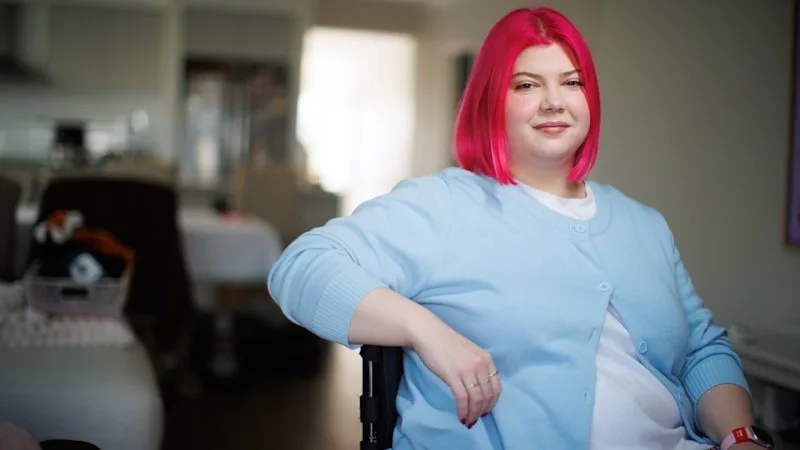
For Jaimie Sheil, an outcome more terrifying than being diagnosed with some awful complication is that when she arrives at an emergency department, doctors will tell her that she is just fine.
“It sounds ridiculous,” said Sheil. “But I was so afraid that if I voiced my concerns about a new symptom, and it turned out to be nothing, I would become the boy who cried wolf.”
Sheil is among young adults, children and teenagers with severe chronic conditions whose symptoms have been fobbed off as just a normal part of growing up, or misdiagnosed with mental health or behavioural issues, new University of Sydney research has found.
The study, published in the Journal of Applied Youth Studie s, drew on in-depth interviews with 33 young Australians with chronic illness, including autoimmune conditions, endometriosis, arthritis, Crohn’s disease, and neurological conditions.
“Even after they get a diagnosis, that thing in the back of their heads saying, ‘maybe you’re not actually that sick, maybe you’re being dramatic, maybe it’s not so bad’, doesn’t go away,” said lead researcher Dr Imogen Harper at the Sydney Centre for Health Societies.
Sheil was 23, healthy and studying astrophysics when a strange numbness crept across her feet.
It would take seven months and repeatedly having her symptoms dismissed as anxiety before she was diagnosed with a rare autoimmune disorder called chronic inflammatory demyelinating polyneuropathy (CIDP), which attacks the protective tissue surrounding peripheral nerves.
By then, most of her legs and hands were numb, and she was reliant on a wheelchair.
“We just want to be believed, and every time the symptoms we’re worried about turn out to be no big deal, it counts against us,” Sheil said.
Harper said assumptions equating youth with physical health had led to years-long diagnostic delays for many young people with chronic conditions.
Estimates suggest as many as one in five Australians under 18 will experience chronic pain at some point.
“The predictable reaction to this is, ‘this can’t possibly be right’, because it is so incongruent to the way we think about children and teenagers’ health,” Harper said.
As a result, early signs of illness were overlooked or explained away, and young people came to distrust their own perceptions of their bodies, ignoring worsening symptoms and avoiding seeking help, Harper said.
The young people interviewed recalled encounters with doctors who told them their symptoms were the normal pangs of growing up, or struggling to get teachers to take their symptoms seriously.
5News aggregated this summary from the outlet’s public feed. The full article, with all the context, is on www.smh.com.au — the content belongs to Sydney Morning Herald - National.