The politics of migration hides Australia's real problem
Everyone now understands that growing the economy only by increasing the number of people, while individuals feel worse off, is a recipe for unhappiness and dissent.
Aggregate growth is a statistic, but individual decline is a vote. The political solution? Fewer people.
That's because those in focus groups and answering polling questions complain about the number of people, who they can see, rather than the reason they are worse off: weak productivity, which they can't see.
As a result, we now have three significant political parties instead of the usual two.
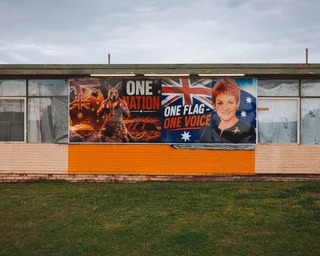
The third newcomer, One Nation, is an anti-immigration party harvesting unhappiness and dissent. The other two have put on some anti-immigration clothes and have got on the grievance catwalk as well.
The starting number for the fashion parade is 300,000, roughly the current level of net overseas migration (NOM). We learnt on Thursday that population growth in the year to March was 392,700, of which 292,100 were migrants.
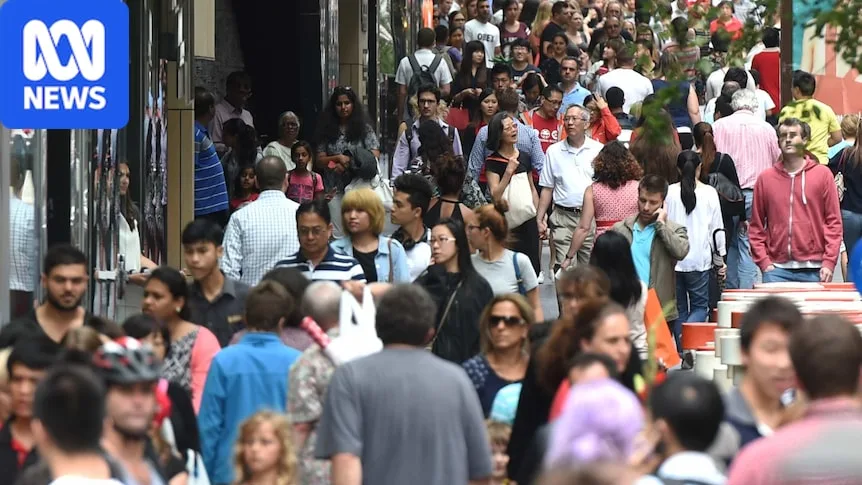
That is 100,000 a year more than it was between the Global Financial Crisis (GFC) and the COVID pandemic and 200,000 more than in the decades before that. ABS data shows that over the past four years population growth has averaged 400,000 a year or 1,100 a day. The result is a noticeable crowding of the cities and a 23.5 per cent increase the national median house price.
Population growth has produced average annual GDP growth since 2010 of 2.4 per cent, while GDP per capita has grown 0.5 per cent and real disposable income just 0.1 per cent and has often been negative, according to the ABC data.
All agree that we need as much, if not more, skilled migration, preferably from those who can handle a nail gun or a trowel.
That means all three plans impact farmers and universities because the only flexibility available to reduce NOM lies in the unskilled visitors who pick fruit and vegetables . These workers are needed because Australians don't want to do this work. Students who pay higher tertiary education fees are needed because governments have cut university funding.
One Nation is closest , offering a pledge and a commitment. The Coalition has an elastic target tied to housing . Labor has converted a forecast into a target.
In a media release to go with his National Press Club speech on Thursday, delayed six weeks while he presumably negotiated with agriculture and education ministers over the impact the changes would have on their constituents, Home Affairs Minister Tony Burke said the plans were "designed to deliver the Net Overseas Migration forecasts in the budget of 245,000 in this financial year and 225,000 in 2027/28".
Treasury must do migration forecasts for the budget every year and they are always wildly wrong because this is the first time the minister in charge of migration has taken any notice of them.
Meanwhile two days earlier, in an exquisitely uncomfortable coincidence, the Canada announced a stunning set of policies designed to lift productivity.
5News aggregated this summary from the outlet’s public feed. The full article, with all the context, is on www.abc.net.au — the content belongs to ABC News Australia - Politics.