Make ‘em laugh: how One Nation uses comedy to normalise harmful ideas
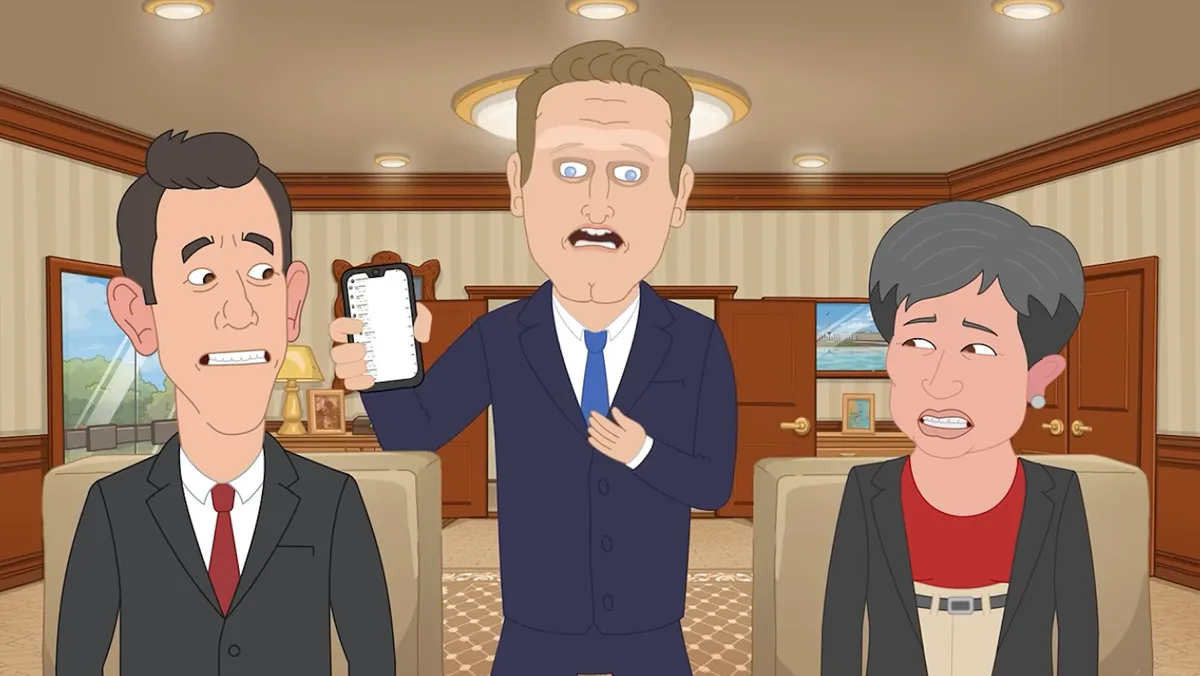
Pauline Hanson's Please Explain/YouTube The political firestorm ignited by an episode of One Nation’s satirical animated series Please Explain was one of those rare moments in Australian politics that has brought together Labor, the Coalition, Greens and the crossbench.
The July episode “Don’t Be Hastie” depicted Western Australian Liberal frontbencher and former Australian Defence Force member Andrew Hastie.
In it, he’s labelled a “traitor” for testifying against alleged war criminal Ben Roberts-Smith and supporting Labor’s “evil hate speech legislation”.
This sparked a fierce response from Hastie.
He called Pauline Hanson and Barnaby Joyce “lying cowards” and demanding they delete the video or explain why he and other veterans are being called traitors.
The video also prompted a spirited response from Tasmanian senator and former soldier Jacqui Lambie.
She described the episode as “absolutely disgusting” and called Hanson “nothing less than a bloody coward”.
While the Coalition has wobbled on how to respond to the unprecedented rise of One Nation, Hastie has been one of the few in the Liberal Party to take the fight directly to Hanson .
But this episode reveals more than just a political scuffle.
It provides a window into the role of humour in contemporary far-right politics.
As the far right continues to surge in Australia and internationally, understanding the creative and unconventional ways they try to mainstream and normalise their ideas is increasingly important.
Please explain… political cartoons Please Explain is a 2D animated online cartoon produced by Stepmates Studios for One Nation since 2021.
One of its co-creators, Mark Nicholson, is standing as a candidate for the party in the Victorian state election in November.
The series, which draws on the tone and style of the irreverent US animated sitcom South Park , is now in its fourth season.
5News aggregated this summary from the outlet’s public feed. The full article, with all the context, is on theconversation.com — the content belongs to The Conversation Australia.