Head of European Investment Bank eyes Canada opportunities as Carney pushes EU ties
The president of the European Union's investment bank says "the time is ripe" to deepen its co-operation with Canada by exploring how to finance Canadian projects — comments that come as Prime Minister Mark Carney pushes for more EU ties.
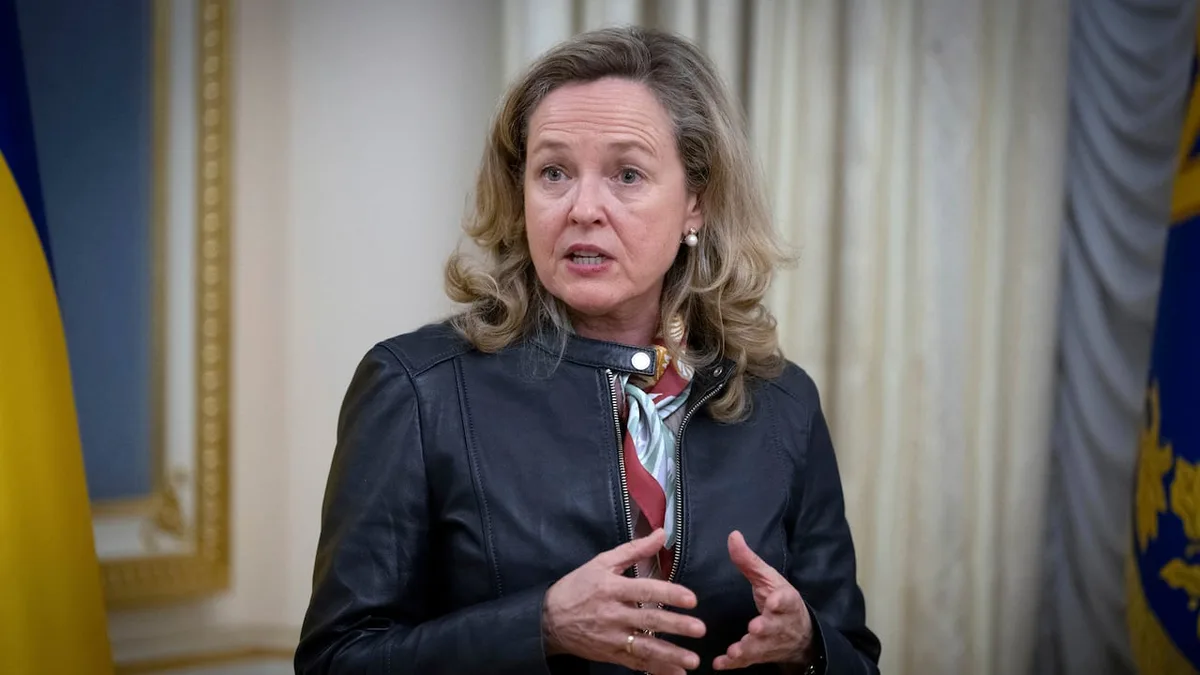
"We haven't been very active in Canada until now," said Nadia Calviño, the president of the European Investment Bank (EIB) in an exclusive interview on Rosemary Barton Live that aired Sunday morning.
But Calviño, who is visiting Canada to meet with various federal ministers, said her trip "clearly shows that in Europe, we put our money where our mouth is."
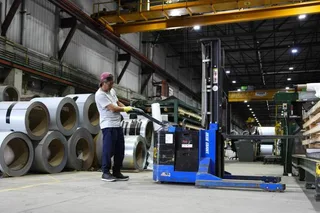
Calviño said the first area where there's a shared interest between the two parties is critical minerals. She also said the EIB is exploring how to get a framework agreement that would enable the bank to invest in critical minerals "and beyond."
"I think the key idea is one that Prime Minister Carney is sharing, which is strategic alliance and strategic co-operation," Calviño told host Rosemary Barton. "We speak the same language, we share the same values."
Asked whether the EIB could invest in future oil and liquid natural gas pipelines, Calviño said the bank has "consolidated its role as the climate bank" and is "much more interested in new technologies" and green energy generation.
Calviño's comments come on the heels of Carney's Canada Investment Summit, which the federal government says attracted nearly $500 billion in new investment into Canadian businesses and infrastructure.
Plus, Carney is pushing Canada to deepen its ties to the European Union, though exact details of his vision are unclear.
Canada won't pay directly into EU budget under Carney's plan: ambassador-designate
On Thursday, Carney addressed the European Parliament and outlined a goal to secure "seamless, digital" trade in non-agricultural goods and services, co-operation on computing capacity and AI safety protocols, and exploring an integrated market for financial services.
However, opposition parties have been questioning whether Canada will need to make concessions, particularly after European Commission President Ursula von der Leyen said Canada could become an EU "associate member" — a term that is not a legal designation.
Calviño said she wouldn't waste any time on "the process, the procedures, the names [and] the headlines" and said the EIB is "a very practical organization."
"We do investments. We put money. We support projects. We make things happen. And I think that's the approach of Canada, which very much resonates with the way we look at things," Calviño said. "I would say the sky's the limit."
In an interview with CBC's The House this week, Canada's ambassador-designate to the EU, Jonathan Wilkinson, ruled out Canada paying directly into the 27-nation bloc's budget.
5News aggregated this summary from the outlet’s public feed. The full article, with all the context, is on www.cbc.ca — the content belongs to CBC Politics.