After the Fire Comes the Rotting Meat. The Province No Longer Helps
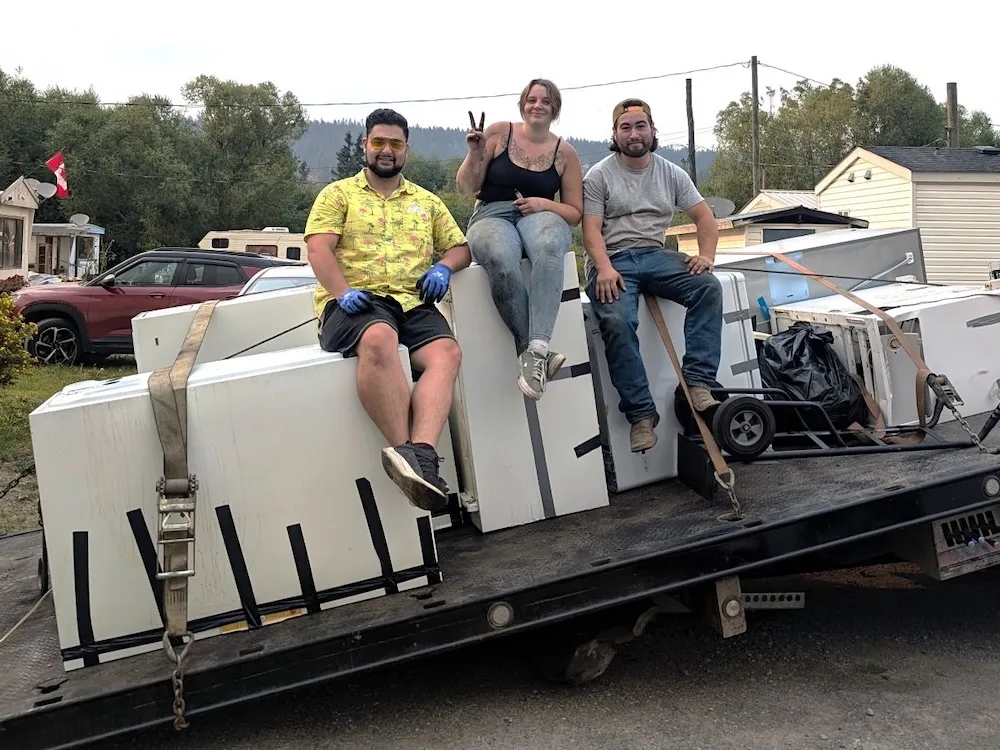
When Becky Spreng fled her home north of Clinton, she had two freezers full of meat. One had a full quarter of a cow; the other was stocked with pork and chicken. It has spent the last month rotting.
On Thursday, as she prepared to finally return home, Spreng didn’t want to consider the mess.
“My roasts were Saran wrapped and then paper wrapped, so all of that blood — eugghh,” she said.
Thousands of others around B.C. will have found themselves in the same position by the time summer ends. And as many have prepared to return home this year, they’ve been told that they’ll have to clean their freezers and fridges out themselves because the province has stopped funding the curbside pickup of nightmare appliances and their contents.
In both Boston Bar and Clinton, an appliance industry group swooped to the rescue at the last moment after residents expressed disgust and outrage. But the stinky-fridge problem highlights continued struggles for British Columbia’s provincial emergency management bureaucracy five years after 2021’s wildfires and floods prompted the promises of more support.
The contents of freezers can sustain only a couple of days without power before they should be thrown out. Before this year, there was an established playbook for what happened with freezers following an evacuation.
Although residents were urged to consult their insurer for guidance on how to handle household damage linked to their evacuation, local governments also provided help, often hiring contractors to pick up sealed freezers and fridges from the curb. Clinton residents returning after fleeing 2017’s Elephant Hill fire were among those who were able to dispose of their freezers in such a manner.
Emergency responses are handled by local governments in British Columbia but financed by the provincial government, and Victoria underwrote the pickup operations.
Governments supported the disposal of fridges and freezers because of the hazard the contents could pose to residents during the disposal process, Jamie Vieira, the director of the emergency operations centre for the Thompson-Nicola Regional District, told The Tyee. The regional district, which spans a massive fire-prone area around Kamloops, has overseen the return of residents following long-term evacuations on numerous occasions over the last decade.
This year, however, local governments say the province told them that it would no longer cover the hefty fridge and freezer retrieval and cleanup costs.
“Our understanding is that at one time it was designated as a serious health risk [for residents] to clean spoiled food out of their fridge or freezer,” Vieira said.
Vieira and other emergency management officials said that over the winter, health officials deemed it safe for residents to clean and dispose of freezers and fridges after long power outages. According to Vieira and others, the changing health guidance led the province to declare it would no longer pay for the disposal of the freezers and their contents.
A spokesperson for the Interior Health Authority, however, says health guidance has not actually changed.
5News aggregated this summary from the outlet’s public feed. The full article, with all the context, is on thetyee.ca — the content belongs to The Tyee.