How do you take T. rex's temperature? These scientists did it
Scientists have long discussed whether and which dinosaurs were warm-blooded. Now, researchers say they have used chemistry to take the temperature of two T. rexes.
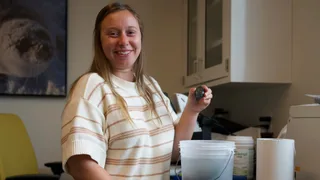
It wasn't easy, acknowledged Aradhna Tripati, a professor and geochemist at the University of California, Los Angeles. She co-authored the research published Wednesday in the journal Science Advances , and explained it to CBC's Quirks & Quarks ahead of an interview with host Bob McDonald.
"You would not want to go to a T. rex and stick a thermometer in its mouth or in its armpit or in its butt, you know, the way you might take temperature in a person or most other animals."
Nor could you, considering they went extinct about 66 million years ago.
Instead, scientists used a technique that relies on chemistry that varies with temperature, and leaves signals in certain hard tissues such as tooth enamel and eggshells.
Those materials contain a mineral called bioapatite, where carbon atoms bond with oxygen. A heavier kind of carbon atom (carbon-13, which has one more neutron than carbon-12) bonds preferentially with a heavier, rarer kind of oxygen atom (oxygen-18, rather than oxygen-16). This is more prevalent at lower temperatures, where the bonds are more stable.
By comparing the amount of "isotope clumping" in living animals with different body temperatures, scientists can estimate the body temperature of extinct animals, including dinosaurs.
In fact, UCLA scientists did that a decade ago using eggshells from titanosaurs and oviraptors, and concluded that they were both warm-blooded .
They had also analyzed teeth from some plant-eating dinosaurs , such as brachiosaurs, which have thick enamel for grinding plants.
But tyrannosaurs have very thin tooth enamel, Tripati said, so getting enough tooth enamel for the analysis was tricky.
The researchers worked on the technique with more common teeth from the megalodon, an ancient giant shark, until they could successfully do the analysis with very small samples.
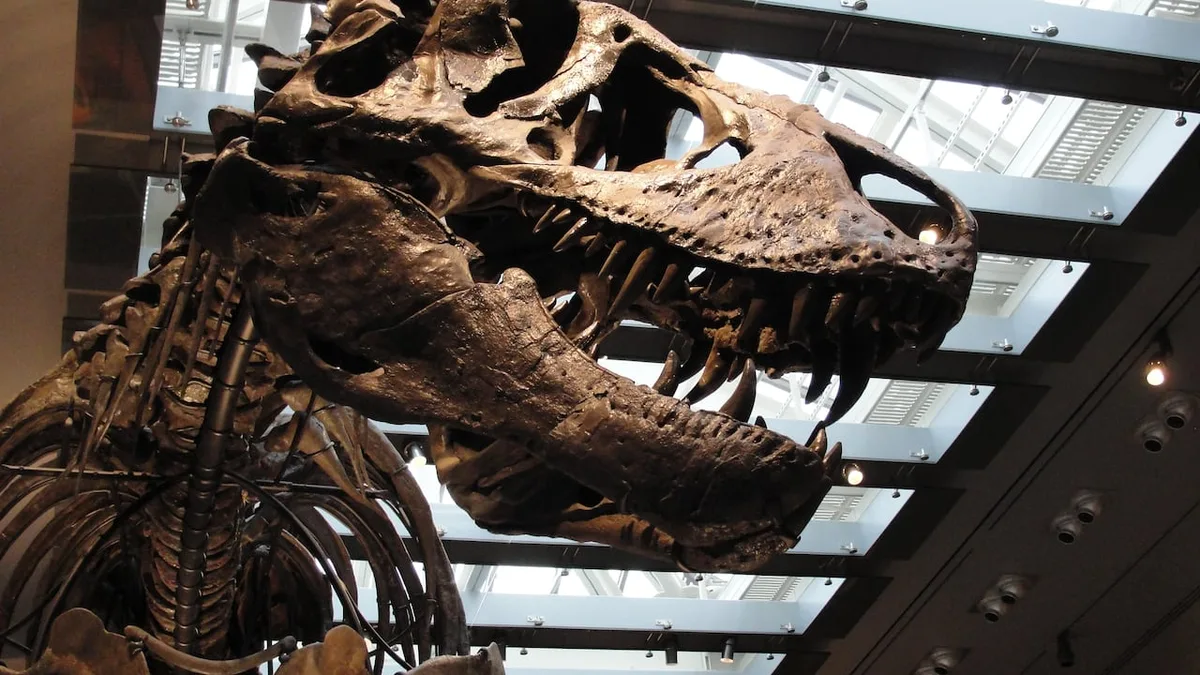
Then they requested some tooth enamel from Thomas the tyrannosaur, a young adult T. rex skeleton displayed at the L.A. County Natural History Museum.
"They wouldn't let us pull a tooth off and just, you know, destroy it," Tripati recalled. But the scientists were permitted to shave a little bit off the sides of two teeth – "a pinch of salt amount."
They also managed to get a T. rex tooth fragment from a specimen identified only by a number.
5News aggregated this summary from the outlet’s public feed. The full article, with all the context, is on www.cbc.ca — the content belongs to CBC Technology.