Why 'red tourism' is winning over China's younger generation
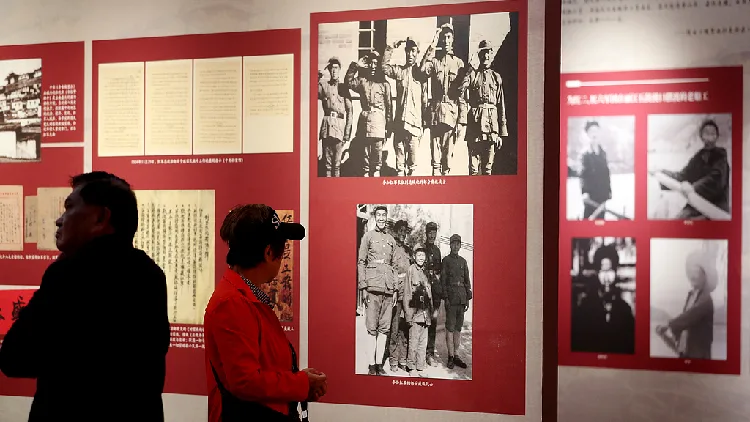
For many young Chinese, the Communist Party of China's (CPC) revolutionary history is no longer just something to be read about in textbooks or viewed from behind glass.
It is becoming an experience — one that can involve walking through historic sites, taking on a role in a wartime scenario or even stepping into a virtual recreation of the Long March.
That transformation is helping fuel a new wave of "red tourism" in China, as young travelers increasingly visit revolutionary sites, memorials and former revolutionary bases.
The trend has gained further momentum this year, which marks the 105th anniversary of the CPC's founding and the 90th anniversary of the victory of the Long March.
The Long March, a historic retreat of the Red Army spanning tens of thousands of kilometers in the 1930s, paved the way for the CPC's eventual defeat of the then-ruling Kuomintang and the establishment of the People's Republic of China in 1949.
During the past summer holiday, many red tourism destinations saw a surge in visitors, with young people making up an increasingly large share.
"Red tourism was particularly popular this summer, with young travelers accounting for nearly 65% of visitors," said Qi Chunguang, vice president of Tuniu, a Chinese online travel agency.
Group tours remain popular, he said, with professional guides and carefully planned itineraries helping visitors get more out of their trips.
The trend is also reflected in online searches.
According to the 2026 Red Tourism Consumption Trends Report released by Tongcheng Travel, searches for red tourism-related products jumped more than 130% year on year in the first half of 2026.
Searches for tickets to revolutionary sites rose 86%, while bookings for red tourism itineraries increased 48%.
Wu Ruoshan, a council member of the Beijing Tourism Society, said the appeal of red tourism among young people stems from both emotional resonance and innovation in tourism products.
"Red tourism is moving from simple sightseeing toward immersive experiences," Wu said, noting that digital technologies and interactive projects are giving young visitors new ways to connect with history.
From watching history to stepping into it Traditional red tourism often centered on visiting revolutionary sites, viewing historical artifacts and listening to guided explanations.
此摘要由5News从媒体的公开信息源汇聚而成。 包含完整背景的全文在www.cgtn.com — 内容归CGTN Politics (oficial)所有。