What does CIFTIS 2026 leave behind after just 5 days?
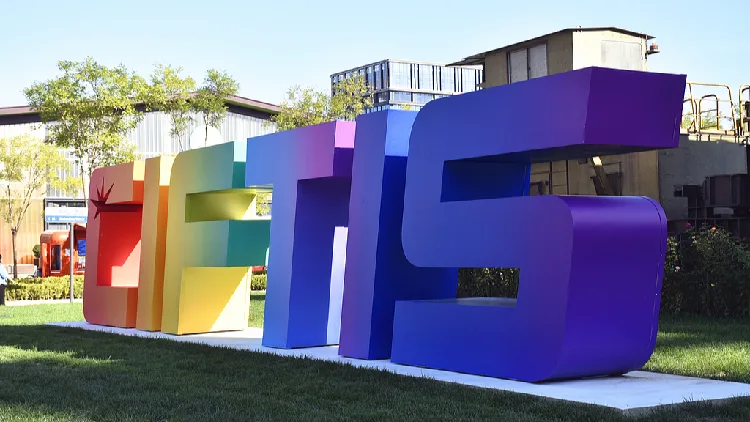
The 2026 China International Fair for Trade in Services (CIFTIS) concluded on September 13 at Shougang Park in Beijing.
Over five days, 90 countries and international organizations, more than 1,800 companies, and 473 Fortune Global 500 and industry-leading enterprises gathered here, with over 190 forums and business matchmaking events held intensively.
As the exhibition booths are dismantled and the crowds disperse, what has this year's CIFTIS truly left behind? On September 10, during the "Beijing Day" series of events, 36 projects were signed at the "Invest in Beijing" promotion conference, with a total value of 44 billion yuan ($6.1 billion).
Beijing's Chaoyang District, home to the largest number of foreign-invested enterprises in the city, ranked first in the city with 6 key projects and a signing scale of 11 billion yuan, covering sectors including advanced intelligent manufacturing, AI computing infrastructure, brain-computer interfaces, pharmaceutical and health funds, and smart cultural tourism.
The list of debuts at this year's CIFTIS is equally substantial.
Over 200 new products and achievements were released during the exhibition, more than 100 of which were global or China debuts.
On September 11 alone, 37 companies and institutions released 81 new achievements.
In the medical field, a medical ultrasound AI large model was exhibited for the first time at a major public event.
In the information and communications technology sector, China's three major telecom operators demonstrated how they are taking their AI token business global—moving beyond laying cables to exporting intelligence.
Their AI agents—China Telecom's TeleAgent, China Mobile's MobileClaw, and China Unicom's UniClaw—made their collective debut, alongside 10 service packages covering multimodal AI token services, computing-power empowerment for manufacturing, AI quality inspection, and secure cross-border data circulation.
According to a PwC report released in June, China ranks among the global leaders in effectively applying AI across the real economy.
More overseas clients are now incorporating China's open-source AI ecosystem into their digital upgrades.
The structural changes hidden in the data may be the deeper signal this CIFTIS has left behind.
According to Ministry of Commerce, China's total services imports and exports reached 3.8 trillion yuan in the first half of 2026, up 8.3% year on year.
此摘要由5News从媒体的公开信息源汇聚而成。 包含完整背景的全文在www.cgtn.com — 内容归CGTN Business (oficial)所有。