APEC opportunity: Can Hong Kong become Asia's capital connector?
Editor's note: He Jingyi is a CGTN business reporter.
The article reflects the author' views and not necessarily those of CGTN.
As Asia's economic landscape becomes more fragmented, the question is not simply how to stay open, but how to stay connected—and where capital can flow across increasingly complex borders.
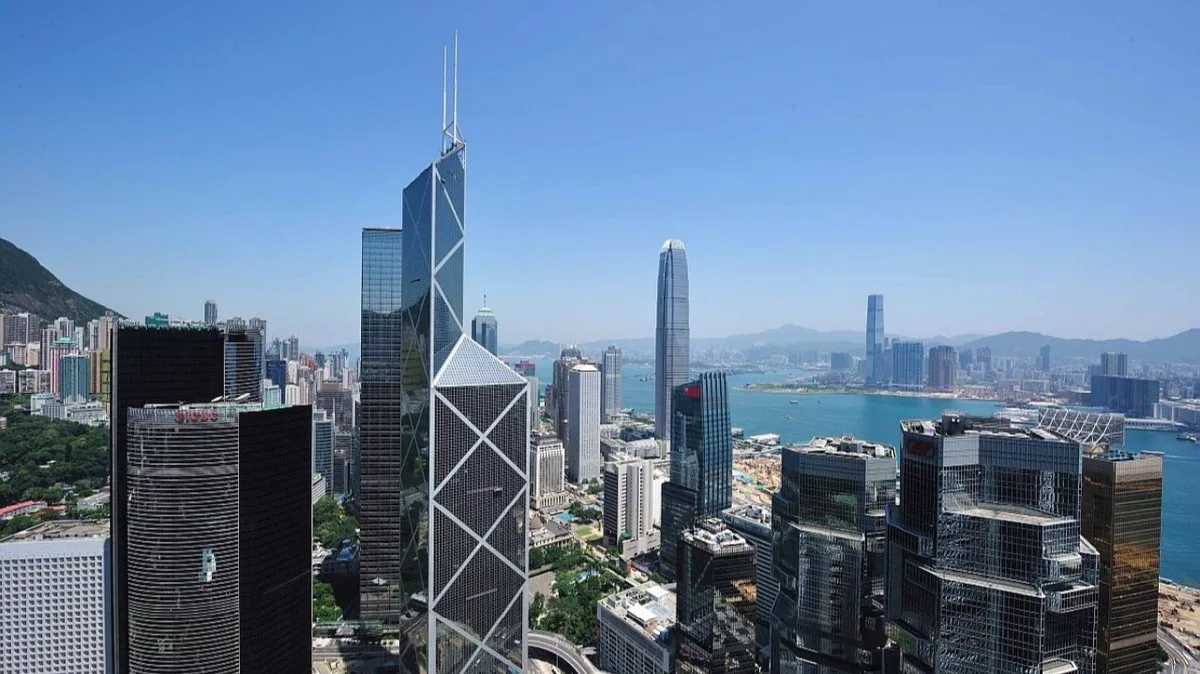
For Hong Kong, this raises a more specific question: What can the city offer an Asia-Pacific region that increasingly needs both resilience and connectivity? As the city implements its first Five-Year Plan and prepares to host the APEC Finance Ministers' Meeting, it has an opportunity to rethink its role in the region.
Can Hong Kong move beyond being a traditional gateway between the Chinese mainland and the world, and become a financial connector for a more integrated Asia-Pacific? The question was discussed on Wednesday at The University of Hong Kong, where Mari Pangestu, special envoy of the president of the Republic of Indonesia for International Trade and Multilateral Cooperation, and Professor Edward K Y Chen, honorary professor at HKU Business School, discussed how Asian economies can preserve regional integration amid geopolitical and economic uncertainty.
Pangestu's answer was particularly relevant to Hong Kong: "The real potential lies in the financial connectivity that Hong Kong can provide." That may be the most useful way to think about Hong Kong's next economic chapter.
Resilience does not mean retreat Asia is facing a more complicated economic environment than it did a decade ago.
Geopolitical tensions are reshaping trade, supply chains are being reconfigured, energy and commodity shocks are raising costs, while the green transition and artificial intelligence are creating new opportunities as well as new risks.
The instinct in such an environment may be to become more self-reliant and less exposed to external shocks.
But that is not necessarily the most realistic strategy for Asia, one of the world's most trade- and investment-dependent regions.
Pangestu's argument is that resilience should not be confused with retreat.
Regional economies need to diversify, strengthen their capacity to absorb shocks and deepen cooperation at the same time.
Edward Chen made a similar point in his closing remarks at HKU, arguing that resilience can only be built through regional cooperation and a collective response.
The implication is important: Economic security does not have to come at the expense of openness.
此摘要由5News从媒体的公开信息源汇聚而成。 包含完整背景的全文在www.cgtn.com — 内容归CGTN Business (oficial)所有。