Reporter’s Diary: How to take care of the elderly in Kenya?
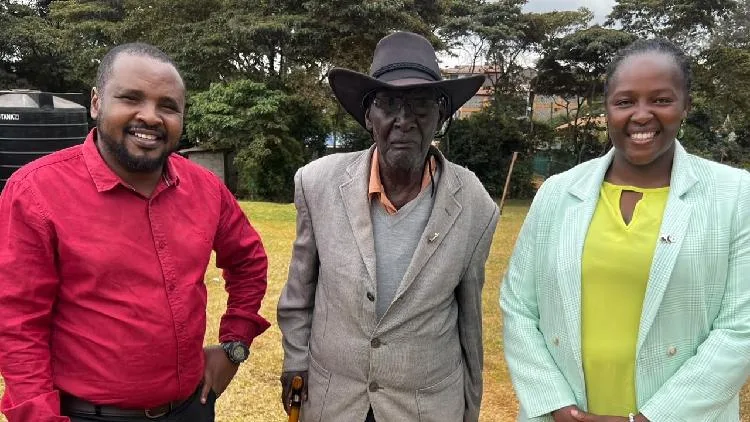
At 96, Ephraim Matindi Hinga has lived through almost a century of change.
From the transformation of Kenyan society to the challenges of growing old in a rapidly changing world, his life offers a window into a generation whose contributions built the foundations on which younger generations stand.
When I visited him at his rural home in Kiambu County, accompanied by fellow journalist Enock Sikolia, our assignment was to tell the story of Kenya’s ageing population and the growing financial pressures facing older people.
But sitting with Mzee Hinga, a descendant of the great Waiyaki wa Hinga, the story became more personal.
Beyond the statistics, policy discussions and projections about the future, there was a man whose life illustrated both the dignity of aging and the vulnerability that can accompany it.
Mzee Hinga remains committed to speaking up for the welfare and dignity of older persons.
His story is a reminder that while Africa is celebrated for having the youngest population in the world, it must also confront a future in which millions more of its citizens will grow old.
And the question is not simply how long people will live, but how well they will live when they can no longer earn a regular income.
THE COST OF GROWING OLD For some people, retirement offers an opportunity to rest after decades of work.
For others, it marks the beginning of a difficult struggle to meet basic needs, including food, healthcare, and everyday expenses.
Mzee Hinga is fortunate to have children who support him.
They pay for his house help, who assists him with cooking and washing clothes, allowing him to maintain some independence as he grows older.
Yet, as he explained during our interview, not every older person has that safety net.
His children’s support is essential, but he recognizes that many families are themselves struggling financially.
此摘要由5News从媒体的公开信息源汇聚而成。 包含完整背景的全文在www.cgtn.com — 内容归CGTN World (oficial)所有。