World's largest chinstrap penguin colony plunges by 63%
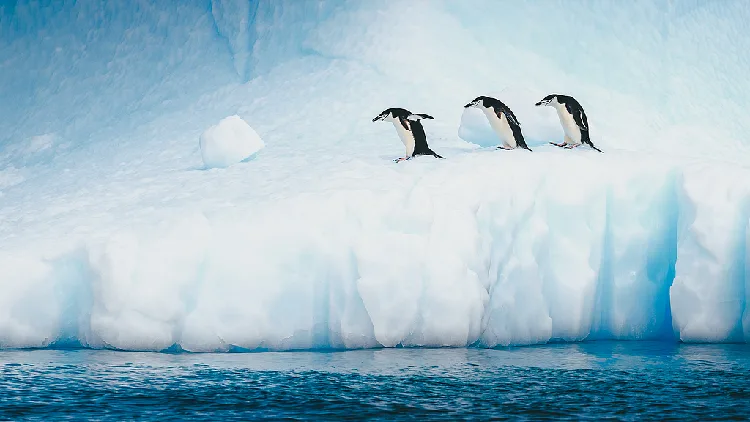
The number of chinstrap penguins breeding on Zavodovski Island near Antarctica has fallen by 63% since 2011, causing the colony to lose its status as the world's largest, according to researchers from the British Antarctic Survey (BAS).
Chinstrap penguins are among the most numerous penguin species.
A large proportion of their known population breeds on islands in the southern Pacific, including Zavodovski Island.
BAS researchers said climate change is making survival increasingly difficult for the penguins.
Rising sea temperatures are driving Antarctic krill, their main food source, farther south.
Professor Norman Ratcliffe, an ecologist at the BAS, told China Media Group that the region is warming and is one of the fastest-warming areas in the world.
Krill are the main food source for chinstrap penguins, and during the breeding season they have almost no alternative food sources.
Ratcliffe added that as the climate warms, the habitat of krill is contracting southward, moving beyond the northern range where chinstrap penguins forage.
This directly causes the rapid decline in the chinstrap penguin population.
The penguins face an additional challenge because there are few suitable islands farther south where they can establish breeding colonies.
This means they cannot simply follow their food source as it shifts toward colder waters.
Researchers warn that the continued decline could put chinstrap penguins at risk of being classified as an endangered species.
此摘要由5News从媒体的公开信息源汇聚而成。 包含完整背景的全文在www.cgtn.com — 内容归CGTN Nature (oficial)所有。