China's Yellow River turns the tide – in water, wings and livelihoods
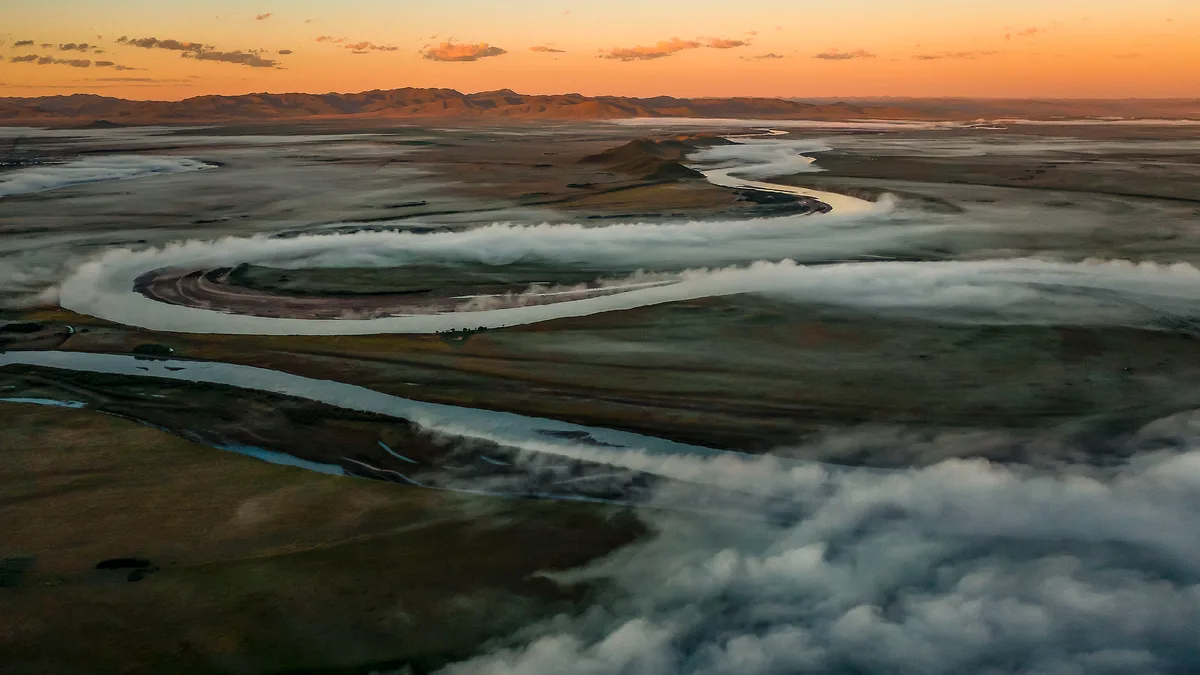
At first light on the boardwalks of the Yellow River Delta National Nature Reserve, Wu Lixin, a senior engineer at the Dawenliu management station, records how this season's oriental storks are faring.
When Wu started working there 37 years ago, the landscape was mostly barren saline-alkaline flats, and migrating birds stopped only briefly before moving on.
Today, his patrol zone is one of the world's most concentrated breeding areas for the oriental stork, and each spring and autumn, hundreds of thousands of migratory birds rest and refuel in the delta's wetlands.
What Wu has watched with his own eyes is the story of the entire Yellow River Basin over the past five years in miniature.
An ecosystem rebuilt from headwaters to sea In October 2021, China released a national outline for the ecological protection and high-quality development of the Yellow River Basin.
What followed was not a single sand-control or flood-control project, but a basin-wide restoration effort built on one principle: treating mountains, rivers, forests, farmland, lakes, grasslands and deserts as one interdependent system.
On the Loess Plateau, the river's main source of sediment, the results are measurable.
By the end of 2025, a cumulative 290,500 square kilometers of eroded land had been brought under initial control, raising the soil conservation rate to 69.75% – 28 percentage points higher than in 1990 – while plateau vegetation cover has climbed from 34% to 63%.
In north China's Inner Mongolia Autonomous Region's Ten Kongdui area, where seasonal tributaries once flushed some 27 million tonnes of sediment into the Yellow River each year, layered treatment has cut that to about 4 million tonnes.
The river itself is responding.
The main stream has maintained Grade II water quality – suitable for drinking after treatment – for four consecutive years, and 47 rivers and lakes across the basin have joined the Ministry of Water Resources' "mother river rejuvenation" campaign.
The Jinci Spring in Shanxi Province, dry for nearly 30 years, now flows year-round.
Meanwhile, the Wenquan River in Fuping, Shaanxi Province, ran dry for four decades before water returned.
In the delta, more than 300,000 mu (about 20,000 hectares) of wetland have been restored, and bird species in the reserve have grown from 187 at its founding to 376, making it a key staging post on the East Asian-Australasian Flyway.
此摘要由5News从媒体的公开信息源汇聚而成。 包含完整背景的全文在www.cgtn.com — 内容归CGTN Nature (oficial)所有。