Pinglu Canal: Engineering a new waterway to the sea
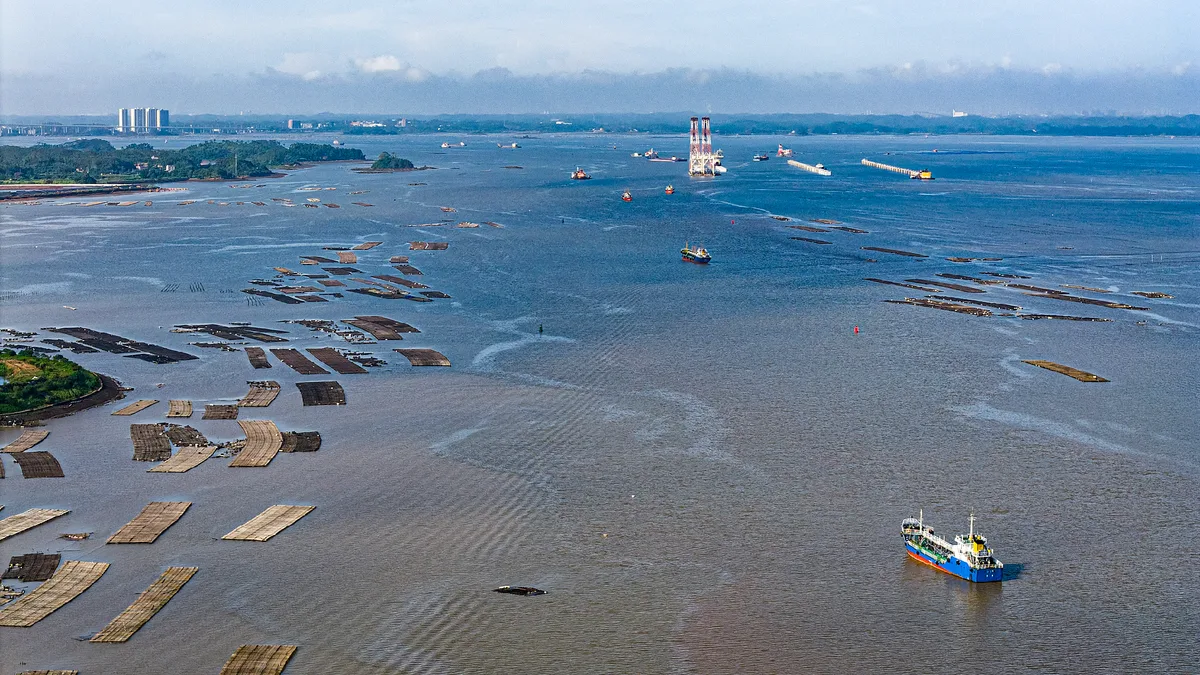
China's Pinglu Canal officially opens to navigation on Wednesday, giving southwest China a shortcut to the coast and overseas markets.
The 134.2-kilometer waterway connects the Xijiang River shipping network with the Beibu Gulf in south China's Guangxi Zhuang Autonomous Region.
Designed for vessels of up to 5,000 tonnes, the canal marks the completion of a major river-to-sea transport project, bringing together navigation engineering, ecological protection and regional logistics.
The canal was built at a cost of 72.7 billion yuan (about $10.75 billion).
Engineering a route from river to sea The canal connects the Xijiang River system with the Beibu Gulf through a network of waterways and ship locks.
Three double-line ship locks at Madao, Qishi and Qingnian are key parts of the navigation system.
The project has undergone vessel trials covering ship-lock passage, overtaking, turning, tidal berthing and night navigation.
On Tuesday, authorities announced navigation classifications for the canal.
The inland section is provisionally classified as a Class B navigation area, while the Qinzhou Bay river-sea junction is classified as equivalent to a Class A navigation area.
The classifications define the navigation requirements for vessels operating along the route.
Protecting mangroves and restoring habitats Ecological protection has been a major part of the canal's construction.
The project has cleaned 14,490 mu (966 hectares) of mangrove forest.
The mangrove forest area at the estuary covers 3,649 hectares.
The project has also relocated 9,572 mature mangrove trees and replanted 275,000 mangrove saplings elsewhere, with a survival rate of over 90%.
此摘要由5News从媒体的公开信息源汇聚而成。 包含完整背景的全文在www.cgtn.com — 内容归CGTN Tech & Sci (oficial)所有。