New evidence reaffirms Japan's germ warfare crimes in China
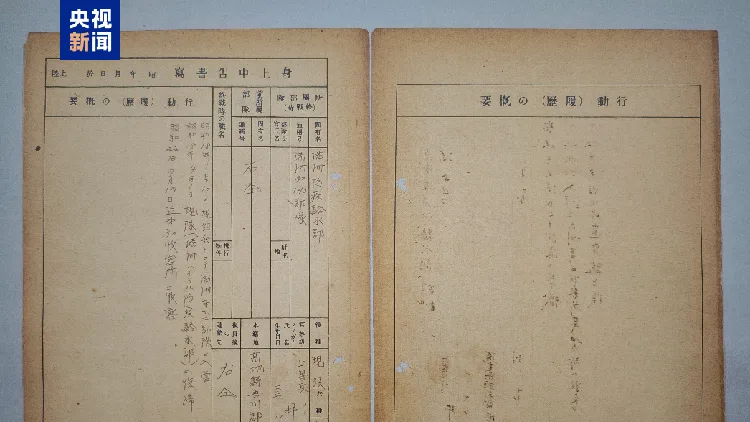
A new collection of historical records about Unit 731, the notorious Japanese germ warfare division during World War Two (WWII), has unveiled more evidence of Japan's war atrocities in China.
Released on Wednesday by the Exhibition Hall of Evidences of Crime Committed by Unit 731 of the Japanese Imperial Army in northeast China's Harbin, Heilongjiang Province, the records confirm that the Japanese military buried large quantities of chemical shells in China on the eve of its defeat.
The 70-minute oral testimony from Hitoshi Tanizaki, a former medic at the Hailar branch of Unit 731, provides firsthand evidence useful for further research into Japan's abandoned chemical weapons in China.
The testimony was collected in 2016 when researchers from the Exhibition Hall visited Japan.
Tanizaki, whose original name was Hitoshi Ozaki, said in the video that he was 21 when he joined the military.
Before enlistment, he had assisted a doctor and attended a night commercial school.
Tanizaki said that after being assigned to the Hailar branch, he realized that it was a military unit that violated international law.
The Hailar branch was under the direct command of Unit 731's headquarters in Harbin, the provincial capital.
Its First Section was responsible for cultivating bacteria, while its Second Section conducted toxicity tests on water sources, among other duties.
Of particular significance, Tanizaki disclosed that the Japanese military had destroyed evidence of its crimes and buried chemical shells when it was defeated.
He confirmed that, during the retreat, the Hailar branch set fire to all its facilities, while the Japanese military's chemical warfare unit secretly buried large quantities of chemical shells.
"It wasn't bacteria, but poison gas," said Tanizaki.
He added that there was a chemical warfare unit, based in the Fulaerji District of Qiqihar, Heilongjiang.
Jin Shicheng, a researcher at the Exhibition Hall, said the testimony directly corroborates that the Japanese military had abandoned chemical weapons in China when it was defeated.
此摘要由5News从媒体的公开信息源汇聚而成。 包含完整背景的全文在www.cgtn.com — 内容归CGTN Politics (oficial)所有。