Japan's pacifist course under strain as nuclear restraints challenged
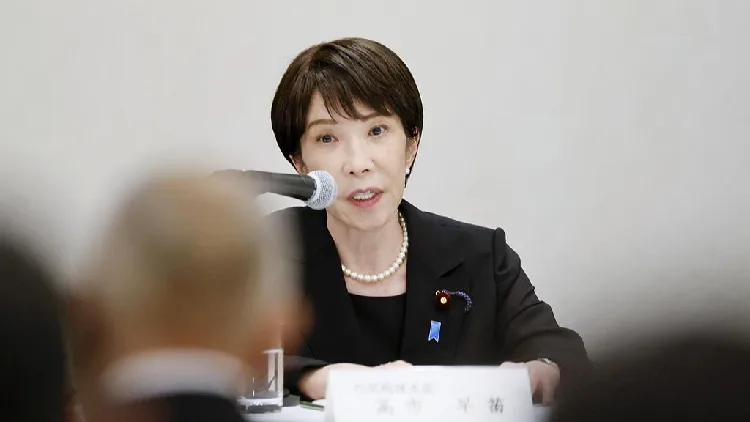
Standing at a site marked by historical suffering, yet turning a blind eye to the warnings of the future, Japan's Prime Minister Sanae Takaichi has again sparked fresh concerns over her remarks regarding the nation's anti-nuclear principles.
At a memorial ceremony held on Sunday at Nagasaki's Peace Park to commemorate the 81st anniversary of the US atomic bombing of the city, Takaichi, when addressing the event, reiterated her ambiguous remarks that Japan "is upholding" the Three Non-Nuclear Principles.
Her wording differed subtly from that of previous prime ministers, stopping short of explicitly pledging that the country will uphold the principles.
According to the Tokyo Shimbun, since Takaichi took office in October last year, at least 128 local assemblies from 36 prefectures across Japan have submitted written opinions to the Diet, Japan's parliament, urging the government to stand firm on the Three Non-Nuclear Principles.
The number marks a record high since the Diet began accepting such submissions in July 2000.
The sharp contrast between citizens' calls to preserve the anti-nuclear commitments and voices within the political establishment advocating a review of the principles reflects a profound challenge facing Japan's postwar pacifist identity.
Loosening the principles: dangerous test of public acceptance The Three Non-Nuclear Principles, established as a cornerstone of Japan's postwar policy, prohibit the country from possessing, producing or permitting the introduction of nuclear weapons into the territory.
However, the principles have now become a subject of open political debate.
Japanese media previously reported that officials within the Takaichi administration had considered whether to review the "no introduction of nuclear weapons" clause when revising Japan's key security documents later this year.
The issue drew further attention after Defense Minister Shinjiro Koizumi said during a television program in July that Japan should discuss nuclear-related policies "without taboos." Under Takaichi's leadership, the traditional peace-oriented boundaries of Japanese politics have increasingly become tools of political maneuvering, Meng Mingming, an assistant researcher at the Institute of Japanese Studies under the Chinese Academy of Social Sciences, told CMG.
He said the government's calls to reconsider the Three Non-Nuclear Principles represent a "desensitization test" by right-wing forces – gradually bringing previously untouchable issues into mainstream debate and turning established red lines into negotiable policy options.
Remilitarization: Eroding foundations of pacifism The nuclear debate comes amid Japan's broader military expansion.
此摘要由5News从媒体的公开信息源汇聚而成。 包含完整背景的全文在www.cgtn.com — 内容归CGTN Politics (oficial)所有。