Japan's war memory: Remembering pain, forgetting responsibility
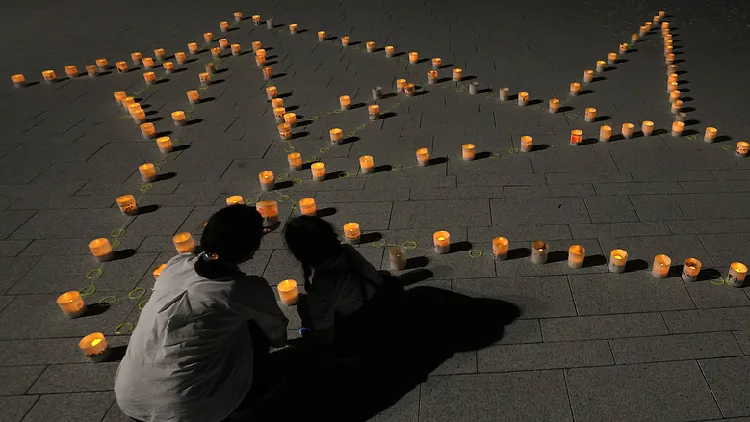
Editor's note: August 15 marks the 81st anniversary of Japan's announcement of its unconditional surrender in World War II.
Xu Weijun is an associate research professor at the Institute of Public Policy, South China University of Technology.
His research interests include East Asian international relations and China-US relations.
Japan's reckoning with its wartime history has long been a subject of debate, particularly over how the government should confront and acknowledge its past.
The article reflects the author's opinions and not necessarily those of CGTN.
In March 2026, an opinion poll conducted by the Japan Broadcasting Corporation revealed a thought-provoking result.
When asked whether World War II was "a war of aggression launched by Japan against its Asian neighbors," only 35% of respondents agreed, 16% disagreed, and as many as 48% answered "I don't know." These figures reflect not merely a gap in historical knowledge, but also a deep rupture between war memory and the perception of historical responsibility in contemporary Japanese society.
Contemporary Japanese society does not lack memories of the war.
In post-war Japanese public life, there have always been numerous war-related commemorative ceremonies, peace education and narratives of the atomic bombings.
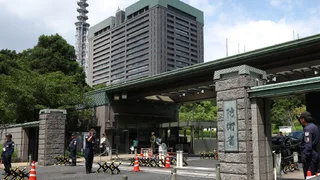
At the same time, however, Japanese politicians have repeatedly visited Yasukuni Shrine, which enshrines Class-A war criminals and is widely regarded as a symbol of Japanese militarism and historical revisionism.
This contradictory picture reveals the underlying structure of Japan's war memory: Japanese society remembers the war, and even harbors a genuine fear of it, yet it has not recalled to the same extent how Japan launched the war, how it invaded Asian countries, and how it inflicted enormous suffering on the peoples of those countries.
In other words, the current situation in Japanese society is not simply "forgetting the war," but rather "selectively remembering the war." Many Japanese people can perceive the suffering of war through the atomic bombings, the Battle of Okinawa and the trauma of defeat, yet they may not necessarily understand Japan's responsibility as a perpetrator through the lens of colonial rule, the Nanjing Massacre and the atrocities committed on battlefields in Southeast Asia.
For Japanese society, the core issue regarding historical understanding lies not in whether the war is remembered, but in whose suffering is remembered and whose is forgotten.
Structural flaws This divergence in memory is first related to structural flaws in Japan's history education.
此摘要由5News从媒体的公开信息源汇聚而成。 包含完整背景的全文在www.cgtn.com — 内容归CGTN Politics (oficial)所有。