How can China-EU economic and trade relations strike a new balance?
Editor's note: Zhou Jianjun is an associate research fellow at CEEC Economic and Trade Cooperation Institute, Ningbo University.
This article reflects the author's opinions and not necessarily those of CGTN.
It has been translated from Chinese and edited for brevity and clarity.
Recently, some EU member states have been urging the European Union to speed up its efforts to develop a so-called "EU Section 301" tool, seeking to equip the EU with more powerful trade policy instruments so that it can address its trade imbalance with China.
The widening trade deficit has become a major issue in China-EU economic and trade relations and a key consideration behind the EU's push to strengthen its trade policy instruments.
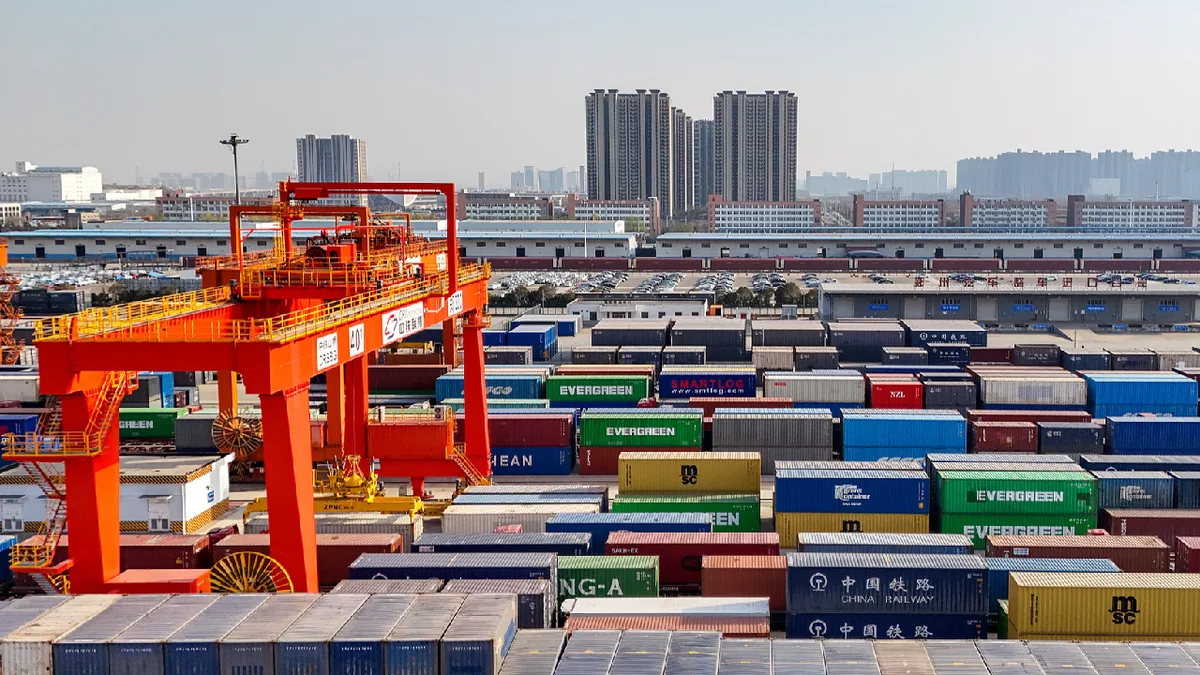
In 2025, the EU's trade deficit in goods with China reached 359.8 billion euros ($402 billion), up 15% year on year and equivalent to approximately 47.4% of the total China-EU trade in goods.
In the first eight months of 2026, the EU's trade deficit with China reached 242 billion euros, or an average of 1 billion euros a day.
Ursula von der Leyen, president of the European Commission, said that the "imbalance" in China-EU trade has hit a "tipping point" and that the EU will employ "all available tools" to reduce its unsustainable trade deficit with China and rebalance China-EU economic and trade relations.
France and Germany have jointly proposed an "EU Section 301" tool to impose tougher trade-defense measures on China to curb the trade deficit.
It can be seen that the central purpose of the proposed "EU Section 301" tool is to expand the levers at the EU's disposal to address the China-EU trade imbalance by unilateral means, at a time when it is felt in Brussels that traditional measures such as anti-dumping and anti-subsidy investigations are no longer sufficient to meet the EU's objectives.
In contrast to the EU's narrative, however, the imbalance in China-EU trade is rooted in complex structural issues and cannot be measured by the goods trade deficit alone.
On the goods trade front, the EU claims China has reaped huge gains from the deficit and has cast it as a "€1 billion-a-day" crisis.
Yet this figure does not take account of the structural issues in bilateral trade and does not hold up to closer scrutiny.
Currently, intermediate goods account for nearly half of China-EU trade.
此摘要由5News从媒体的公开信息源汇聚而成。 包含完整背景的全文在www.cgtn.com — 内容归CGTN Business (oficial)所有。