Glaciers: From victims to sources of disaster
Editor's note: Yang Zhao is the chief editor of CGTN's Sci-Tech section.
Against the backdrop of a changing climate, the story we most often tell about glaciers is one of disappearance.
They are melting.
They are retreating.
Satellites and cameras record their decline.
Glaciers have become one of the most visible victims of global warming.
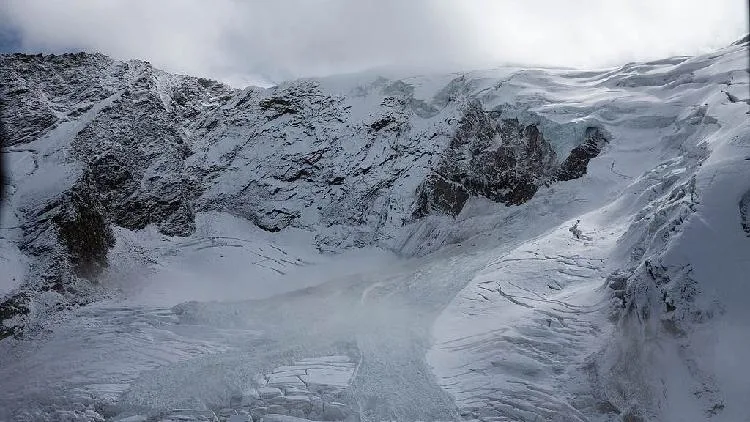
But the recent disaster in the Himalayas offers a different warning: cross a certain threshold, and a glacier can become something else – the starting point of a chain of disasters.
That is what happened along the China-Nepal border.
A rock-and-ice avalanche that began high in the mountains developed into a debris flow within minutes, sweeping through the Gyirong border port downstream.
How does a glacier make this transition – from a victim of climate change to a source of disaster? And can science help us prevent or mitigate the damage? I spoke with Nie Yong, a disaster expert at the Institute of Mountain Hazards and Environment under the Chinese Academy of Sciences.
His answer was sobering: we are becoming increasingly capable of seeing what is happening to glaciers, but we are still far from knowing exactly when one of them is about to fail.
The last mile of disaster prediction From several powerful typhoons making landfall in China this summer to countdown alerts appearing on people's phones before an earthquake, people in China have grown accustomed to expecting warnings when nature turns dangerous.
That expectation is backed by real investments in science, technology and infrastructure.
Earthquakes and typhoons have relatively mature monitoring systems around the world and are among the areas that have received the most investment in disaster monitoring and early warning.
此摘要由5News从媒体的公开信息源汇聚而成。 包含完整背景的全文在www.cgtn.com — 内容归CGTN Tech & Sci (oficial)所有。