APEC energy talks spotlight China's role in regional green transition
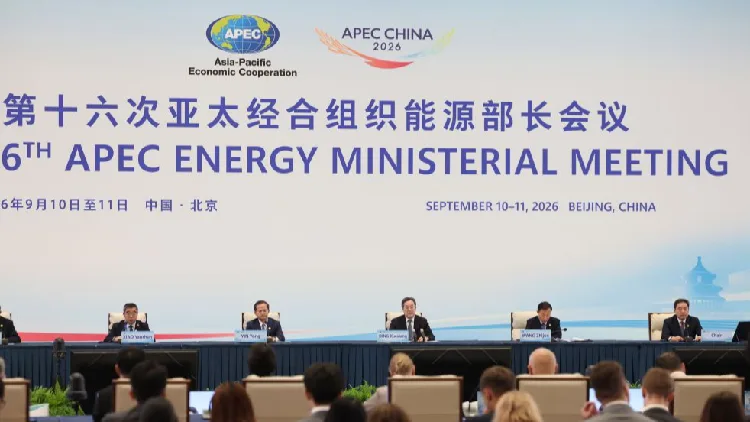
Delegates from APEC economies have met in Beijing to discuss ways to strengthen regional energy security and accelerate the transition to cleaner energy, as disruptions to the Strait of Hormuz expose vulnerabilities in the Asia-Pacific's energy supply chains.
The disruption of navigation through the Strait of Hormuz since late February 2026 has triggered a significant oil supply shock, with daily supply shortfalls reaching multi-million-barrel levels, highlighting the region's reliance on imported energy.
"From our end in Papua New Guinea, we face the impacts of the war in Iran and the impacts that on the fuel supply.
We know we are an import-based economy," Conrad Kumul, a delegate from Papua New Guinea, told CGTN.
The 16th APEC Energy Ministerial Meeting comes as economies across the Asia-Pacific face pressure to secure energy supplies while pursuing long-term transition goals.
Some participants said the crisis could also create momentum for renewable energy development.
"The idea now is to push very much forward with the energy transition, even more than before," Steivan Defilla, assistant president of the APEC Sustainable Energy Center, told CGTN.
"Oil prices are so high that the comparatively renewable energies are very low in price." As this year's APEC host, China has promoted an open and inclusive approach to facilitate exchanges among member economies and encourage cooperation on energy security and sustainable development.
During his speech at the opening ceremony of the meeting, Chinese Vice Premier Ding Xuexiang said China has been actively engaged in pragmatic energy cooperation within the APEC framework, effectively promoting regional energy development and making important contributions to safeguarding global energy security.
To advance global energy security and sustainable development, Ding urged efforts to vigorously develop distributed energy sources and charging infrastructure to enhance inclusive energy development in the Asia-Pacific region.
Participants said the meeting is not only about responding to immediate supply shocks but also about shaping a longer-term energy transition that ensures broader access to reliable and affordable energy.
China's contribution China's experience in developing renewable energy and related technologies is increasingly being shared with Asia-Pacific economies seeking to diversify energy sources and improve supply resilience.
By the end of 2025, China's installed wind and solar power capacity had reached 1.84 billion kilowatts, accounting for 47.3% of the country's total installed power capacity.
此摘要由5News从媒体的公开信息源汇聚而成。 包含完整背景的全文在www.cgtn.com — 内容归CGTN Politics (oficial)所有。