India remains the fastest draw in flood relief to Nepal: 141.5 tonnes of aid rushed after flash floods
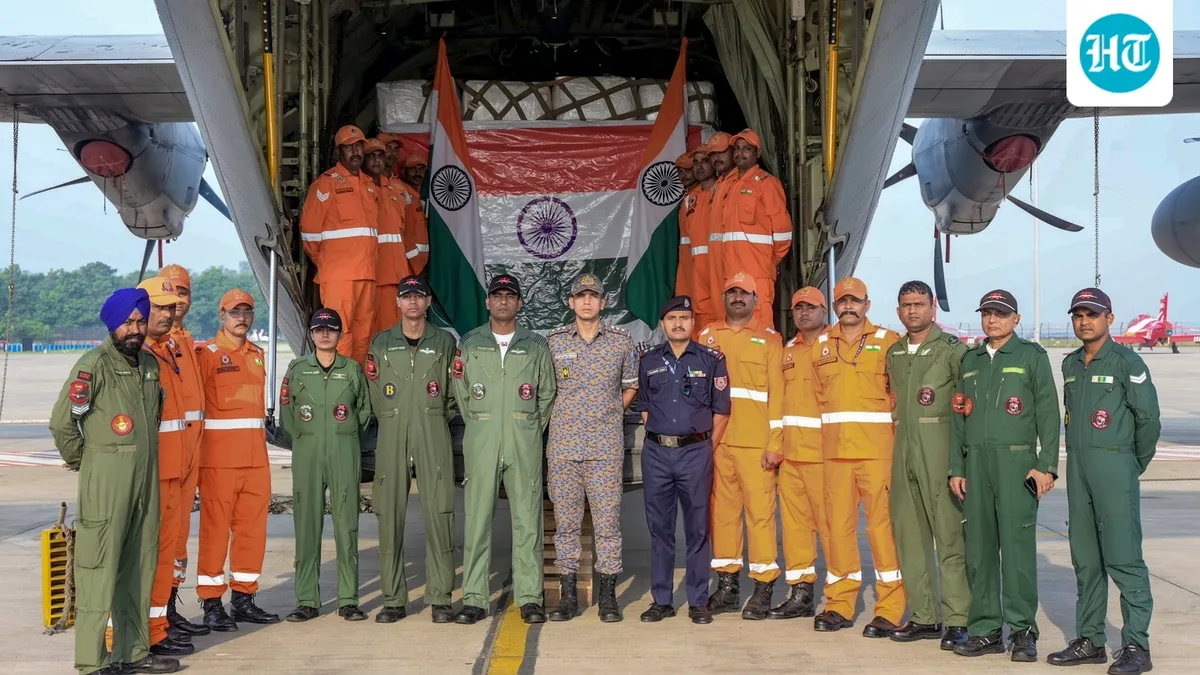
India has sent over hundreds of tonnes of emergency relief material to flood-stricken Nepal. As per data accessed by HT, New Delhi has rushed a total of 141.5tonnes of material and equipment between August 26 and September 19.
On August 26, 2026, a series of flash floods struck Nepal and Tibet in one of the worst natural disasters the country has seen. The floods killed a total of 1,411 people in the landlocked country, as per Nepal's disaster management agency, and left around 5,875 missing. In Tibet, around 43 deaths were reported, with 519 people missing.
India's prompt response reinforces the country's "first responder" tag, reflecting its growing record of delivering aid and assistance to disaster-hit countries, from Türkiye and Syria to Myanmar, Sri Lanka and Venezuela.
Based on the data accessed by HT, along with emergency relief material, India has also sent around 54 expert personnel to help with reconstruction, emergency control and rescue across Nepal.
Also Read | India rushes 62-tonne aid to Nepal as it walks the talk on ‘first responder’ role
Along with India, several other nations and international organisations had pledged aid and emergency material to Nepal.
Among these nations were Australia, Canada, South Korea, the United Kingdom and organisations such as the World Bank, the European Union, the Asian Development Bank, the Red Cross and the Red Crescent societies and more.
Along with this, private companies such as Nvidia donated around $10 million for relief, and South Korea's Doosan Group donated around $ 5 million.
Shishir Gupta is Executive Editor at Hindustan Times and one of India's top journalists covering national security, strategic affairs, foreign policy and geopolitics. Over the past three decades, he has extensively reported on India's military, diplomatic and security landscape, covering every major conflict and national security challenge, from the 1999 Kargil War and the 2020 East Ladakh standoff to Operation Sindoor in 2025. He has also covered major terror attacks, including the IC-814 hijacking, the 26/11 Mumbai attacks and the 2025 Pahalgam terror strike, along with numerous Pakistan-backed terrorist incidents in the Kashmir Valley and across India. He has reported on national and state elections for more than three decades. A recognised authority on strategic affairs, Gupta has covered India's nuclear programme since the Pokhran-II (Shakti series) tests in May 1998 and has written extensively on global nuclear issues, Indian diplomacy and the country's expanding global outreach. He has also reported widely on international conflicts and terrorism, with a special focus on the Indian subcontinent. Gupta has interviewed Prime Minister Narendra Modi more than four times, including Modi's first interview with the print media after becoming Prime Minister in May 2014. His other interviews include three with the Dalai Lama, as well as conversations with Benjamin Netanyahu, Amit Shah, Yogi Adityanath, S. Jaishankar, Nirmala Sitharaman and Piyush Goyal. He is the author of Indian Mujahideen: The Enemy Within (Hachette, 2011) and Himalayan Face-off: Chinese Assertion and Indian Riposte (Hachette, 2014).
5News aggregated this summary from the outlet’s public feed. The full article, with all the context, is on www.hindustantimes.com — the content belongs to Hindustan Times - India News.