In Delhi’s Atal Canteens, food to fill a stomach
Account subscription benefits alongside Premium Stories, Editorials, Opinions and more. Unlock these with Subscription
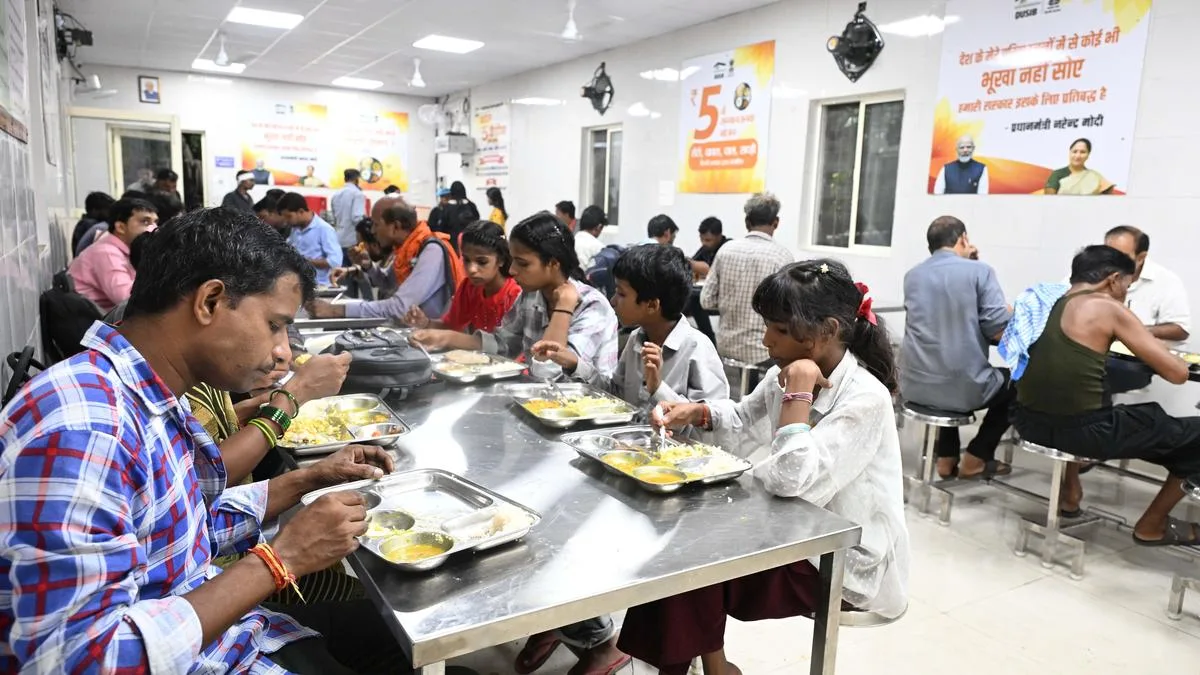
The Atal Canteen at Anand Vihar in New Delhi. | Photo Credit: Sushil Kumar Verma
It is around 11 a.m. and the downpour is intensifying. Mahesh Saini, 40, with a sack slung over his left shoulder and a stick in his right hand, reaches the Nehru Nagar Atal Canteen, an initiative of the Delhi government to provide meals at ₹5 each. As he enters, a man from a counter inside shouts, waving his hand: “ Bora bahar (Leave the sack outside).”
Mahesh, a ragpicker, puts down the white plastic sack, ties its mouth carefully, and leaves it next to the door. He props up his stick there too. His once-white T-shirt and his hair tell the same story: neither has been washed for a while.
He walks to the counter and the man behind a laptop holds out a web camera and takes his photo. “Now blink,” the operator says, so that the camera can scan his iris. Mahesh silently obeys, as he knows the drill by now. He produces a ₹5 coin, moves to the next counter and picks up a steel plate.
A woman serving the meals wastes no time in filling the plate’s compartments with scoops of hot short-grain rice, yellow dal with some rajma, a runny sabzi (vegetable) of aloo (potato) with a little brinjal, and four thin tawa rotis.
Mahesh settles at one of the six metal tables with attached metal stools. “ Khana mujhe achha lagta hai (I like the food). There are no complaints,” he says, revealing his pan-stained teeth. There are about 15 people eating at the canteen. Outside, the rain pours down.
Mahesh came to Delhi about a month ago from his village in Madhubani district of Bihar after his wife died. He collects plastic bottles and other trash. For this, he earns ₹200 a day. “I end up spending almost all the money,” Mahesh says, adding that he sleeps on the footpath.
He fishes out a flimsy black polythene bag from his pocket and packs three rotis in it for later and continues to eat the rice and dal with his hand.
For thousands of people like Mahesh, Atal Canteens have become a daily stop for a cooked meal, which costs them little. Since December 2025, the Delhi government has started similar Atal Canteens at 100 locations across the city, giving out close to 50,000 meals every day. Each canteen has a daily capacity to provide 1,000 meals, 500 each for lunch and dinner.
The contract for running the 100 canteens is given to 11 different companies or NGOs via a tender process. The company charges ₹30 for each meal, of which it collects ₹5 from the individual and ₹25 from the government. The 100 canteens are divided into 20 groups of five each. Food is cooked at a central canteen for each group of five canteens, and the vendor is not supposed to supply food to anyone else from there, officials say. The cooked food is then distributed to the canteens in steel drums or insulated casseroles of 20-30 litres.
At the launch of the scheme on December 25 last year, the birth anniversary of former Prime Minister Atal Bihari Vajpayee, Delhi Chief Minister Rekha Gupta said that the government’s aim was to make sure that no one in Delhi goes hungry.
5News aggregated this summary from the outlet’s public feed. The full article, with all the context, is on www.thehindu.com — the content belongs to The Hindu.