Beyond the walls of Siddhavatam Fort
Account subscription benefits alongside Premium Stories, Editorials, Opinions and more. Unlock these with Subscription
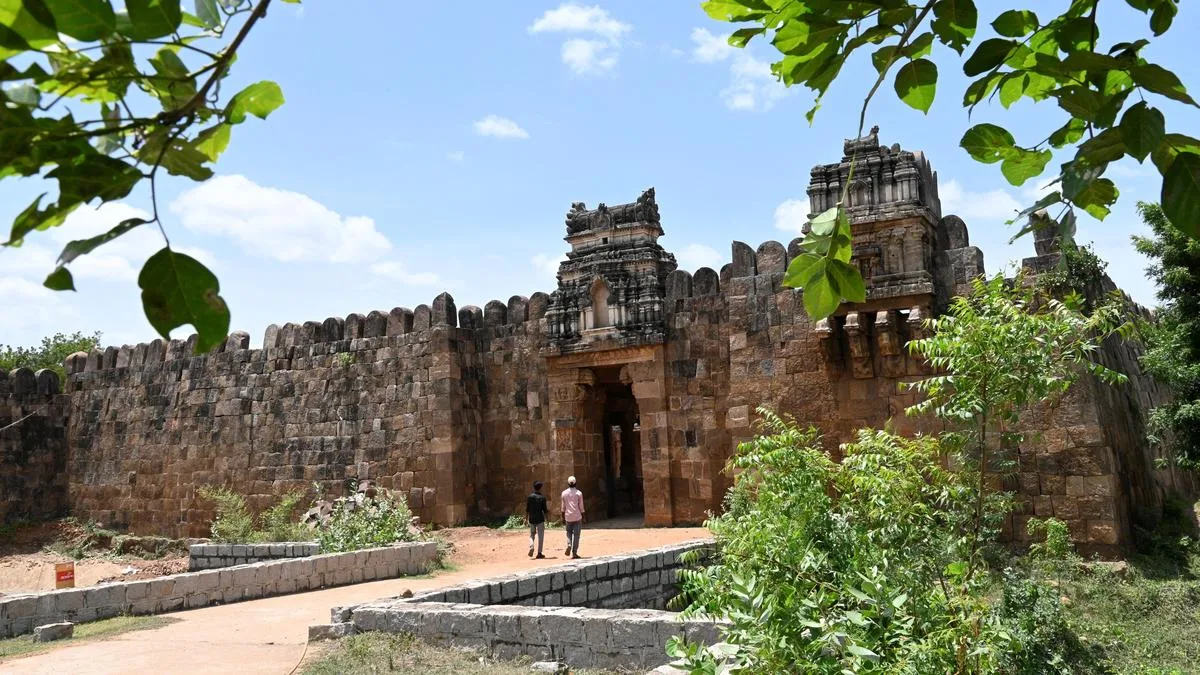
A view of the Siddhavatam Fort in Kadapa district. | Photo Credit: K.V. Poornachandra Kumar
For Sanjeev Borgaonkar and Shaik Wajid, who were part of a tourist troupe from Pune, a visit to Siddhavatam Fort was meant to be another stop on their tour of Andhra Pradesh. Instead, the imposing citadel held their attention long after their families had moved on. Perched on the banks of the Penna River, amid the Palakonda and Veligonda hill ranges, the centuries-old fort continues to draw visitors—even as the heritage site waits to reclaim some of its lost glory.
That fascination is shared by many who make their way to the fort, especially on weekends. Even as restoration work taken up by Archaeological Survey of India (ASI) is currently under way, tourists from the neighbouring districts continue to arrive at the fort, undeterred by the lack of snacks and drinking water facilities in the vicinity. “Even the toilets needs enhancement,” says Mr. Borgaonkar.
But, the fort’s location has meant more than strategic advantage over the centuries. Siddhavatam Fort, also known as Sidhout Fort, stands as a reminder of the contributions of successive regional rulers and remains a largely unexplored tourist destination in Rayalaseema region. Nestled between the Palakonda (or Lankamalla) and Veligonda hill ranges, it is situated on the left bank of Penna or Pinakini river in Kadapa district of Andhra Pradesh.
It’s location also gives Siddhavatam a religious significance. For devotees arriving from the south, the area is considered the gateway to the pilgrimage centre of Srisailam, revered as ‘Dakshin Kashi’. Situated on 30 acres of land, the site is known for its monumental gateways, ornately-carved pillars, and seventeen bastions, besides numerous places of worship.
Among these places of worship is Siddheswara or Siddhavateswara temple, believed to date to the 13th century, based on the wall inscription dated 1233 CE and associated with the reign of Rajendra III of the Chola dynasty. That inscription, written in a mix of Tamil and Grantha characters, records the construction of the western Gopuram. It also indicates that the temple was already a fully functional place of worship in the 13th century, before the site was fortified for military purposes.
Its initial construction began in 1303 CE under the Matti or Matli kings of the Tuluva dynasty. An older record available with the Archaeological Survey of India (ASI) states that the fort was constructed by Ananta Raja in 1303 CE. The Matli chiefs were a powerful regional family who became prominent during the Vijayanagara Empire and gained political authority in the Siddhavatam Seema (region) by the 16th century. “The era of King Sadasivaraya of Vijayanagara witnessed weddings with the Matli family, thus increasing their political influence far and wide.
5News aggregated this summary from the outlet’s public feed. The full article, with all the context, is on www.thehindu.com — the content belongs to The Hindu - National.