Investing in corporate bonds through OBPPs: How to read SEBI's new mutual fund-like credit risk-o-meter—experts explain
If you invest through Online Bond Platform Providers (OBPPs), a new risk-o-meter will help you analyze the credit risk of corporate bonds and other debt instruments.
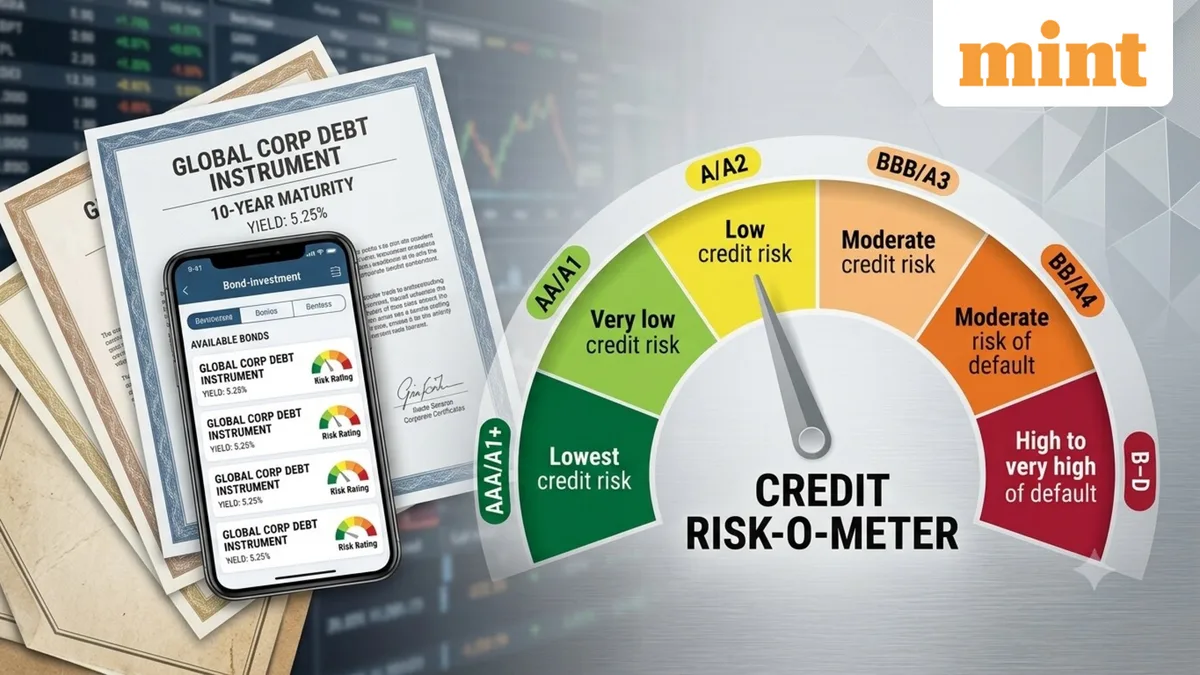
According to a SEBI circular released on 7 October, the meter will be mandatory in offer documents, private placement memorandums, advertisements and on OBPPs’ web and mobile platforms. It will map credit ratings to six colour-coded credit-risk levels.
The provisions may come into force on 21 November 2026, “45 days after the circular was issued.” Here’s what investors need to know and how to read the risk-o-meter.
The risk-o-meter may be seen as a traffic light for the credit risk of a bond. SEBI has translated credit ratings into six colour bands, from green for the lowest credit risk to red for high to very high risk of default, including D, said Vishal Goenka, Co-Founder, IndiaBonds.
For retail investors, the easiest way to read it is as a credit-risk ladder, not a recommendation to buy or avoid a bond, said Nishchay Nath, Founder & CEO, BondScanner.
According to the SEBI circular, issuer/ OBPPs must display the credit rating agency’s name and the bond’s actual credit rating below the meter. If the bond is unsecured, “unsecured” must be clearly shown in bold red text.
Investors should also watch for rating changes, which OBPPs must communicate within 24 hours of receiving the update. Short-term ratings such as A1+, A1, A2, A3 and A4 indicate the issuer’s ability to meet short-term debt obligations, generally those maturing within one year.
“A rating only indicates the issuer’s ability to repay. It does not tell investors whether a bond is attractive at its current price or yield. A lower-rated bond may offer a higher return to compensate for higher credit risk. Investors should therefore also assess the issuer’s financial position, maturity, security structure and liquidity,” Nath mentioned.
Goenka said the format is familiar, but the purpose is narrower. The mutual fund meter reflects the risk level of an entire scheme, whereas this one captures only credit risk - the likelihood of the issuer defaulting.
Investors should use it as a first filter, and then check 3 things: the maturity against their investment horizon, the rating shown below the meter, and whether the bond is secured or unsecured.
For retail investors seeking steady income, AAA and AA-rated bonds are generally the lower-credit-risk segment, while A-rated bonds can offer additional yield with higher risk, he explained.
Nath explained that the bonds carry several risks that do not move together:
SEBI mentioned that where a credit rating agency (CRA) mentions “Issuer Not Cooperating” (INC), the risk-o-meter must be displayed in a specified manner.
The tag means the rating agency has not received the information or cooperation needed to properly assess the issuer. Investors should treat it as a reason to pause before considering this bond, Nath said.
5News aggregated this summary from the outlet’s public feed. The full article, with all the context, is on www.livemint.com — the content belongs to LiveMint - Money.