Psoriasis cases are on the rise, say dermatologists. What are the causes and how do you treat the condition?
Account subscription benefits alongside Premium Stories, Editorials, Opinions and more. Unlock these with Subscription
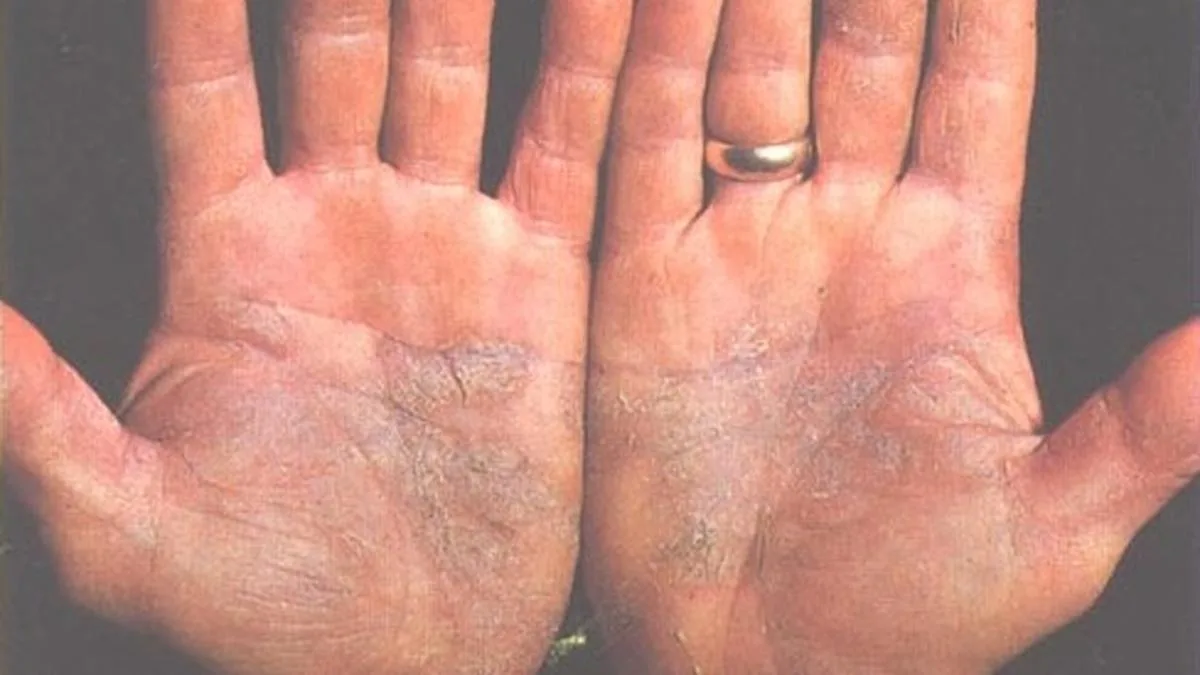
Psoriasis can occur in the palms, soles, scalp or elbows and in skin folds | Photo Credit: By US Military - http://history.amedd.army.mil/booksdocs/wwii/internalmedicinevolIII/chapter20figure100.jpg, Public Domain, https://commons.wikimedia.org/w/index.php?curid=1042690
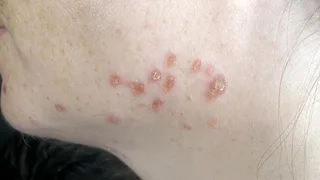
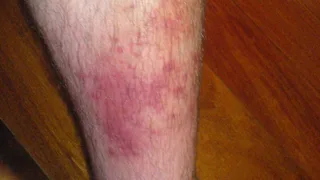
Psoriasis (so-ri’a-sis, a word of Greek origin) is a chronic skin disorder in which red, scaly plaques appear on the skin. The knees, shin, elbows, naval, buttocks, lower back, ears and hairline, are most commonly affected. Some people suffer from pitting of nails as well. Dermatologists say patients have varying degrees of the condition -- from mild discomforting changes, to severe, debilitating forms.
Experts say that while psoriasis primarily manifests on the skin, it is defined as a systemic inflammatory condition affecting multiple systems in the body.
According to the National Psoriasis Foundation, a non-profit organisation based in the United States, psoriasis plaques occur because of an overactive immune system, resulting in faster skin cell growth. While normal skin cells grow completely and fall off in a month, in persons with psoriasis, skin cells pile up on the surface of the skin. Symptoms include flaky skin and raised, discoloured bulges on the skin, akin to boils. Some have blisters, itching and even bleeding. Some exhibit ridges along the nailbed. Some also have pustules, which break and leave scabs. It can occur in the palms, soles, scalp or elbows and in skin folds. Psoriasis is not a contagious condition, but results in low confidence in patient.
Krishnan* was diagnosed with psoriasis in 1991, when he was 20. “My father took me to a doctor who diagnosed my condition. It started as a scar on my bottom, spreading to my back and the armpits. It is persistent still, and flares up during winters,” he says. Mr. Krishnan was an active cricketer until the condition began to demotivate him. It also resulted ibn him avoiding a steady job. “I bathe twice a day. I have tried everything, from powder to lotion to ointments and even injectables,” he reveals, but psoriasis persists.
The condition can also run in families. His brother was diagnosed with the condition as well, Mr. Krishnan says. “But he leads an active life and does not have as many scars or episodes. He is a medical professional, and his condition is milder.”
In an article ‘Psoriasis in India: Prevalence and Pattern’ published in the Indian Journal of Dermatology, Venereology and Leprology in 2010, the authors Dogra S. and Yadav S. of the Department of Dermatology, Venereology and Leprology at the Postgraduate Institute of Medical Education and Research, Chandigarh, said the prevalence in India and the epidemiological characteristics are similar to that of the disease in the West. They maintained that in India, the prevalence varied from 0.44% to 2.8%.
The authors called for more research and a detailed prospective study to delineate the natural course of the disease, as it varied in different individuals.
5News aggregated this summary from the outlet’s public feed. The full article, with all the context, is on www.thehindu.com — the content belongs to The Hindu - Sci-Tech.