Fishers from coastal Andhra seek Forest Rights Act-style law to protect fishing grounds
Account subscription benefits alongside Premium Stories, Editorials, Opinions and more. Unlock these with Subscription
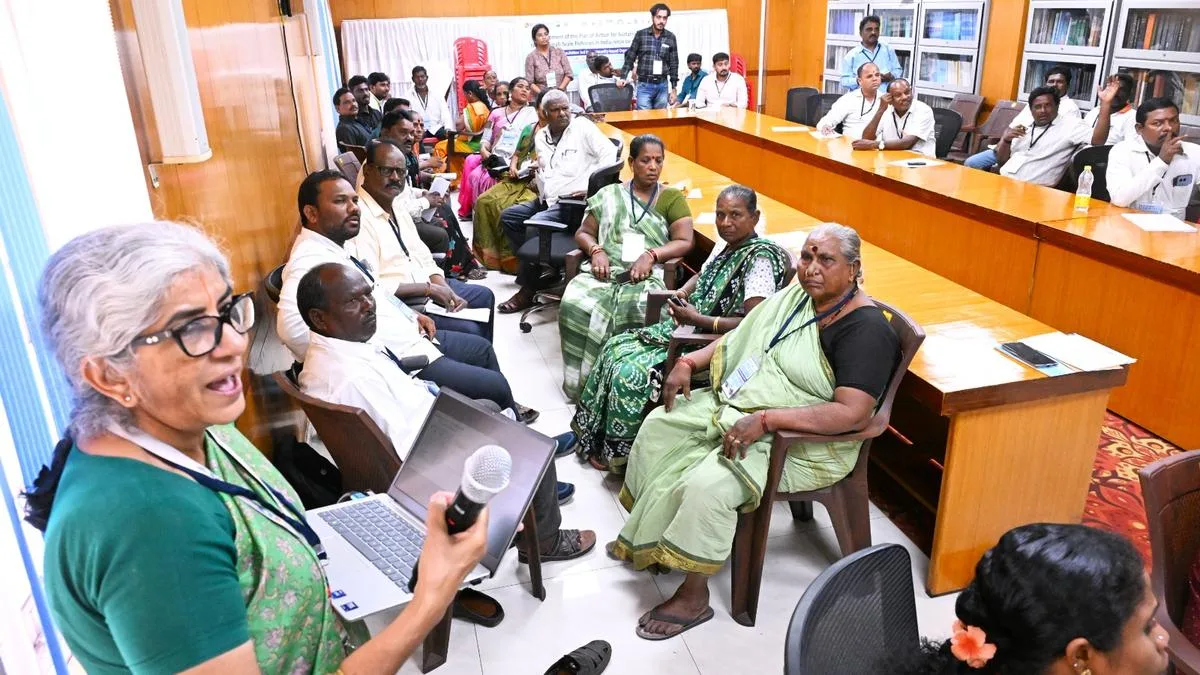
Participants at the consultation of traditional fishers from six coastal districts at the Fishery Survey of India hall in Visakhapatnam on Thursday. | Photo Credit: Special Arrangement
Traditional fishers from six coastal Andhra districts have asked for a law on the lines of the Forest Rights Act to protect their fishing grounds and access routes from displacement by coastal projects. The demand came at a consultation in Visakhapatnam on Thursday (October 8, 2026) attended by 72 delegates from Konaseema, Kakinada, Anakapalli, Visakhapatnam, Vizianagaram and Srikakulam districts.
The meeting, held at the Fishery Survey of India hall, was organised by the Bay of Bengal Programme Inter-Governmental Organisation (BOBP-IGO), the District Fishermen Youth Welfare Association (DFYWA) and FISHCON. DFYWA executive secretary Arjilli Dasu chaired the sessions. BOBP-IGO representative Ahana Lakshmi and FISHCON president Surada Rajarao took part.
A comprehensive blueprint to safeguard marine small-scale fishers against climate vulnerabilities and tenure insecurity was shaped here on Thursday as 72 traditional fishing delegates from six coastal districts gathered for a high-level consultation workshop.
Hosted at the Fishery Survey of India hall, the event was organised by BOBP-IGO, the District Fishermen Youth Welfare Association (DFYWA), and FISHCON. DFYWA Executive Secretary Arjilli Dasu chaired sessions drawing participants from Konaseema, Kakinada, Anakapalli, Visakhapatnam, Vizianagaram, and Srikakulam districts, alongside BOBP-IGO representative Ahana Lakshmi and FISHCON President Surada Rajarao.
Fishers described how changing weather, storm surges and coastal erosion were shrinking fishing seasons and depleting stocks. They sought district-wise ecological mapping so that ecosystem buffers, safe evacuation routes and storm-proof storage could be built into the State’s disaster plans.
Delegates asked for last-mile early warning systems that deliver multi-day forecasts and wind alerts directly to traditional craft. They recommended linking the alerts with INCOIS ocean forecasts, using NavIC and IoT technologies, and holding community mock drills and running sea ambulances.
Speakers said ambiguous customary rights left fishers vulnerable to displacement by industry.
5News aggregated this summary from the outlet’s public feed. The full article, with all the context, is on www.thehindu.com — the content belongs to The Hindu - National.