A secular republic’s sacrilege problem
Account subscription benefits alongside Premium Stories, Editorials, Opinions and more. Unlock these with Subscription
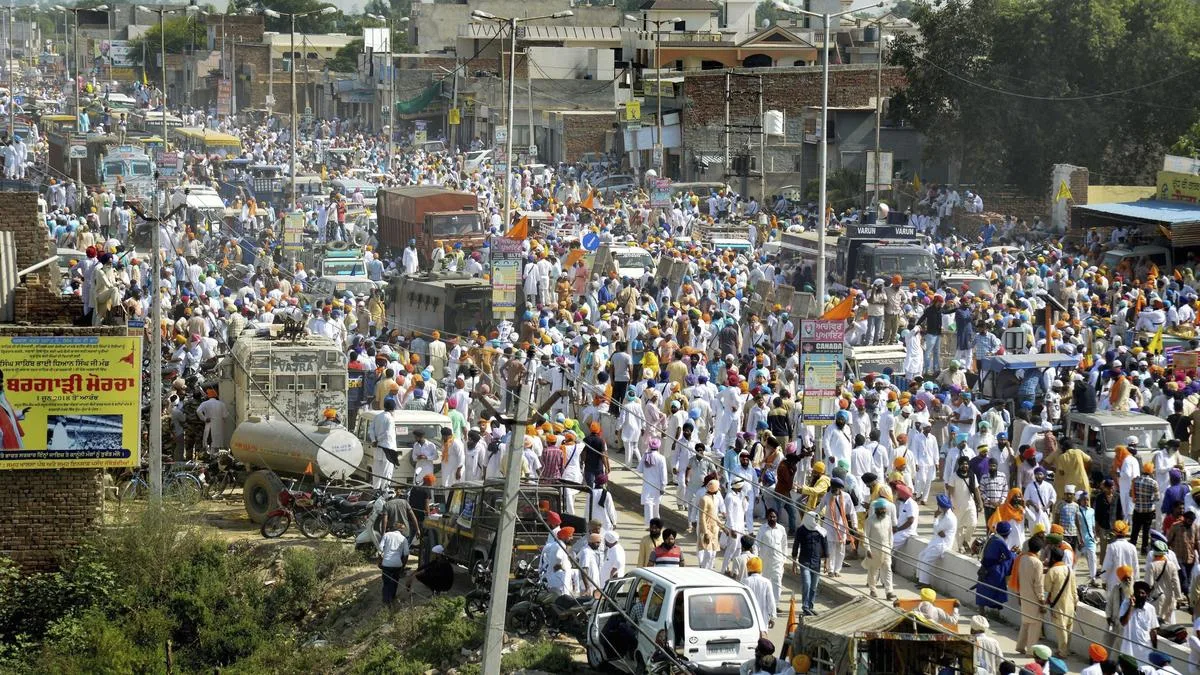
A rally seeking justice for the sacrilege incident of Guru Granth Sahib that took place in 2015, at Bargari village in Faridkot, on October 7, 2018
I n April 2026, the Governor of Punjab gave his assent to the Jaagat Jot Sri Guru Granth Sahib Satkar (Amendment) Act, which criminalises sacrilege against the Guru Granth Sahib with sentences running as high as life imprisonment. The law arrived almost immediately after passage, closing out a decade of agitation that followed the desecration incidents at Bargari and Burj Jawahar Singh Wala in 2015, and the police firing at Behbal Kalan that killed two protesters. On paper, this looks like routine State legislation responding to genuine communal hurt. In substance, it is India’s most severe working sacrilege law: a statute that punishes the physical desecration of a sacred text with sentences up to and including life.
The Constitution declares secularism part of its “basic structure,” and a law of this kind sits awkwardly against that declaration. It permits, and in Punjab’s case has now enacted, punishment for disrespect to religion in a nation-state that officially professes no religion of its own and guarantees every citizen the right to free speech. Punjab’s law is only the most vivid recent example of a wider pattern: a body of provisions, some colonial in origin and some entirely contemporary, that treat criticism of religious belief and practice as a matter for the police rather than public debate.
Blasphemy, in the sense English ecclesiastical law first gave the word, is an expressive wrong: contemptuous or irreverent speech, writing or imagery about a god, a prophet, a scripture or a set of beliefs. Sacrilege is a different kind of wrong, the violation or defilement of something set apart as sacred, whether a place of worship, a rite, or a physical object. It has historically been understood as a matter of conduct, akin to trespass or vandalism, rather than expression. The distinction sounds academic, but Indian law actually draws it on the statute book. Section 298 of the Bharatiya Nyaya Sanhita, carrying forward the old Section 295 of the Penal Code, punishes injuring or defiling a place of worship with intent to insult a religion, a sacrilege-type offence aimed at conduct. Section 299 of the BNS, carrying forward the old Section 295A, punishes deliberate and malicious insult to religious beliefs by words, signs or visible representation. Reference works on Indian law describe this expressive offence as the country’s general prohibition on blasphemy.
Measured against that distinction, Punjab’s new law does not sit cleanly on the sacrilege side of it.
5News aggregated this summary from the outlet’s public feed. The full article, with all the context, is on www.thehindu.com — the content belongs to The Hindu - National.