Column by Devdutt Pattanaik | The most Indian leaf is imported
Account subscription benefits alongside Premium Stories, Editorials, Opinions and more. Unlock these with Subscription
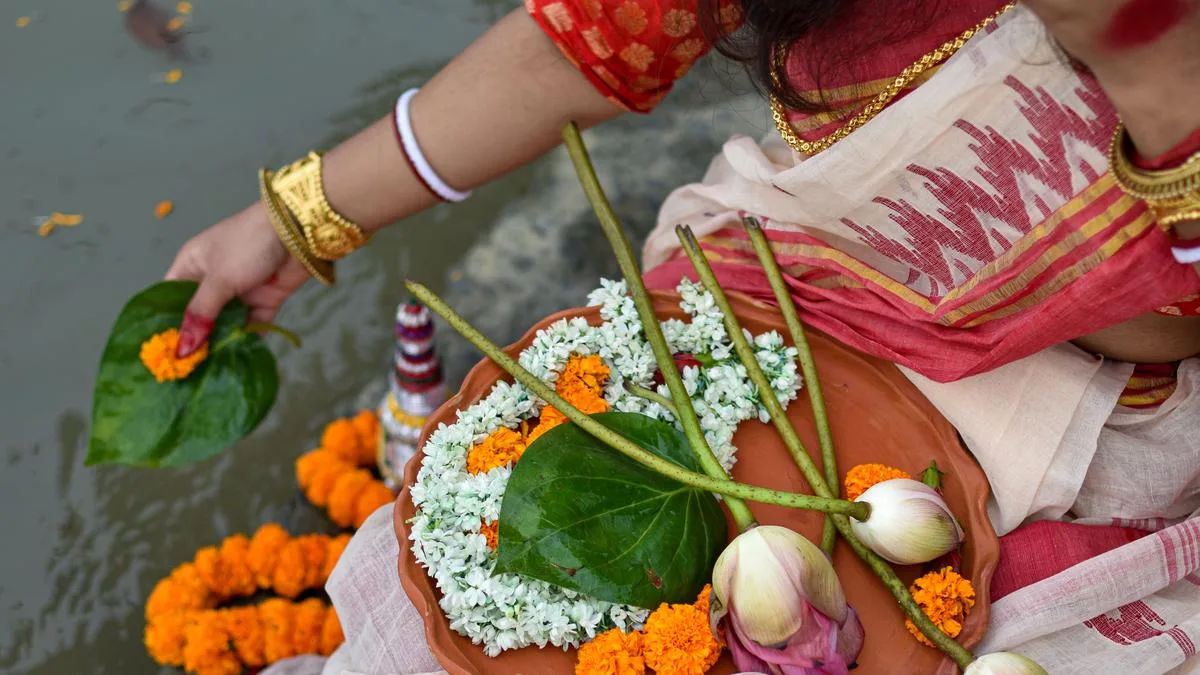
Betel leaves are an important part of Hindu rituals | Photo Credit: Sudip Biswas
On the outer walls of the Chennakeshava temple in Belur, built by the Hoysala kings in the 12th century, stands a woman holding betel leaves. But the tambula or betel appears nowhere in the Vedic Samhitas , the Ramayana or the Mahabharata . It was not part of that world.
It arrived much later, carried on trading vessels from the Indonesian archipelago and the Malay Peninsula, entering India during the Gupta period (around 4th century CE) through the eastern coast. Its presence, carved in stone into a temple wall in Karnataka, however, reveals how quickly the leaf had ceased to be a foreign import. No Hindu ceremony was considered complete without it.
A woman holding betel leaves on the outer walls of the Chennakeshava temple
The betel leaf and areca nut were popular in East and South India before Sanskrit documentation. Tamil Sangam poetry reveals a world from 2,000 years ago that was familiar with them. Poems such as Pattinappalai describes the busy markets of Puhar, where betel leaves were sold; Maduraikanchi highlights the cultivation and sale of the leaves; while Kuruntogai reveals how the offering of the leaf with the areca nut was a symbol of hospitality and affection.
After meals, a quid of betel leaf wrapped around some areca nut and lime, perfumed with cardamom, clove, nutmeg, mace, and camphor — the five aromatics known collectively as pancha-sugandha — served to aid digestion and sweeten the breath. Ayurvedic physicians found additional uses: betel entered their pharmacopoeia as a treatment for filarial infection, obesity, skin diseases, and headaches. Singers were advised to consume it regularly, the belief being that it enhanced the voice. Traditional medicine found uses even for the parts of the plant that religion condemned. The stalk of the leaf, smeared with oil, was applied in remedies for constipation and abdominal bloating in children.
Religion absorbed tambula with equal thoroughness. It was used to sprinkle holy water, offered to deities, and included in the daksina paid to priests. Medieval South Indian temples incorporated it into daily liturgy. Theologians found in the betel quid a symbol of the Hindu Trinity: the areca nut representing Brahma the Creator, the leaf representing Vishnu the Preserver, and the lime representing Shiva the Destroyer.
The anatomy of the leaf itself was mapped onto the divine. The goddess Lakshmi dwells on the left, and Saraswati on the right. Yama, the lord of death, resides in the stalk, and the tip — and therefore both are discarded before the leaf is prepared. What remains is auspicious, to be shared between husband and wife, god and goddess, host and guest.
Tambula became a complete social language, capable of signalling welcome, rank, and departure through the same leaf. In Assam, betel nut was the first thing placed before any visitor. In Bhutan, the phrase doma zhes , meaning ‘please have betel leaf and areca nut’, was spoken every time two people met.
5News aggregated this summary from the outlet’s public feed. The full article, with all the context, is on www.thehindu.com — the content belongs to The Hindu.