India’s defence start-up boom is outrunning its talent pipeline
Account subscription benefits alongside Premium Stories, Editorials, Opinions and more. Unlock these with Subscription
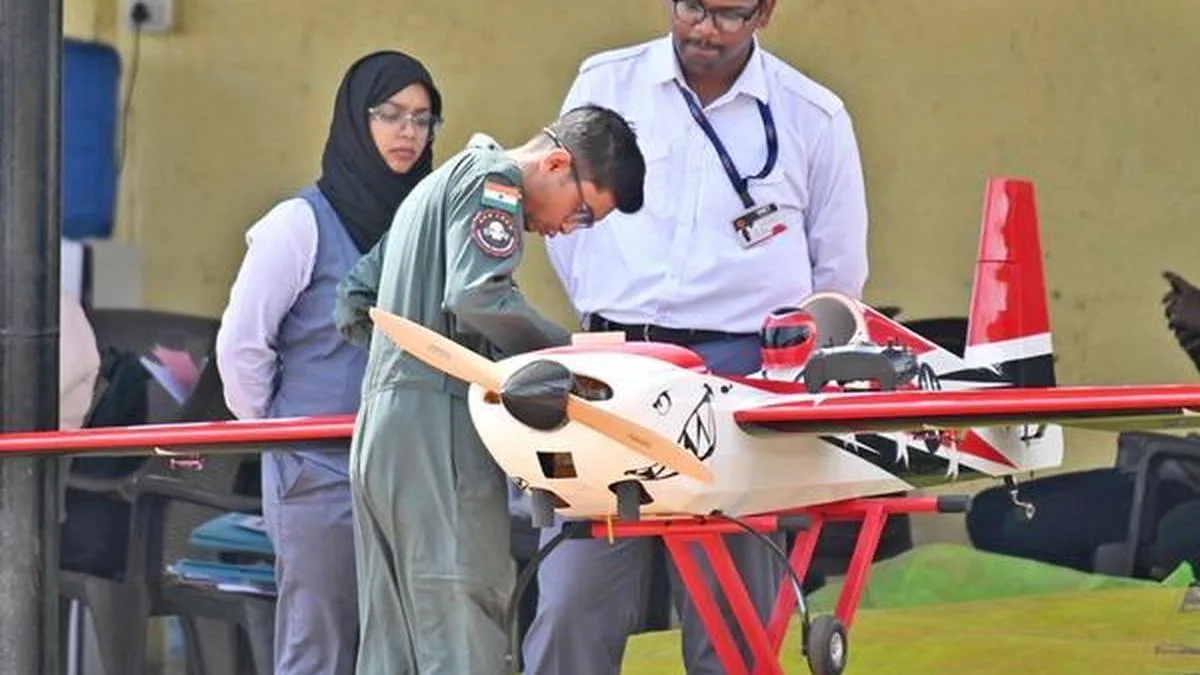
A student working on a flight at the drone challenge. Photo: Special Arrangement.
2026 has proven to be the best year on record for India’s defence manufacturing sector, with the annual defence production reaching an all-time high of ₹1.78 lakh crore in FY 2025-26. Defence exports reached a record ₹38,424 crore in FY 2025-26, which is 62.66% higher than ₹23,622 crore the previous year, with Indian-made equipment now being exported to more than 80 countries.
Indigenous defence production has quadrupled, rising from ₹46,429 crore in FY 2014-15 to ₹1.78 lakh crore in 2025. The government has set its sights on ₹3 lakh crore in annual defence production and ₹50,000 crore in exports by 2029, alongside achieving roughly 88% self-sufficiency in ammunition production. Moreover, the share of the private industry is also expanding rapidly. Its contribution increased to 24% of total output (around ₹42,000 crore) in FY 2025-26, up from 22% the previous year.
Behind the headline numbers lies a more contested story: whether India has a sufficiently trained workforce to sustain this growth, and whether the engineering colleges, and State-run startup schemes can actually support this development. Interviews with founders, a former Navy officer-turned-entrepreneur, a materials science executive and an academic administrator suggest the sector’s talent problem is not a shortage of engineers, it is a shortage of engineers who understand what happens when a prototype has to survive a battlefield.
India’s defence technology market alone, was valued at $7.6 billion in 2025 and is projected to reach $19 billion by 2030 according to a private industry report by staffing firm Quess Corp. By 2030, technology-led systems are expected to make up almost half of India’s overall defence market, marking what the report calls a shift “from platform-driven development to advanced engineering and digital capability building”.
The same report flags a structural problem: specialised roles in radar engineering, RF engineering, avionics, propulsion, optical engineering, quantum communications, systems integration, test and validation, and certification currently account for less than 5% of the existing defence workforce.
5News aggregated this summary from the outlet’s public feed. The full article, with all the context, is on www.thehindu.com — the content belongs to The Hindu - Sci-Tech.