Why are some Americans destroying Flock cameras? | Explained
Account subscription benefits alongside Premium Stories, Editorials, Opinions and more. Unlock these with Subscription
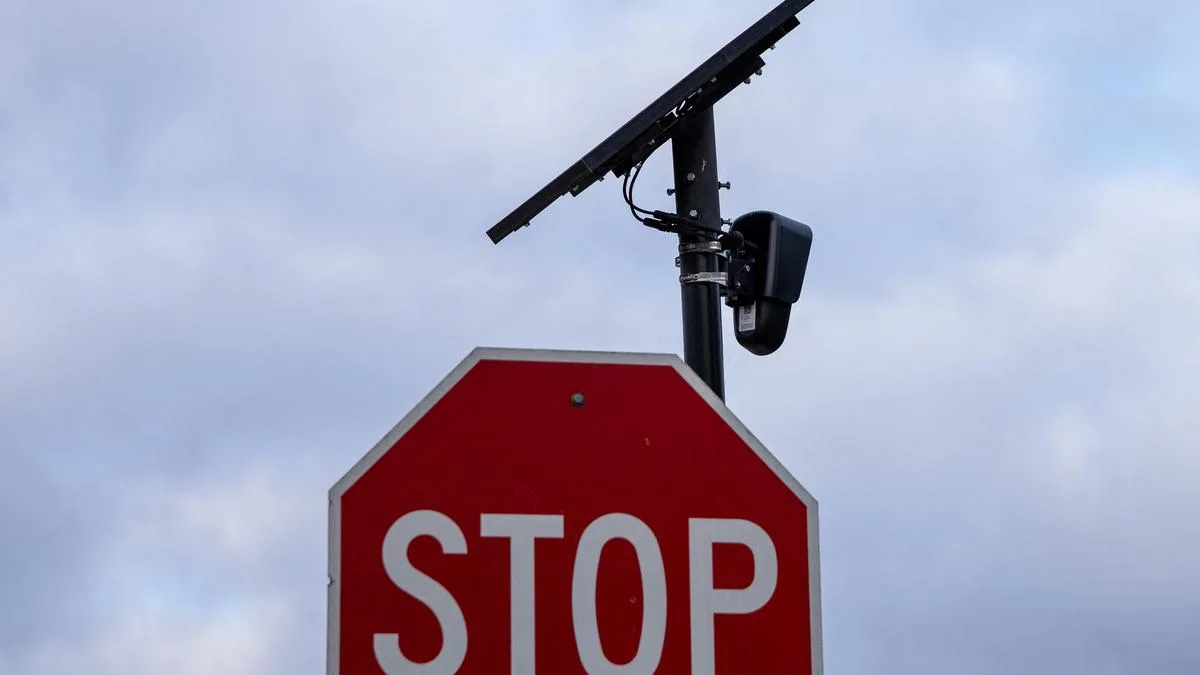
A Flock camera under a solar panel in the U.S. [File] | Photo Credit: REUTERS
The story so far: The head of Flock, a surveillance camera maker-operator that works with a range of clients in the U.S., issued an apology this month after the Washington Post reported that multiple law enforcement officers had abused his product network, with at least one case involving an officer who misused Flock to stalk his ex-partner through her car’s license plates.
Across the U.S., anger is mounting against the surveillance camera firm, with critics going so far as to disrupt or even destroy the Flock cameras in their communities.
Founded in 2017, Flock developed its business with the help of a two-way strategy: the sale of surveillance hardware, as well as surveillance-as-a-service subscriptions. Flock products include license plate reader (LPR) cameras, video cameras, mobile security trailers, audio detection devices, drones, and software offerings. Instead of just buying and using a single camera, clients can join the Flock network and enable (optional) law enforcement access.
Due to this strategy, Flock’s devices can help police officers collect data across wider areas and with more cameras, to detect incidents ranging from stolen cars to gun shootings.
The company’s numbers certainly impress. According to its 2026 factsheet, over 2,800 crimes were solved weekly with Flock technology, while over 2,000 missing people have been located. Flock reported it has partnered with over 6,000 “communities” across 49 U.S. states, as well as “thousands” of law enforcement agencies.
There are a number of reasons uniting the Americans who are against Flock. These range from the company’s reputational challenges and the misuse of its Flock cameras to the general anger over mass surveillance technologies.
Company founder and CEO Garrett Langley made headlines last year when he referred to a critic’s anti-Flock advocacy organisation (called DeFlock) as “terroristic.” He apologised for his comments this July, and promised to improve on the company’s responses to the public’s concerns.
Still, the Washington Post report in August that covered incidents where police officers misused Flock data to stalk women has added yet more fuel to the fire. Soon afterwards, Flock announced it was updating its safeguards, and cutting its default ALPR (Automated License Plate Reader) data retention period to seven days, unless legally required to keep the images for longer.
On its “Myths vs Facts” page, Flock noted that it does not carry out facial recognition, predictive policing, or demographic profiling. Flock stated it did not contract with the U.S. agency ICE or the tech firm Palantir — both associated with mass surveillance. Even so, media outlets have identified Flock cameras as being AI-powered. U.S. lawmakers have also raised questions about ICE possibly accessing Flock data .
Despite its outreach attempts, Flock is still facing public fury.
5News aggregated this summary from the outlet’s public feed. The full article, with all the context, is on www.thehindu.com — the content belongs to The Hindu.