Trump submits civil nuclear agreement with Saudi Arabia to Congress for review
Account subscription benefits alongside Premium Stories, Editorials, Opinions and more. Unlock these with Subscription
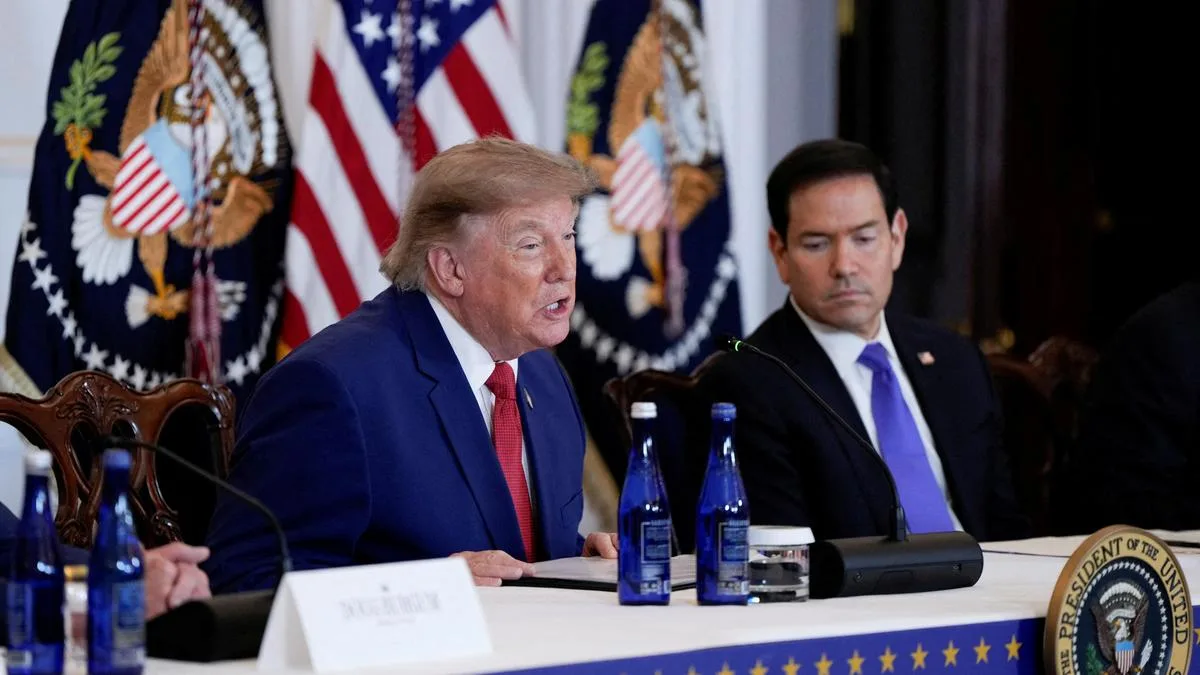
U.S. President Donald Trump speaks next to Secretary of State Marco Rubio. File | Photo Credit: Reuters
U.S. President Trump has submitted to Congress for review an agreement with Saudi Arabia aimed at bolstering the kingdom's civilian nuclear program, but continues to insist that it won't move forward if Saudi Arabia doesn't normalise relations with Israel, according to a Trump administration official.
The classified document was submitted to Capitol Hill on Monday (August 24) as required by the Atomic Energy Act, according to the administration official, a congressional aide, and two others familiar with the matter. All four spoke on condition of anonymity because they were not authorised to comment publicly on the classified matter.
The agreement was signed last month in Washington by U.S. Energy Secretary Chris Wright and his Saudi counterpart. But the next day, Trump announced he was requiring the Saudis to normalise relations with Israel through the Abraham Accords as part of the pact, raising doubts that the agreement would come to fruition.
Neither the administration official nor the others familiar with the matter would comment on whether Mr. Trump's call for the Saudis to join the accords is detailed in the classified document submitted for the congressional review.
Under law, Congress has 90 days while in session to review the agreement. Unless Congress passes a joint resolution rejecting the agreement during the review period, the agreement can take effect without a vote by either chamber.
It is unusual for the entire contents of such agreements to be classified at such a high level. Previous civil nuclear pacts with other countries -- known as 123 agreements -- have been made public, although some of them have contained classified annexes that were not released.
The Saudi Embassy in Washington did not have any immediate comment on the matter.
But Mr. Trump's continued insistence on the Saudis joining the accords could complicate the path to final approval. The accords approved in 2020 expanded the number of Arab and Muslim-majority nations with diplomatic ties with Israel.
The Saudis were taken by surprise by Mr. Trump's announcement that the completion of the civil nuclear deal would hinge on Riyadh's agreement to join the accords.
Mr. Trump faced fierce criticism from some lawmakers, including some who are concerned it could potentially help the Saudis fulfil their long-standing desire to enrich their own uranium and, in the process, spur new rounds of nuclear proliferation and competition.
The Saudis, meanwhile, have made clear that normalising relations with Israel would first require the establishment of a clear path for Palestinian statehood. And Israeli Prime Minister Benjamin Netanyahu has rejected the idea of Palestinian statehood as being untenable for his country's security.
The deal, if approved, is expected to last 30 years and is also expected to involve U.S. firms in developing the program following a joint U.S.-Saudi study.
5News aggregated this summary from the outlet’s public feed. The full article, with all the context, is on www.thehindu.com — the content belongs to The Hindu - International.