Dissent, degrees and the Bar: Inside the NALSAR-CJI controversy
Account subscription benefits alongside Premium Stories, Editorials, Opinions and more. Unlock these with Subscription
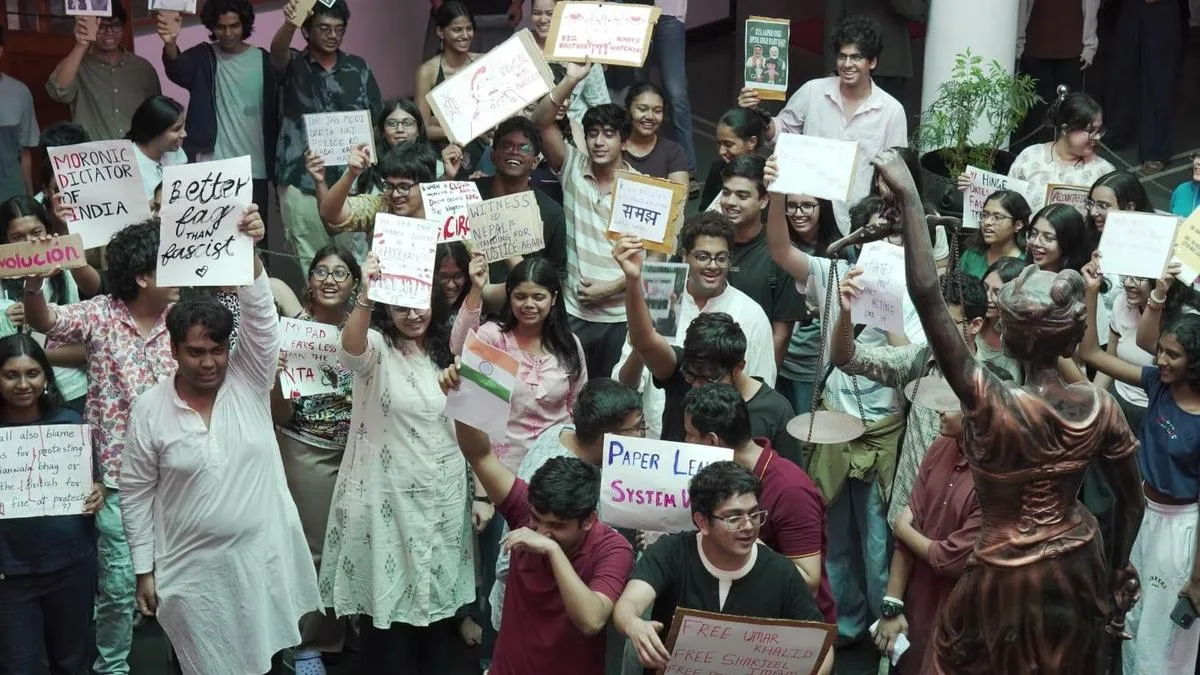
Students of NALSAR Law University in a protest demonstration in solidarity with the NEET protests at Jantar Mantar, New Delhi, on its campus on July 24 in Hyderabad. | Photo Credit: Special Arrangement
When students at NALSAR University of Law sat down to draft an email to their administration in early August, asking their university not to invite the Chief Justice of India , they did not think they were starting a national argument about the limits of dissent inside India’s legal profession.
Within two weeks, that request had reached the Supreme Court itself, drawn in the country’s top law regulator, and prompted an extraordinary rebuke from the sitting Chief Justice.
“It was meant to be an internal communication with the admin of NALSAR,” said Priya, a pseudonym for a 2026-batch NALSAR graduate who agreed to describe the episode on condition of anonymity. “We just wanted to, you know, not invite him and just talk to us. And that was ignored.”
The dispute has folded in questions well beyond one convocation: how far the right to protest extends to students training to become officers of the court, whether India’s bar regulator has authority over people who are not yet advocates, and what happens when criticism of the judiciary collides with the reverence traditionally expected of it.
The trigger, Priya said, traced back to remarks Chief Justice Surya Kant made from the Bench in the preceding months: a comparison of certain young people to “cockroaches” in May, and, in July, a refusal to view video evidence of an alleged police crackdown on student protesters at Delhi’s Jantar Mantar. The CJI later said the cockroach remark was taken out of context, aimed at people using fraudulent degrees to file harassing litigation, not at unemployed youth broadly. By then, though, the phrase had become the rallying cry of a youth movement calling itself the Cockroach Janata Party, and footage the court declined to watch had circulated widely online.
“We as law students, as people who believe in the Constitution, if the highest legal authority is saying we don’t have the time to watch videos on police brutality, that went against everything we stood for,” Priya said.
So NALSAR’s graduating students wrote to the administration asking it to reconsider its customary invitation to the CJI, who serves as ex-officio chancellor of India’s National Law Universities, as chief guest at convocation. Priya said the letter got no reply. “Then someone leaked the whole thing to the media, and then it became a whole thing,” she said. By mid-August, national outlets had picked up the story.
5News aggregated this summary from the outlet’s public feed. The full article, with all the context, is on www.thehindu.com — the content belongs to The Hindu.